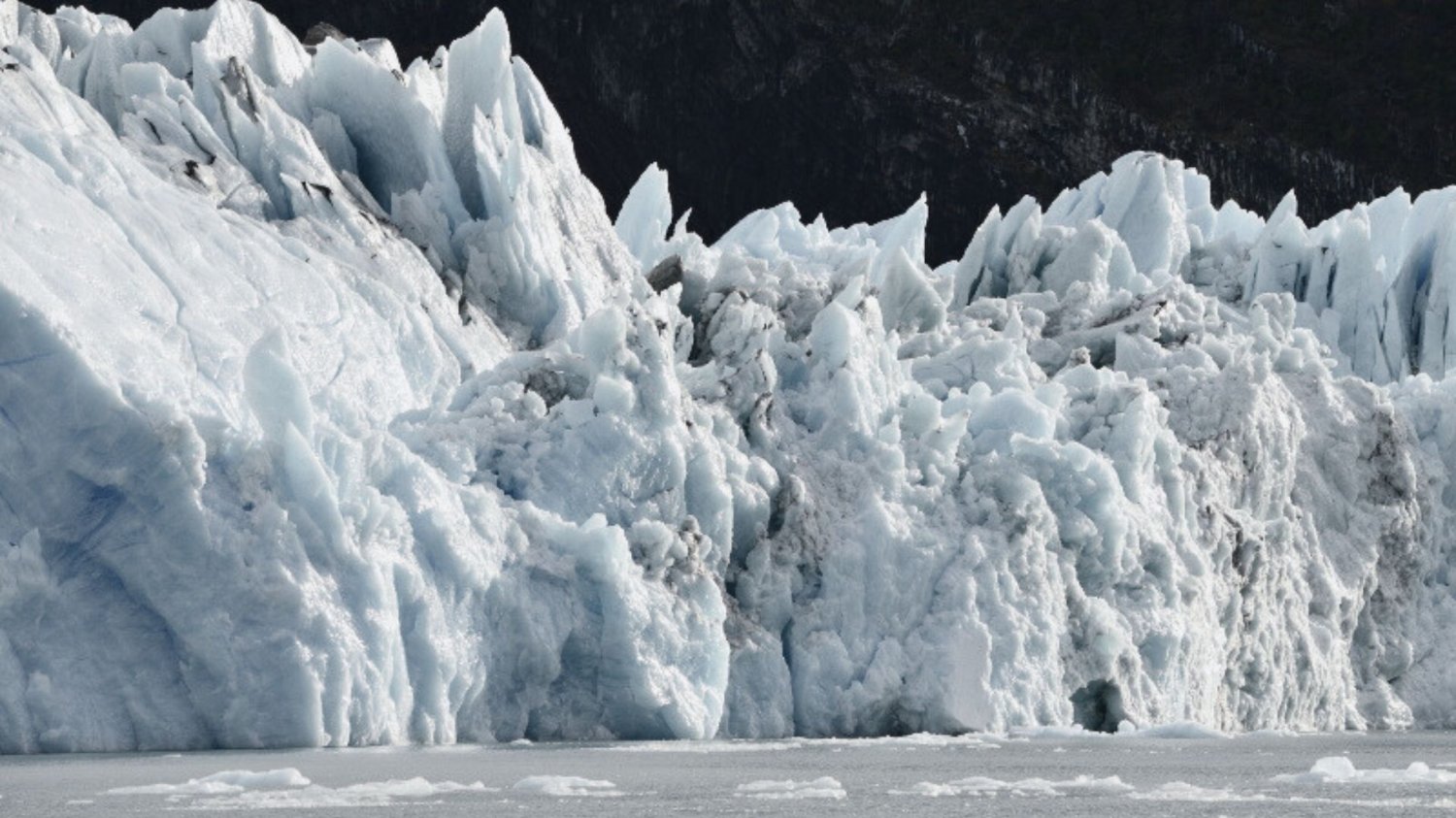
The Senate of the Nation confirmed that This Thursday he will seek to approve the reform of the Glacier Law on campuswhich already has opinion prepared in committees. According to parliamentary sources, in addition to the law that redefines the protection of glaciers, the Upper House discusses this Thursday the Juvenile Criminal Regime Law for your definitive sanctionand the Friday will focus on labor reform and the Agreement between Mercosur and the European Union.
The ruling party’s strategy is to advance with these initiatives before the opening of the ordinary sessions at the beginning of March, in a schedule of express treatment against achieved social and environmental rights, and greater economic adjustment.
What does the reform of the Glacier Law imply?
National Law 26,639, passed in 2010, protects glaciers and the periglacial environment as strategic freshwater reservesprohibiting activities such as mining and hydrocarbon exploration and exploitation in those areas.
The project now being submitted for approval in the Senate introduces substantial changes. Among the most controversial, the text proposes that Not all formations with perennial ice automatically have the same protectionbut that the provinces define, with their own criteria, which areas present a «relevant water function» and they must be protected. By transferring the decision on the protection of glacial bodies to jurisdictional criteria, the very objective of the law, which is to establish environmental “minimum budgets,” loses meaning.
Complaint for lack of water protection and pressure from governors
The modification generated strong criticism from environmental organizations and scientific sectors, who warn that the proposal weakens environmental safeguards and compromises water security of the country. By allowing provinces to decide which glaciers or periglacial zones are protected, the door is opened to disparate criteria and conflicts between jurisdictionsin a context in which rivers and basins do not recognize political limits.
The project responds to political and economic pressures from sectors linked to megamining and governors seeking to make the norm more flexible to facilitate extractive investments in their territories. President Javier Milei himself pointed out that the modifications were a request for Alfredo Cornejo, governor of Mendozain the middle of social mobilizations against megamining in their provincesuch as the San Jorge project and other undertakings with environmental impact. Likewise, the body of the opinion itself explicitly talks about the lithium and copper tables.
Multinationals like Glencore, McEwen Mining, Barrick Gold y Yamana Goldamong others, hope to move forward with projects that are currently prohibited because they generate irreversible damage.
The labor reform garners widespread repudiation
Additionally, on Friday the Senate would move forward with the definitive sanction of the labor reformwhich was previously discussed and modified in the Chamber of Deputies, and with the ratification of the Free Trade Agreement between Mercosur and the European Uniontreaties that have also generated strong debates and mobilizations in different sectors of society.
As the text of the labor reform law becomes known where There is not a single favorable article for workersthe rejection of a large part of the population grows. After negotiating their social funds, the CGT has delivered to the working class first calling for a mobilization without a strike and then for a strike without a mobilization. However, the anger and desire to stop the entire law is growing. A real fighting plan with general strike until the reform falls It could stop the entire package of regressive policies with which the government is trying to accelerate.
A key week in Congress
The call for a double day Thursday and Friday shows the ruling party’s determination to advance its agenda before the opening of ordinary sessions. The modification of the Glacier Law marks a setback in the protection of common goods and water and it has to stop now.
These counter-reforms could not be voted on without the complicity of sectors that presented themselves as oppositionincluding Peronist blocs from provinces such as Salta, Tucumán and Misiones, whose votes are key. Meanwhile, some denounce “betrayals” behind closed doors but consider the fight lost and postpone everything to a future repeal in another government.
Experience shows that the promises of “we will change it later” are not fulfilled. They said the same thing with the illegitimate debt with the IMF in 2018 and now we all pay it because Peronism validated that scam. The fight is now and resignation cannot win us. We have to prepare a great day of struggle demanding strikes, mobilization and uniting all demands.
Source: www.laizquierdadiario.com