The war launched by the United States and Israel against Iran continues to put international markets in check: the price of oil reached in the last hours its highest value in the last three yearssetting off alarms among the major financial and economic players and fully impacting the pockets of billions of people globally.
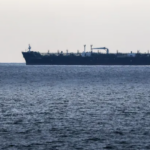
The stock markets of South Korea and Japan started the day this Monday with sharp falls, after the benchmark US oil barrel will overcome the barrier of US$100reaching its highest value in more than three and a half years. An immediate effect of the rise in the price is the fear that energy supply from the Middle East will be cut off as risks to shipping rise in the Strait of Hormuz, a key area for the global oil trade. That causes a chain reaction in international finance.
On Sunday night, oil exceeded US$117, a price that had not been seen since 2012. At the same time, as often happens, geopolitical uncertainty causes other commodities show increases. In the last hours soybean oil rose 4%, wheat 0.69%, corn 1.52% and aluminum, faced with a possible shortage of supply, rose to highs not seen since 2022. The dollarin parallel, rises as a “safe haven asset”.
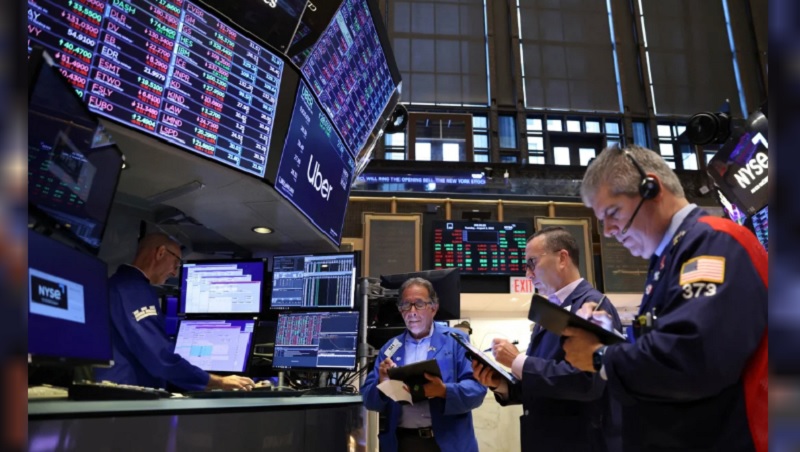
The price of oil rose more than 25%, reaching over US$120 per barrel this Monday. Thus, the Asian stock markets felt the blow: the Seoul stock market plummeted more than 8%; Tokyo fell more than 7% y Taipei more than 5%. The same thing happened in the markets of Hong Kong, Shanghai, Sydney, Singapore, Manila and Wellington, where significant falls were also seen.
In the early hours of the day, US crude oil futures West Texas Intermediate (WTI) they came to shoot more than 30%touching the US$119.48 per barrelthe highest value since July 2022. Afterwards, the price settled a little and was around US$102. On Friday it had already risen 12% and, in the last week, the increase is around 36%.
He Brentwhich is the international reference, was not far behind either: it jumped a 27,54 % and reached the US$119.50 per barrel in the early hours of Monday, although it later fell and was trading near U$S 105. Last week it had already risen almost 28%.
Every time the barrel rises, Transportation, production and energy costs skyrocketaffecting everything from the price of food to the bus ticket. In a country like Argentina, where inflation is already a daily drama, this type of international shock only aggravates the situation of workers and popular sectors.
The reaction in the markets reflects that behind each rise in oil there is a chain of consequences: devaluations, settings y more pressure on salaries. Meanwhile, large speculators take advantage of the volatility to do business, while working people pay the price for a global economy tied to the interests of imperialist powers and energy multinationals.
In Argentina, the international increase in oil prices can promote export earnings of companies and corporations in the sector such as YPF , Pan American Energy (Bulgheroni), Vista Energy (Galuccio), Shell , Chevron , Tecpetrol (Rocca) y Pluspetrol (Rodríguez Rey-Poli). The same for the agroexportersbenefited from the increases of other commodities.
But the other side is a new pressure on the general increase in the prices of mass consumption goods and services. As national history demonstrates, when oil (gasoline, diesel) and gas rise, the prices of food, industrial goods and production costs in general also increase.
So, as Guadalupe Bravo details in another articleArgentina faces the possibility of deepening “an already delicate economic situation. accelerating inflation, lagging wages y an industry hit by closures and layoffsand shock in energy costs could quickly be transferred to prices and further deteriorate purchasing power. It remains to be seen What will be the measures adopted by the Government that has been applying a large fiscal adjustment, dumping service increases on consumers, with extractivism and financial scams being the axes of its roadmap.”
Source: www.laizquierdadiario.com