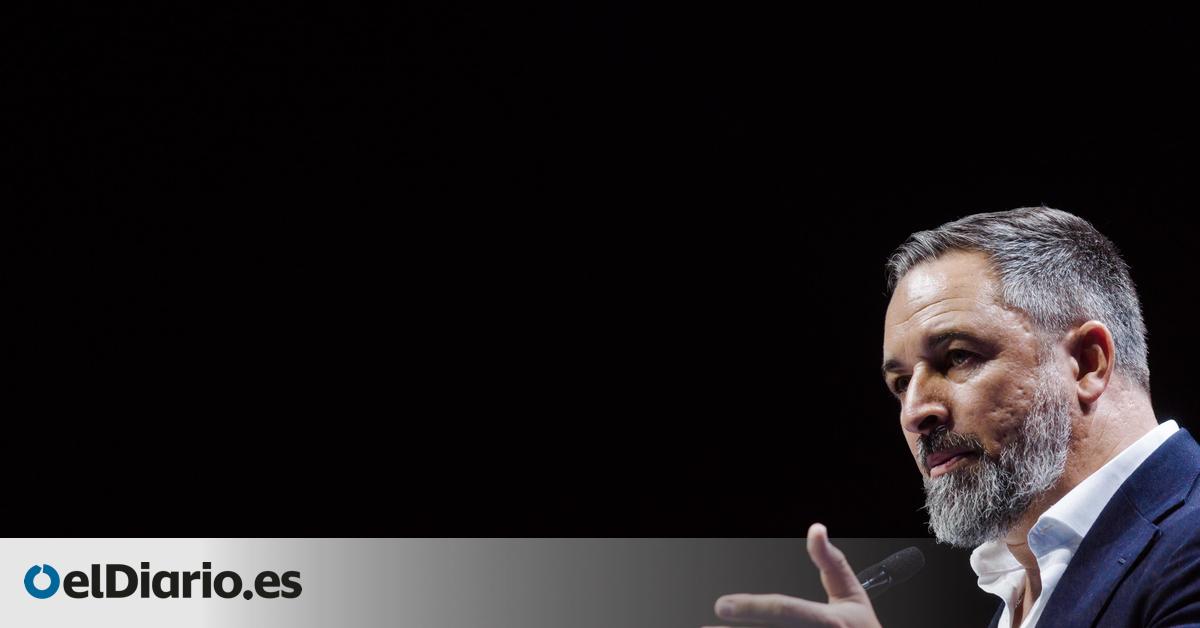
The departure of Vox in the summer of 2024 from the five regional governments in which it formed a coalition with the PP raised the question of whether the extreme right would know how to benefit from recovering a more comfortable opposition role or if it would be harmed by the loss of power and focus. A year and a half later, he already has his answer: he has managed to double his seats in Extremadura, maintain dependence on the PP and is looking forward to a start in 2026 in which he can be key in the negotiations after the regional elections in Aragon and Castilla y León.
The party says goodbye to the year in a sweet moment and resists the accusations against its youth branch ‘Revuelta’ and its turbulent internal life, with a trickle of departures and defenestrations of those who were once its most recognizable faces. He has managed to focus attention on his demands to facilitate the investiture of María Guardiola, who called elections to win just one more seat and remain four away from the absolute majority. The extreme right added six deputies and 40,000 more votes than in 2023, which allowed it to present itself as the true “winner” on Sunday. He even staged it with a battle against the PP for being the last to appear on election night, as the most voted force usually does. The winner of that symbolic fight was Santiago Abascal, who waited to speak after midnight, after María Guardiola and his own candidate in the region, Óscar Fernández.
Since that day, Vox leaders have dedicated themselves to appearing on television and radio to set out their agenda: reversing ecological policies and what the extreme right calls “gender policies,” combating “mass immigration” and lowering taxes. Although Abascal has not closed himself off to any possibility, including re-entering regional executives, nothing seems to indicate that he is going to abandon a strategy that has given him so much profit. “They have already been in the Government and the truth is that they did not last even a year. If their desire is to be in the Government there will have to be a commitment to seriousness,” Guardiola responded on Tuesday in an interview in Cope, in which he also threw a dart at the centralized functioning of the party: “I don’t know if I will have to speak with the candidate from Extremadura or with Mr. Abascal.” At the moment he has done it with Óscar Fernández and it has been to work on the document of 206 demands that he already rejected in October.
The evidence that they do not need to be among the executives to impose their ultra-prescription on the PP has been many throughout this year and a half. This summer they managed to get their former government partner in Murcia to agree to all their requests to push the budgets forward, including the closure of a shelter for minors and a reform of the Mar Menor Law. Just a few weeks ago, concessions were started in the Valencian Community – where they also came out in 2024 – to allow the presidency of Pérez Llorca. And just two days after the Extremaduran elections they reached an agreement with the PP in Seville – in this case Vox has never been in the executive – to approve their budgets in exchange for cuts in items destined for the Women’s Service or “reinforce” the control of migrants who want to register.
The eve of Christmas Eve, between news of negotiations, Government announcements and Christmas shopping, was also the date chosen to discreetly announce the expulsion of its Executive, Javier Ortega Smith. Of the iconic photograph on the front page of Vox alongside the PP and Ciudadanos at the rally in Colón in 2019, only Abascal remains.
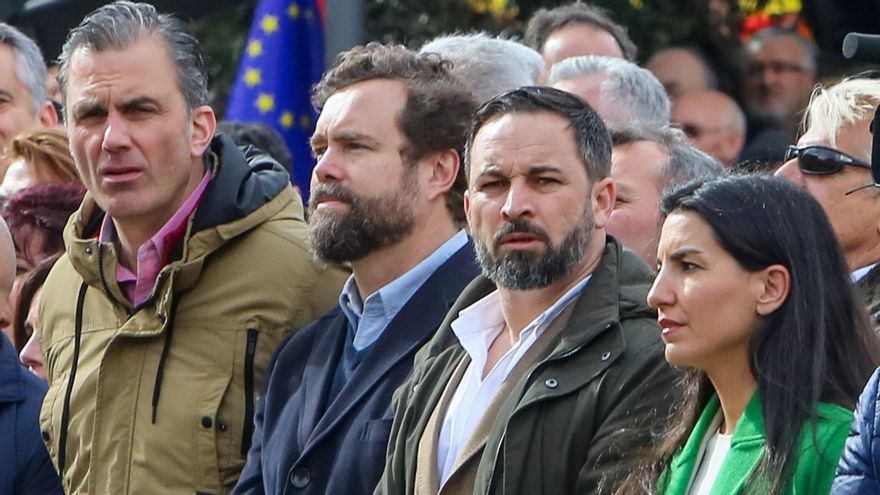
The distancing of Javier Ortega Smith, Rocío Monasterio, Iván Espinosa de los Monteros and other prominent members of the first hard core of the party has been gradual while the most ultra-conservative sector led by MEP Jorge Buxadé gained power. Espinosa de los Monteros resigned from his seat after the poor results of the 2023 general elections, in which they lost 19 deputies, and is now promoting a new project. Monasterio left in 2024 amid criticism of the party’s drift. Ortega Smith continued, but losing more and more internal weight.
The defenestrated agree that Abascal has isolated himself and that they speak of a lack of internal democracy. Ortega Smith responded to his dismissal by sharing an old video of the Vox leader in which he assured that in Spain the parties are “very undemocratic institutions” because “everyone owes the leader their salary” and thus “it is very difficult for people to be free.” He accompanied that clip with a brief message: “Today, just like then, I still believe in the same thing.”
They hope to emerge stronger from the regional elections in 2026
At least for now, neither his controversial internal life nor the accusations by former Revuelta leaders of diverting funds raised for the dana have taken their toll on Vox. The next electoral dates marked on the calendar, Aragon and Castilla y León, will finish demonstrating their state of form in the territories where they abandoned autonomous power. Polls predict a already seen of Extremadura: the PP as the first force, a collapse of the PSOE and a great rise for the extreme right, which will reserve a key role. And, in fact, Feijóo’s people already assume that they are far from the absolute majorities and are simply resigned to leading the right-wing bloc.
The deadlines accompany the strength of Abascal, who controls the negotiation times in Extremadura and could delay it until the Aragon elections on February 8. January 20 is the deadline for the constitution of the new Assembly of Extremadura, with the election of its presidency and members of the Board, so there will have to be contacts between both parties. But there will still be one more month left for Guardiola’s first attempt at investiture, which has to be February 19 at the latest. Weeks later they will return to the polls with the regional elections of Castilla y León that will be held no later than March 15. It is foreseeable that after that appointment Mañueco will also have to reach agreements. And two months later, in June, it will be Andalusia’s turn.
At this moment the PP has 28 seats in Aragon, six below the 34 absolute majority, while the PSOE has 23 and Vox, seven. A survey for Heraldo de Aragón predicts that the popular party would gain only one or two parliamentarians, but Vox would manage to incorporate four or five more seats. The worst unemployed, according to the surveys, will be the PSOE led by former minister Pilar Alegría, which would remain in a range of between 17 and 19 parliamentarians. Jorge Azcón has already ruled out that Vox wants to enter the regional governments again because, he assures, Vox “feels comfortable” in the opposition asking for measures “that are then practically impossible to comply with”: “If he wanted to enter he would not have left,” he said last Monday.
Castilla y León constituted the first laboratory for the coexistence of the extreme right in a coalition. Mañueco had to appoint Juan García-Gallardo as vice president precisely because of a miscalculation: he called elections to free himself from Ciudadanos and ended up giving unprecedented power to the extreme right. A survey by La Nueva Crónica predicts that the PP will go from 31 to 29 attorneys, the PSOE will drop to 25 – from 28 – and Vox will go from 13 to 19. The absolute majority of 41 attorneys would be unattainable for Mañueco unless he sits down to talk.
Further away are the elections in Andalusia, scheduled for summer, in which Juan Manuel Moreno Bonilla will have to defend his absolute majority. The so-called Andalusian CIS gives it a range between 53 and 55 seats, where the absolute majority is located, compared to the 58 it has now. María Jesús Montero’s PSOE would hit rock bottom with between 25 and 28 deputies compared to the current 30. And the extreme right, if the forecasts come true, would sing bingo with another increase with which it would step on the heels of the socialists with between 19 and 22 seats.
Between the political Spain of summer 2024 and winter 2025 there are five fewer executives with Vox, but a PP increasingly blended with the ultras and a discourse that has permeated. If in June of last year immigration was the ninth problem for Spaniards, according to the CIS, in December 2025 it will be the fourth. It has become the first, overcoming economic problems. Long gone is the time when concern about gender inequalities and class differences was far above.
Source: www.eldiario.es