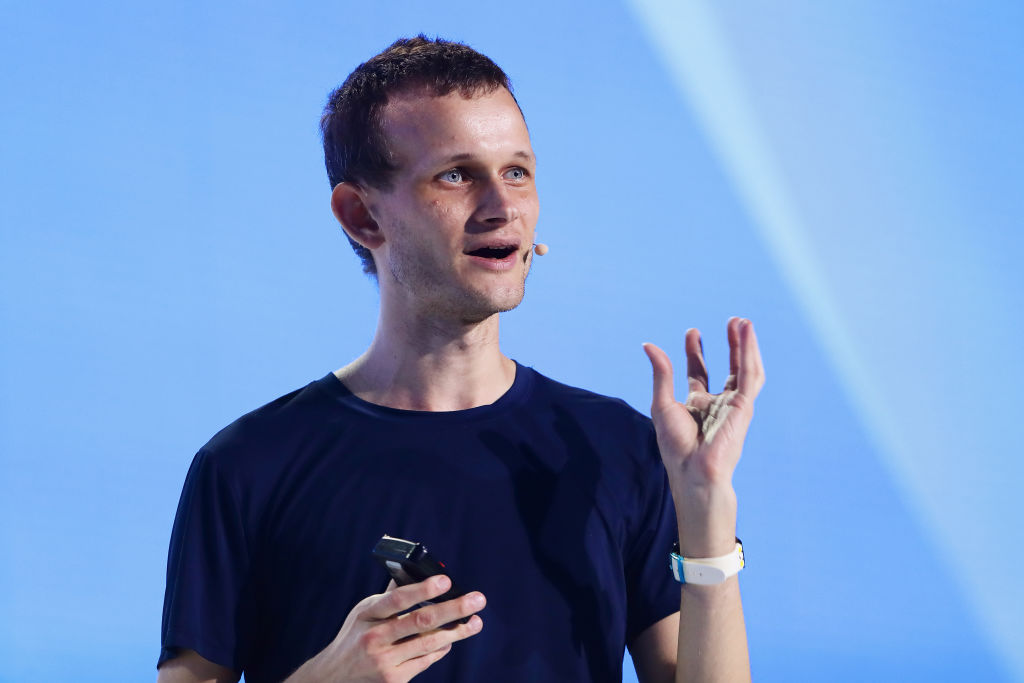
As the war in Ukraine enters its fourth year, there is a striking sound from the crypto world. Ethereum co-founder Vitalik Buterin does not limit himself to technological innovation, but explicitly intervenes in the geopolitical debate.
His message is sharp: in his view, the Russian invasion is nothing less than “criminal aggression,” and true peace requires more than just diplomacy or military pressure. According to Buterin, part of the solution lies in principles that come from the crypto world.
No moral shades of gray
In his recent comments, Buterin explicitly rejects the idea that the war is morally ambiguous. He emphasizes that Ukraine needs continued international support to protect civilians, maintain infrastructure and continue to defend itself militarily.
At the same time, he strongly criticizes narratives in the West that relativize Russia’s responsibility. As long as the political leadership in Moscow feels no real incentive to pursue peace, continued economic and military pressure will remain necessary to force negotiations, he believes.
From blockchain to state governance
It is striking that Buterin extends his analysis to a much more fundamental question: how do you prevent future aggression? He draws on ideas from blockchain governance, such as:
- decentralized governance
- mortise square
- digital forms of democracy
These mechanisms are designed to disperse power, limit authoritarian concentration, and give citizens proportionate influence over decision-making. In theory, such a system would make a state strong when it comes to prosperity and public services, but weak when leaders try to organize aggression or oppression.
According to Buterin, decentralization is not an abstract technological concept, but a possible compass for political reform.
European security is linked to Russian change
The core of his argument goes beyond ending the current war. According to him, sustainable security for Europe and Ukraine requires a fundamental transformation of Russia itself, towards a system that puts economic development and civilian welfare above military expansion.
He sees that process as a two-step rocket:
- Maximum support to Ukraine to increase military pressure on Russia and enforce a ceasefire.
- After the current regime: create space for moderate forces within Russia that are open to reform, peace and more decentralized forms of government.
One radical but untested vision
Applying crypto-like governance to nation states remains largely theoretical. So far, these models mainly function within digital networks, not within complex geopolitical reality.
Yet Buterin’s vision shows a broader development: technology and politics are becoming increasingly intertwined. While conflict is traditionally approached through diplomacy, economics or military force, he suggests that system innovation may also be necessary to achieve lasting peace.
Source: https://newsbit.nl/vitalik-buterin-schetst-radicale-toekomst-na-oorlog-kan-crypto-bestuur-rusland-hervormen/