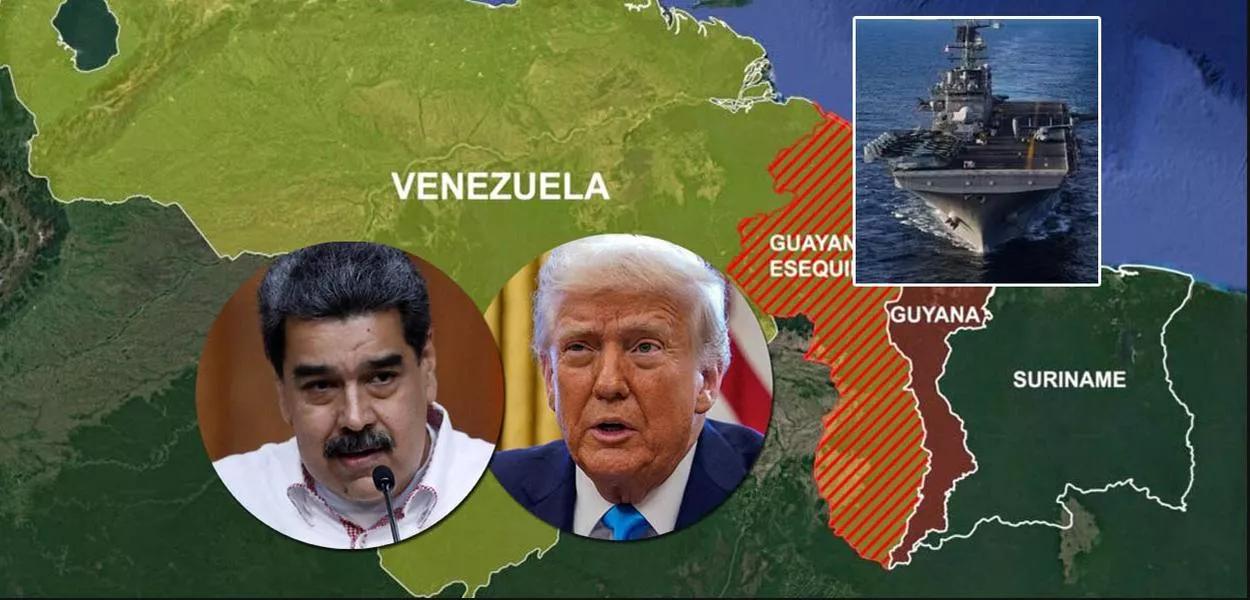
Military offensive two USA against a Venezuela it reignited the international debate on the strategic interests involving the South American country, especially in the energy field. Although the North American government justified the action with the argument of combating so-called “narco-terrorism”, data on Venezuelan natural resources place oil at the center of the global geopolitical discussion.
Information consolidated by Brazilian Institute of Oil, Gas and Biofuels (IBP) indicate that Venezuela held, in 2021, the largest proven oil reserves on the planet. According to the survey, the country had around 303.8 billion barrelsa number that places it alone at the top of the world ranking and reinforces its strategic weight in the international energy market.
Venezuela leads global reserves ranking
According to international data compiled by IBP, Venezuelan reserves represent approximately 18% of all proven oil in the worldestimated at around 1.7 trillion barrels. The volume puts the country well ahead of other major traditional energy powers, such as Saudi Arabia, Canada, Iran e Iraq.
Despite its economic, political and military influence on the global stage, the United States itself appears only in ninth position of the ranking of proven reserves, with a volume significantly lower than that of Venezuela. This discrepancy between geopolitical power and the availability of energy resources is often cited by analysts as a relevant factor in understanding North American foreign policy.
Oil and international geopolitics
The concentration of the world’s largest oil reserves in Venezuelan territory gives the country a strategic role that goes beyond South America. Control, influence or even instability in regions with large volumes of hydrocarbons have a direct impact on international prices, global supply chains and investment decisions in the energy sector.
Historically, external interventions led by Washington have occurred in countries with large reserves of natural resources, especially oil. Cases in the Middle East and North Africa are often cited by international relations scholars as examples of how energy interests intertwine with discourses of security, regional stability or combating transnational threats.
In the current context, Venezuela brings together two central elements of this debate: vast oil reserves and a government in open political confrontation with the United States and its allies. Venezuela’s leadership in the global ranking reinforces the perception that the country occupies a sensitive position in the international dispute for energy, at a time of energy transition and uncertainty in the global fossil fuel market.
Economic and strategic impacts
The weight of Venezuela’s reserves means that any change in the country’s political or institutional status can have effects beyond its borders. Instability affects not only local production, but also expectations of future supply, commercial agreements and strategies of large companies in the energy sector.
Experts point out that the influence on these reserves can have repercussions on decisions related to sanctions, foreign investments, strategic alliances and pricing policies. In a global market that is still heavily dependent on oil, even with the advancement of renewable energies, Venezuela remains a key actor in the international energy balance.
Sovereignty and international law in focus
In addition to the economic implications, the military offensive raises questions about respect for the norms of international law and the sovereignty of States. The combination of energy wealth and external pressure reignites historical debates about self-determination, foreign interventions and the role of great powers in the global order.
By concentrating the largest oil reserves in the world and, at the same time, becoming the target of foreign military action, Venezuela comes to symbolize, for many analysts, the recurring conflict between national sovereignty and global strategic interests. The episode increases international attention on the region and reinforces the centrality of oil as a structuring element of contemporary geopolitics.
While governments and multilateral organizations evaluate diplomatic and security developments, data on Venezuelan reserves remains an unavoidable factor in understanding why the country remains at the center of international strategic disputes.
Source: https://www.ocafezinho.com/2026/01/03/venezuela-concentra-maiores-reservas-de-petroleo-do-mundo-e-atrai-poder-sangrento-dos-eua/