Maduro’s allies, Russia and China speak of a “cowboy attitude” and “intimidation”. Regime in Caracas finds itself under increasing pressure with the interception of oil tankers, while neighbors in the Americas are divided.
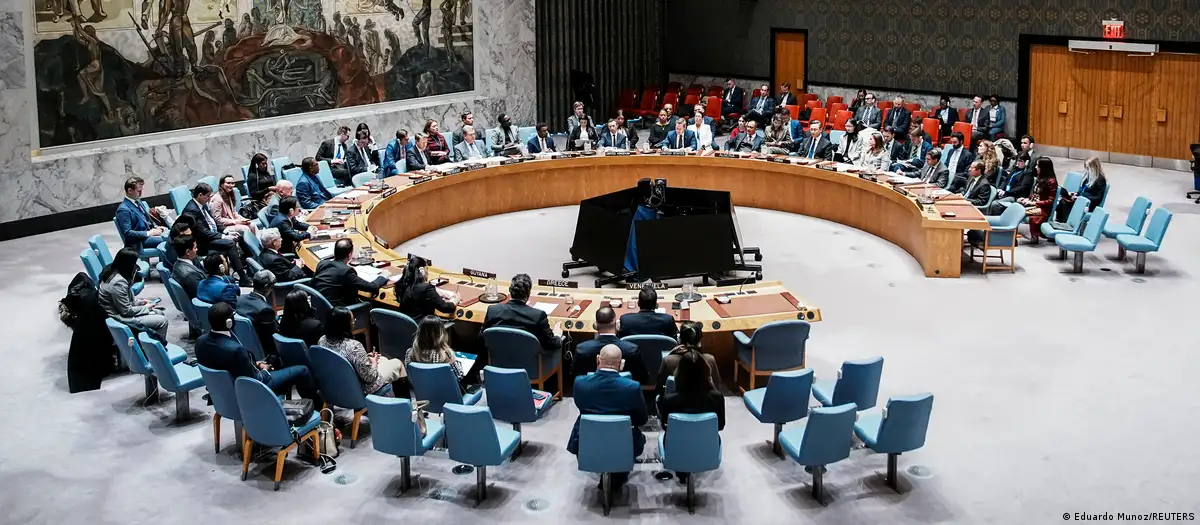
Venezuela accused the United States of carrying out “extortion” and seeking to establish a “colony” in the South American country by blocking oil tankers off its coast, during a meeting at the United Nations (UN) Security Council. Requested by the Venezuelan government, the heated discussion on Tuesday (23/12) also saw demonstrations of support by allies of the Nicolás Maduro regime, under increasing pressure from the White House.
“This is the largest known extortion in our history, a gigantic crime of aggression in development outside of all national parameters, legal logic and historical precedent,” he claimed during the meeting requested by Venezuela.
Venezuela’s permanent representative to the UN, Samuel Moncada, classified the blockade of oil tankers as “a crime of aggression with which the president intends to turn back the clock of history by 200 years to impose a colony on Venezuela”.
In turn, the US ambassador to the UN, Mike Waltz, said that his country will continue to impose sanctions on Venezuela “to the maximum” in order to “deprive” Maduro of “financing” the Cartel de los Soles. The United States accuses the president of leading the criminal organization, which Venezuela denies.
According to Waltz, the sanctioned oil tankers are “the main economic lifeline of Maduro and his illegitimate regime.” The US intercepted two oil tankers in the Caribbean in recent weeks and said it had begun an “active pursuit” to seize a third tanker.
“Cowboy attitude”
While South American neighbors are divided in their response to the escalation of tension between Caracas and Washington, Maduro’s allies came out in support of Venezuela at the UN meeting.
Russia called the American blockade of oil tankers “illegal” and said “this ongoing intervention could become a model for future acts of force against Latin American countries.”
Before the naval blockade announced by President Donald Trump last week, the US was already investing in an offensive with military mobilization in the Caribbean Sea.
“Washington’s responsibility is also evident in the catastrophic consequences of this ‘cowboy’ attitude,” said Russian diplomat at the UN, Vasily Nebenzia.
For its part, China expressed opposition to “acts of unilateralism and intimidation”. “China (…) supports all countries in defending their sovereignty and national dignity”, declared the Chinese representative to the UN, Sun Lei.
In reaction, Waltz said that Washington will do everything in its power to “protect our hemisphere, our borders and the American people.”
Division in the Americas
Among the countries of the Americas, Nicaragua denounced acts of “modern piracy” by the USA. The term has been used repeatedly by the Venezuelan regime in reaction to the confiscation of ships carrying Venezuelan oil.
Over the weekend, the Mercosur summit in Foz do Iguaçu ended with a division between South American neighbors. Brazil and Uruguay were left out of a statement on the margins of the meeting asking Venezuela to reestablish the democratic order through peaceful means and guarantee unrestricted respect for human rights.
Lula stated that an American intervention in Venezuela would be a humanitarian catastrophe. The president of Argentina, Javier Milei, asked partners to support the military pressure that the United States exerts against Venezuela and to condemn Maduro’s government.
After the meeting at the UN, Maduro and members of his government stated that the Venezuelan government received “overwhelming support” from the Security Council, in favor of “the right to free navigability and free trade.
Pressure for support
Also on Tuesday, Venezuela’s Parliament approved a law to punish anyone who supports the seizure of oil tankers subject to US sanctions with up to 20 years in prison.
The text targets “any person who promotes, instigates, requests, invokes, favors, facilitates, supports, finances or participates in actions of piracy, blocking or other international illicit acts against legal entities that carry out commercial operations with the Republic and its entities by States, powers, corporations or foreign people.”
Fines are also established in bolivars “equivalent to between 100 thousand and 1 million times the highest exchange rate”. Anyone who is fined will also be subject to confiscation.
For its part, the US government recently increased the reward for any information leading to Maduro’s arrest to $50 million.
Originally published by DW on 12/24/2025
Source: https://www.ocafezinho.com/2025/12/24/venezuela-acusa-eua-de-extorsao-na-onu-por-bloqueio-naval/