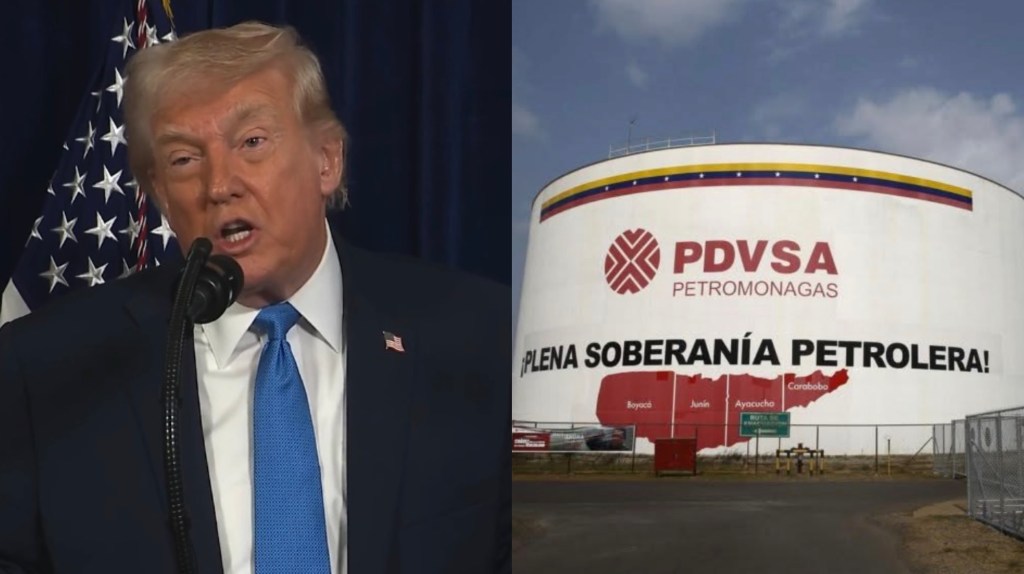
The President of the United States, Donald Trumpand his advisors are developing a long-term plan to exercise control over the Venezuelan state oil company Petróleos de Venezuela, SA (PDVSA) and most of the country’s oil production, the newspaper reported The Wall Street Journal this Wednesday (7).
Sources consulted by WSJ stated that the proposals under analysis include the acquisition and commercialization of most of the oil produced by PDVSAwith the aim of giving the United States direct influence over one of the largest oil stocks in the Western Hemisphere. This strategy, according to advisers, would be in line with Trump’s stated objective of reduce global oil prices to around $50 per barrel.
The plan, which is still under internal development and depends on executive decisions and negotiations with the Venezuelan government, foresees Washington using purchase agreements and potentially partnerships with American oil companies to organize the commercialization of Venezuelan barrels, including possible joint ventures with companies such as Chevron.
Economic and geopolitical objectives
According to sources, Trump believes that such control could help strengthen the US position in the global energy marketrestrict the influence of other countries — especially China, which has been the main buyer of Venezuelan oil in recent years — and expand the supply of crude to North American refineries.
The strategy includes plans for profits from oil sales to be managed by US entities or by a “trustee” supervised by the US government, with part of these resources being used to finance the purchase of American goods and services and, according to officials linked to the proposal, support the Venezuelan economy under new administration.
Post-invasion context and negotiation with PDVSA
The plan gained momentum after US military action in Caracas on January 3, which resulted in the capture of the Venezuelan president Nicolas Maduro and his wife, Cilia Floresand his transfer to New York on narcoterrorism charges. The vice president Delcy Rodriguez was sworn in as interim president of Venezuela and, since then, Venezuelan officials have said they are in negotiations with Washington about oil sales and possible trade agreements.
On Wednesday, Venezuelan state-owned PDVSA confirmed that it is in discussion with US authorities to sell crude oil on commercial terms, highlighting that these transactions would be based on criteria of legality, transparency and mutual benefit.
Reactions in the market and geopolitics
The possibility of North American control over the production and sale of Venezuelan oil has already had an impact on the markets: international oil prices fluctuated in the week after preliminary announcements about the plan, reflecting expectations of an increase in global supply.
Energy experts comment that the resumption of large-scale production in Venezuela would require significant investments and timeeven with international partnerships, given the deteriorating state of the infrastructure of the Venezuelan oil industry.
Legal and diplomatic challenges
Analysts emphasize that the proposal raises doubts about its legal basis and respect for the sovereignty of a foreign state, especially considering that Venezuela is a sovereign country with constitutional control over its natural resources. Furthermore, the targeting of revenues and administration of PDVSA by external authorities raise complex issues in international and commercial law.
Venezuelan government representatives have not yet released a broad official response to the plan detailed by the WSJand the White House has not formally commented on the reports to date.
Source: https://www.ocafezinho.com/2026/01/08/midia-dos-eua-revela-que-trump-quer-assumir-o-controle-da-pdvsa/