The UN and governments call for respect for international law, which defines when one country can attack another. Trump did not consult the UN Security Council or the US Congress.
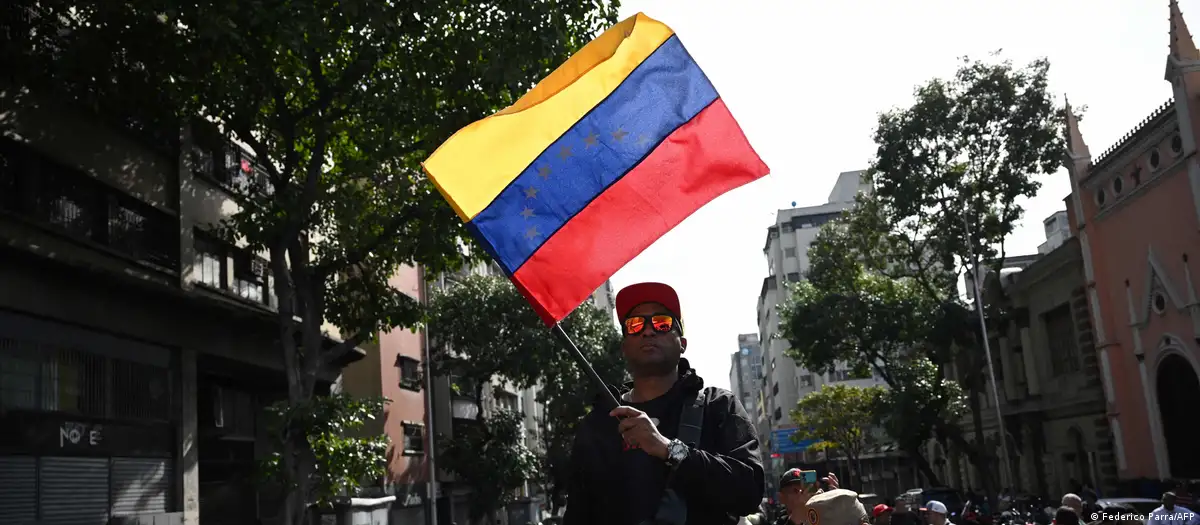
Several governments around the world and the United Nations (UN) classified the attack this Saturday (03/01) by the United States against Venezuela as illegal. Several political leaders call for respect for international law, which is facing a time of crisis at a global level.
Commenting on the military action, which included the capture of President Nicolás Maduro and the Venezuelan first lady, the secretary-general of the United Nations (UN), Antonio Guterres, said he was “deeply concerned about the fact that the rules of international law have not been respected.”
“The Secretary-General continues to emphasize the importance of full respect – by all – of international law, including the Charter of the United Nations,” said a spokesperson, urging “all actors in Venezuela to engage in inclusive dialogue, with full respect for human rights and the rule of law.”
Lula: “flagrant violation of international law”
President Luiz Inácio Lula da Silva said, in turn, that “attacking countries, in flagrant violation of international law, is the first step towards a world of violence, chaos and instability, where the law of the strongest prevails over multilateralism.”
China said that “hegemonic behavior by the US seriously violates international law, infringes on Venezuela’s sovereignty and threatens peace and security in Latin America and the Caribbean.”
In a similar tone, France pointed out that, although Maduro had “severely violated” the rights of Venezuelans, the military operation that led to his capture “contradicts the principle of non-use of force, which underpins international law.”
According to him, “the growing violations” of this principle by permanent members of the UN Security Council, which include the United States, “will have serious consequences for global security, sparing no one”.
The European Union (EU) called for restraint, stating that “in all circumstances, the principles of international law and the Charter of the United Nations must be respected.”
What international law says
International law sets the rules on when a country can attack another or not. As a rule, wars are prohibited.
The Charter of the United Nations, for example, urges its members to resolve their disputes by means that do not endanger peace, security or justice. Countries must refrain from resorting to the threat or use of force against the territorial integrity or political independence of another State.
Likewise, UN General Assembly resolutions prohibit the use of force, aggression, military occupation or war to resolve differences between nations.
Exceptions, however, occur when there is support from the Security Council or a country defends itself against a previous attack.
Under Chapter VII of the UN Charter, the council is responsible for determining the existence of any threat to peace, breach of the peace or act of aggression and making recommendations or deciding what measures should be taken to maintain or restore international peace and security.
The preference is to employ measures without the use of armed force, such as the interruption of economic and diplomatic relations or the suspension of means of communication or transport.
If these measures are inadequate, the Security Council may choose to use sea or land air forces, including blockades and special operations.
In particular, Article 51 states that States have “an inherent right to individual or collective self-defence if an armed attack occurs (…) until the Security Council has taken the necessary measures to maintain international peace and security.”
“Crisis without valid reasons”, says NYT
In an editorial, The New York Times criticized President Donald Trump, stating that he “has yet to offer a coherent explanation for his actions in Venezuela. He is leading our country into an international crisis for no valid reason.”
The newspaper also highlighted that the military intervention also violates American legislation, which requires the head of the White House to seek approval from Congress for any act of war.
“Presidents often overstep the bounds of that law. But even Bush requested and received congressional support for his invasion of Iraq, and presidents since Bush have justified the use of drone strikes against terrorist groups and their supporters with a 2001 law that authorized the action after the 9/11 attacks,” the paper noted. “Trump does not have even a semblance of legal authority for his attacks on Venezuela.”
At a press conference this Saturday, Trump said he did not notify Congress to avoid a leak of information. “Congress has a tendency to leak (information), and that would not be good,” he said.
War against drug trafficking
The Trump administration justifies its actions in the name of a supposed war on drug trafficking, in what experts interpret as an attempt to legally legitimize its military offensive.
The American president has repeatedly accused Maduro of heading the Cartel de los Soles by increasing pressure on his regime. For experts, however, the argument is fragile, since Venezuela has little participation in international drug trafficking.
For Marc Welle, an analyst at the UK think tank Chatham House, Trump’s operation in Venezuela does not meet any of the requirements required by international law. “The U.S. interest in cracking down on drug trafficking or allegations that the Maduro government was, in essence, a criminal organization provide no legal justification.”
This Saturday, the Attorney General of the United States, Pam Bondi, stated that Maduro will be tried by American justice in a New York court.
The Venezuelan president was “charged with conspiracy to commit narcoterrorism, conspiracy to import cocaine, possession of machine guns and explosive devices, and conspiracy to possess machine guns and explosive devices against the United States,” according to her.
Originally published by DW on 01/03/2026
Source: https://www.ocafezinho.com/2026/01/03/ataque-dos-eua-a-venezuela-e-ilegal-dizem-lideres-mundiais/