Brazilian advisor claims that Trump’s closure of Venezuelan airspace amounts to an “act of war” that could escalate. Maduro claims that the real reason for Trump’s obsession with Venezuela is oil – is he right?
A US invasion or attack on Venezuela could plunge South America into a conflict similar to that in Vietnam, warned the Brazilian president’s top foreign policy advisor, Luiz Inácio Lula da Silva.
In an interview with The Guardian, Celso Amorim classified Donald Trump’s recent decision to order the closure of Venezuelan airspace as “an act of war” and expressed fears that the crisis could intensify in the coming weeks.
“The last thing we want is for South America to become a war zone – and a war zone that would inevitably not just be a war between the US and Venezuela. It would end up having global involvement and that would be truly regrettable,” said Amorim, a veteran diplomat and former minister in the first two of Lula’s three terms.
“If there was an invasion, a real invasion… I think we would undoubtedly see something similar to Vietnam – on what scale it is impossible to say,” added Amorim, who believed that even some enemies of Venezuela’s authoritarian leader Nicolás Maduro would be inclined to join the resistance against such foreign intervention.
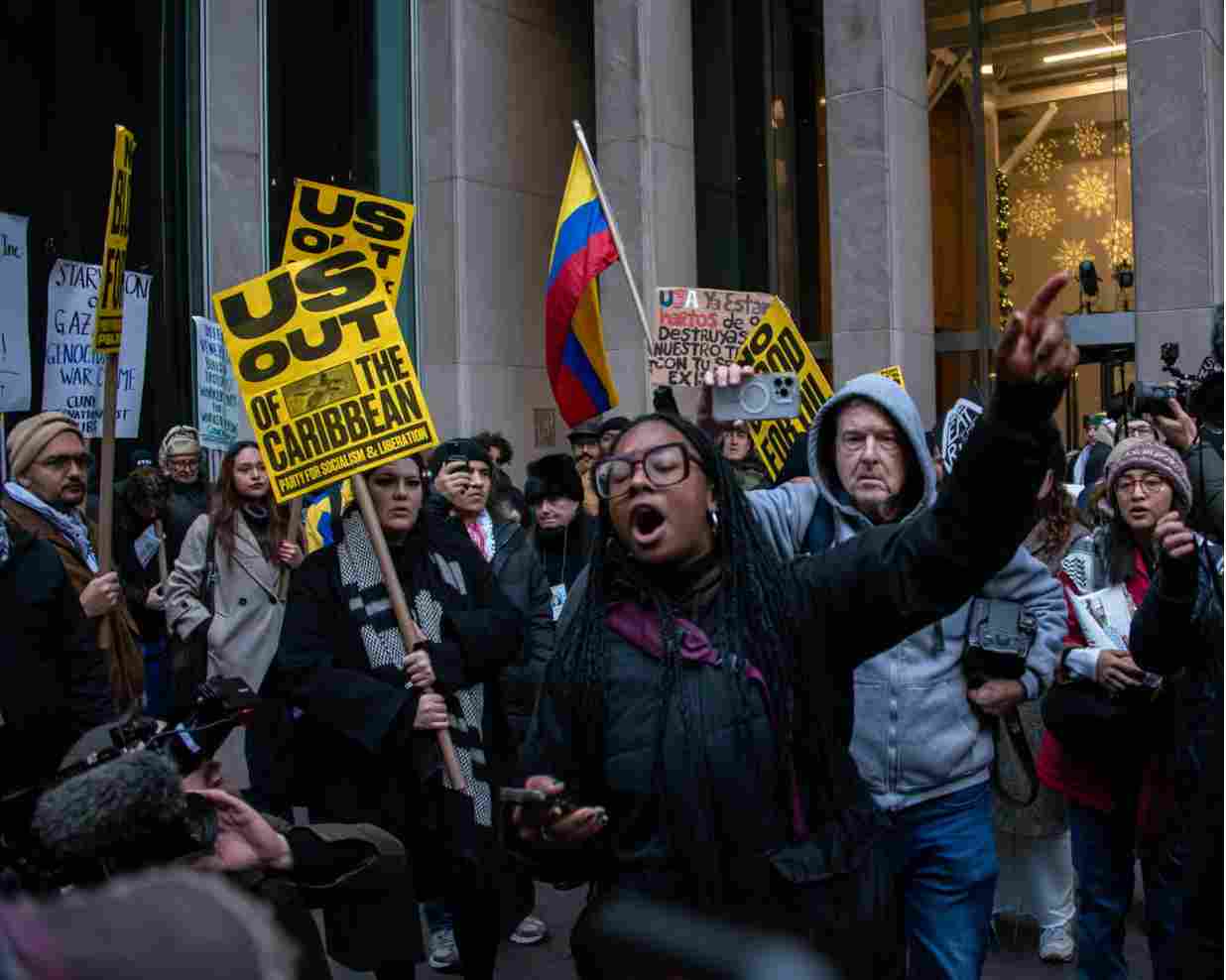
“I know South America… our entire continent exists thanks to resistance against foreign invaders,” said Amorim, who predicted that any US attack would reignite anti-American sentiment in Latin America, similar to that generated by US interference during the Cold War.
The Brazilian diplomat made these statements amid the escalation of Trump’s pressure campaign against the Maduro regime, which has lasted four months.
Since August, the US has placed a $50 million bounty on Maduro’s head, launched the largest naval deployment into the Caribbean Sea since the 1962 Cuban missile crisis and carried out a series of deadly airstrikes against suspected drug trafficking boats that killed more than 80 people.
Most international airlines suspended flights to Venezuela after Trump declared the country’s airspace “totally closed” late last month – a move that Amorim called “totally illegal.”
According to some reports, Trump gave Maduro a week’s deadline to resign during a phone call on November 21 – a deadline that has now expired.
Many observers suspect that Trump’s next move could be to order attacks inside Venezuela, in a move widely seen as an attempt to overthrow Maduro by provoking a military rebellion against him. Asked earlier this month whether the Venezuelan dictator had offered to relinquish power, Trump responded: “He will.”
Celso Amorim: ‘The last thing we want is for South America to become a war zone.’ | Felipe Fittipaldi/The Guardian
However, Maduro, who was democratically elected in 2013 but is widely believed to have rigged last year’s election, has shown no sign of relenting.
Amorim – whose government has not accepted Maduro’s claim to have won the 2024 elections despite long-standing ties to his political movement – said Brazil opposes forced regime change, although he acknowledged there were “problems” with the vote count.
“If every questionable election triggered an invasion, the world would be on fire,” said the diplomat, who emphasized that he was speaking personally and not on behalf of Lula.
“If Maduro comes to the conclusion that leaving power is the best thing for him and for Venezuela, it will be his conclusion… Brazil will never impose this; it will never say that this is a requirement… We will not pressure Maduro to resign or abdicate”, added Amorim, who admitted that relations between Venezuela and Brazil are no longer as “warm or intense” as before.
Speculation is growing about Maduro’s possible fate if he renounces power and goes into exile. Possible refuges include Cuba, Türkiye, Qatar and Russia.
Asked if Brazil could be another option, Amorim said he preferred not to speculate “so as not to appear to be encouraging” the idea. “However, asylum is a Latin American institution [para] people from both the right and the left,” he added, recalling how Ecuadorian Lucio Gutiérrez received refuge in Brazil after being deposed from the presidency in 2005. “We even sent a plane to pick him up,” said Amorim, who was Minister of Foreign Affairs at the time.
The Paraguayan dictator, General Alfredo Stroessner, was also exiled to Brazil after being deposed in 1989 and died in Brasília, the country’s capital, in 2006.
Fears that Venezuela could face a civil war or guerrilla conflict if Maduro falls are not universally accepted.
In an article published in the New York Post last week, opposition leader María Corina Machado – whose movement is widely considered to have defeated Maduro in last year’s elections – rejected the idea that Venezuela would become “another Iraq or Libya”.
“There are those who say that decisive action could generate instability or trigger migration. But instability has already happened and migration has already occurred,” she wrote, referring to the 8 million Venezuelans who fled amid the economic and democratic collapse of the Maduro era.
Lula’s foreign policy advisor hoped that Trump would be inclined to reach a “negotiated solution” with Maduro and that a peaceful transition could still be achieved despite the increasingly belligerent climate.
Any orderly political transition would likely take time, Amorim suggested, recalling the “slow, gradual and sure” opening of Brazil’s 21-year military dictatorship, which began in 1974 and ended with the return of democracy in 1985.
Amorim launched the idea of a recall referendum – similar to the one held in Venezuela in 2004 – as a way of alleviating the political crisis. “[O então presidente Hugo] Chávez accepted the idea, with some reluctance, but accepted it. There was a referendum and he won,” said Amorim, adding: “I don’t know who would win now.”
Voting data released by the apparent election winner and verified by independent experts showed that Maduro suffered a resounding defeat to his opponent, Edmundo González. Maduro has refused to publish the full vote count to support his claim to have won a third six-year term.
Originally published by The Guardian on 12/08/2025
By Tom Phillips – Latin America Correspondent
Source: https://www.ocafezinho.com/2025/12/08/ataque-dos-eua-a-venezuela-pode-desencadear-conflito-regional-nos-moldes-do-vietna/