Without several strong allies, the American president did not receive support from more than half of the guests. Inaugural meeting expected to raise funds for Gaza.
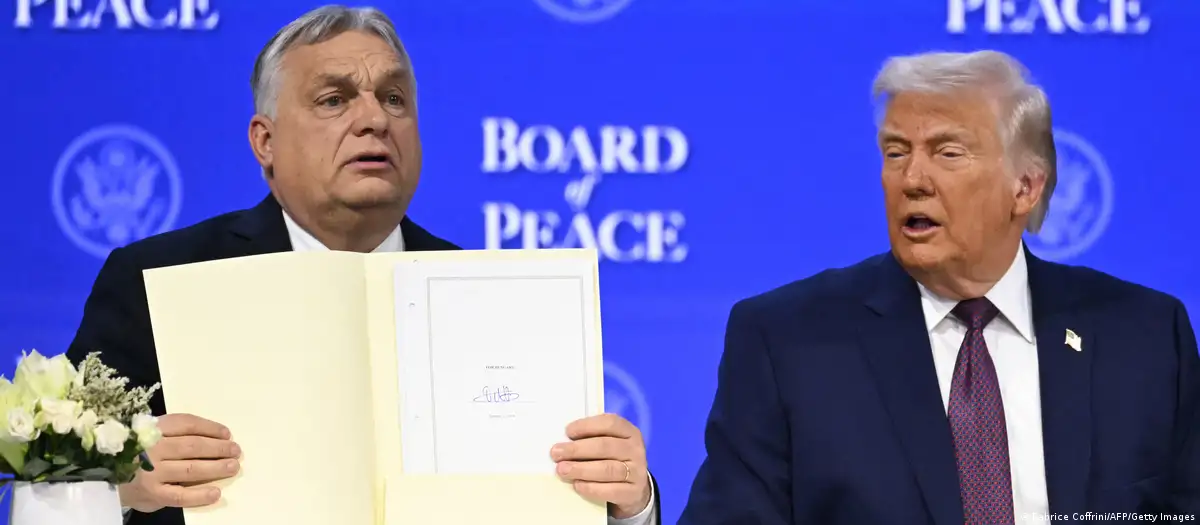
The so-called “Peace Council” of President Donald Trump, of the United States, meets for the first time this Thursday (19/02). The agenda should focus on the future of the Gaza Strip beyond the fragile ceasefire between Israel and Hamas in force.
Without several strong allies, the American’s initiative has the support of 27 countries, among at least 60 guests. Among those who joined the Peace Council are mainly allies in the Middle East, governments closely aligned with Trumpism or widely accused of oppression and authoritarianism.
Among them are Israel and Saudi Arabia, as well as Egypt and Qatar, who helped mediate negotiations for a ceasefire in the Palestinian enclave. Other countries in the region include Bahrain, Jordan, Kuwait, Morocco, Türkiye and the United Arab Emirates.
“We have the greatest leaders in the world joining the Peace Council,” Trump told reporters earlier this week, public broadcaster NPR reported. “I think it may be the most important council ever assembled in any field.”
Hungary, Albania, Kosovo, Belarus and Bulgaria are the only European participants. When meeting this week with US Secretary of State Marco Rubio, Hungarian Prime Minister Viktor Orbán reinforced his support for the Peace Council.
The head of the Hungarian government, who is running for another term for his ultra-conservative agenda, also highlighted what he sees as Trump’s key role in negotiating the war in Ukraine and world peace.
In the Americas, three countries governed by conservative presidents accepted the invitation: Argentina under Javier Milei, El Salvador under Nayib Bukele and Paraguay under Santiago Peña.
The list of countries also included Armenia, Azerbaijan, Cambodia, Indonesia, Kazakhstan, Pakistan, Uzbekistan and Vietnam.
The other nations rejected the invitation — such as Germany, the United Kingdom and France — or did not give an official response, such as Brazil and Russia. Some, such as Italy and the European Union (EU), will be present this Thursday as observers, without involvement in decision-making. The Palestinians were not invited, and President Luiz Inácio Lula da Silva asked Trump for their participation last month.
Fundraising
According to the head of the White House, who presides over the council’s inaugural meeting, raising funds for the reconstruction of the Gaza Strip is this Thursday’s central objective. Five billion dollars would have already been announced by member countries.
The American government’s initial proposal, from last September, envisaged that the Peace Council would limit itself to dealing with the Palestinian enclave. Later, however, the initiative’s statute would make clear its intention to deal with other conflicts around the world, with Trump as president for life.
According to the document, the body must “promote stability, restore reliable and legitimate governance and ensure lasting peace” in regions “affected or threatened by conflict” around the world.
The council will carry out “peacebuilding functions in accordance with international law”, the statute also says. Trump will have broad executive powers, including the ability to veto decisions and remove members, subject to some restrictions.
Several governments and observers have expressed concern about the risk that the group led by Trump will overlap with the powers of the United Nations (UN). The limitation to the Gaza issue was another request from Lula to Trump.
It remains unclear what legal authority or enforcement instruments, if any, the council will have, or how it will work with the UN and other international organizations.
Broad powers for Trump
The UN Security Council in November approved a US-drafted resolution recognizing the council as a transitional and temporary administration “that will establish the framework and coordinate financing for the reconstruction of Gaza.”
The text limited the scope to Gaza, with a mandate until 2027. The Peace Council is required to report on its progress to the Security Council every six months.
Member states serve three-year terms unless they pay $1 billion each to fund the council’s activities and obtain lifetime membership status. It is solely up to Trump to invite countries to the initiative.
Since his position is for life, the president can only see the end of his term brought forward by voluntary resignation or unanimous dismissal by the member states. Each president must designate a successor, who will immediately take over the role if he leaves office.
The position is, therefore, independent of the term as president of the United States, which according to the American Constitution ends in three years. Until then, he also represents the USA as a Member State.
Colonial structure
Human rights experts said Trump’s appointment to oversee a council that manages the affairs of a foreign territory resembles a colonial structure and criticized the council for not including a Palestinian representative even though its purpose is to oversee the temporary governance of a Palestinian territory.
The council has been criticized for including countries with a history of human rights violations, such as some Middle Eastern powers, as well as Belarus and El Salvador.
There was specific criticism of Israel’s inclusion in a council meant to oversee the temporary governance of Gaza, as the Palestinian territory was devastated by an Israeli military attack that killed tens of thousands of people, caused a famine, internally displaced the enclave’s entire population and led to accusations of war crimes.
Israel classified its actions as self-defense after Hamas-led militants killed 1,200 people and took more than 250 hostages in an attack in 2023.
Originally published by DW on 02/19/2026
Source: https://www.ocafezinho.com/2026/02/19/conselho-de-paz-de-trump-deslancha-com-governos-autoritarios/