Between threats, oil and Greenland, diplomacy becomes a spectacle
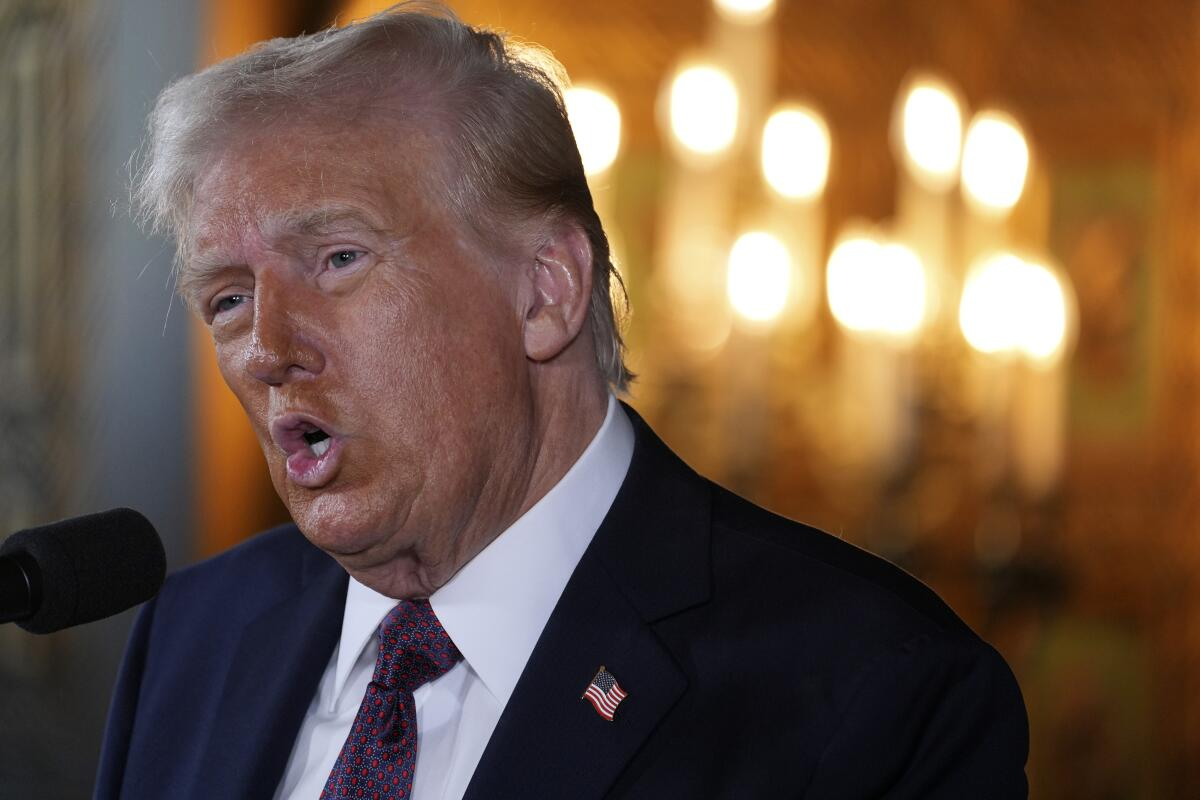
It wasn’t on a podium or in the Oval Office. It was aboard Air Force One, above the clouds, that Donald Trump decided to speak to the world — and speak tough. On the journey between Mar-a-Lago and Washington, the president of the United States transformed the presidential plane into a geopolitical tribune. The main target was Venezuela. But, as usual, it was left to neighbors and even to an icy territory on the other side of the Atlantic.
In a few sentences, Trump made it clear that the logic follows the same: force first, talk later. Or maybe not even after.
After a military operation in Venezuela that left 80 people dead, including civilians and military personnel, Trump decided to send a direct message to the country’s new interim leader, Delcy Rodriguez. Bluntly, he stated: “we are the ones in control”. It went further. He said the United States has full access to Venezuelan oil and threatened a new attack if Caracas did not behave “as requested”.
The tone contrasts, albeit partially, with the stance of Secretary of State Rubio, who had questioned the legitimacy of Rodriguez’s government. Even so, the message was clear: Venezuelan sovereignty continues to be treated as a detail.
On the Caracas side, Delcy Rodriguez tried to lower the temperature. He invited Washington to seek a more conciliatory relationship. Still, when the empire talks about control, the dialogue usually goes silent.
Maduro in court and the appeal of the streets
Meanwhile, far from power and far from the country, Nicolas Maduro is experiencing another dramatic chapter. Deposed and detained in New York, he and his wife appeared in US court to answer drug trafficking charges.
In Caracas, the silence was not absolute. In audio released on the networks, the former president’s son called on the population. He said: “they want to make us look weak, but we won’t be”. The appeal tries to rekindle the popular flame in a country exhausted by sanctions, crises and external interventions.
Still from the plane, Trump expanded the threat map. He spoke about Colombia, which has already reinforced troops on the Venezuelan border, and directly quoted President Gustavo Petro. Mentioned the possibility of military action “Temother of the Venezue”.
Regarding Mexico, the tone was demanding. Trump stated: “we have to do something”criticizing President Claudia Sheinbaum’s refusal to accept US troops to fight drug cartels. Sovereignty, once again, appeared as an obstacle, not a principle.
Cuba also joined the conversation. Trump declared that the country is heading towards a “definitive collapse”now that it no longer receives Venezuelan oil. According to him, no military operation would be necessary. The crisis, in the White House’s view, would resolve itself.
Regarding Iran, the warning was direct. Trump said the US is “monitoring closely” protests against the high cost of living. The threat came packaged as a humanitarian promise: if Tehran represses peaceful demonstrations, the United States “they will come to your rescue”. Recent history shows that this type of aid is often costly.
Greenland: when geopolitics becomes colonial delusion
As if that weren’t enough, Trump spoke about Greenland again. He said, without hesitation: “we need it for national security reasons”. Classified the island as “extremely strategic”alleging the presence of Russian and Chinese ships.
According to him, Denmark would not be able to guarantee the security of the territory. He further stated that the European Union would be aware of the “need for United States control over the island”.
The response was immediate. Danish Prime Minister Mette Frederiksen reacted firmly: “no more threats against a historic ally”. Polls indicate that the majority of Greenlanders want independence from Denmark. But it clearly rejects any idea of annexation to the USA.
The script repeats itself. Trump talks about control, security and national interest. However, the subtext is old: power, resources and influence. The difference is the stage. Now, the world watches in real time, without filters.
The question that remains is not whether these threats will have consequences. That’s how many lives, once again, will pay the price when foreign policy becomes a spectacle and dialogue loses altitude.
Source: https://www.ocafezinho.com/2026/01/09/trump-fala-grosso-no-ar-e-o-mundo-escuta-em-silencio-desconfortavel/