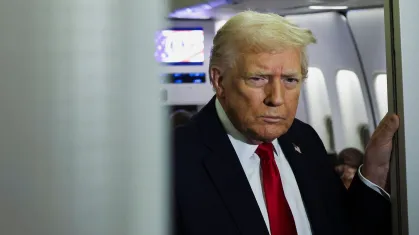
The appointment of a special envoy of the USA to deal with the Greenland has once again placed the largest island in the world at the center of an international diplomatic dispute. The president’s gesture Donald Trump reignited tensions with the Denmarkwith Greenlandic local authorities and the European Unionby reinforcing Washington’s long-standing ambition to expand its influence — and even incorporate — the Arctic territory for strategic and national security reasons.
The announcement was made by Trump in a publication on the Truth Social network. The president announced the choice of governor of Louisiana, Jeff Landryas special envoy to Greenland. In the message, Trump stated that Landry “understands how essential Greenland is to our national security” and that he would act to defend American interests “for the safety, security and survival of our allies and, indeed, the world.”
The declaration was interpreted as yet another concrete movement towards a policy defended by Trump since his first term: that Greenland should become part of the United States. The reaction intensified when Landry, when thanking the appointment, publicly stated that it was “an honor to serve in this voluntary role to make Greenland part of the USA”, a phrase that increased the diplomatic unease.
Copenhagen’s immediate reaction
Denmark reacted quickly. The Minister of Foreign Affairs, Lars Løkke Rasmussenannounced the recall of the American ambassador to Copenhagen, a measure considered a formal reprimand in international relations. In a statement to Danish broadcaster TV 2, Rasmussen said he was “deeply disturbed” by both the appointment and the statements made by the new envoy. “We consider it completely unacceptable,” he said.
The Danish government maintains that Greenland is an integral part of the Kingdom of Denmark and that any discussion about its future must respect the country’s sovereignty and the self-determination of the local population. The ambassador’s summons signals that Copenhagen sees the American gesture as direct interference in internal affairs.
Greenlandic authorities demand respect
Critical reaction also came from Greenland itself. The territory’s prime minister, Jens-Frederik Nielsenstated that the future of the island rests exclusively with the Greenlanders and demanded respect for the local population and territorial integrity. For the autonomous government, the appointment of a foreign envoy with a speech of incorporation ignores decades of institutional advances and the right to self-determination provided for in agreements with Denmark.
In the Danish Parliament, the measure also generated discomfort. Greenlandic deputy Aaja Chemnitz told Reuters that the problem is not in the dialogue with the United States, but in the mission assigned to the envoy. According to her, there is no desire among the local population to become part of the USA.
European Union reinforces sovereignty
The European Union aligned itself with the Danish position and highlighted that the sovereignty of Greenland — and, consequently, Denmark — must be preserved. Brussels views the rhetorical escalation with concern, especially at a time of growing geopolitical dispute in the Arctic, a region that is increasingly strategic due to climate change, the opening of new maritime routes and competition for natural resources.
Strategic importance of Greenland
With around 57 thousand inhabitants and approximately 80% of its surface covered by ice, Greenland has reserves of hydrocarbons and strategic minerals essential for the global energy transition. Although it is geographically located in North America, it maintains deep historical and political ties with Denmark, which it formally joined in 1953. Since 2009, the territory has had autonomous government and the right to declare independence through a referendum.
United States interest in the island is not new. After World War II, then-president Harry Truman tried to buy it, offering US$100 million in gold — a proposal rejected by Copenhagen. Even so, in the 1950s, Washington installed a military base in the region with Danish authorization, consolidating its strategic presence in the Arctic.
Political pressure and internal resistance
During his first term, Trump had already publicly defended the idea of acquiring Greenland, a proposal categorically rejected by local authorities. In his current time at the White House, the president adopted a tougher speech, even threatening Denmark with an increase in trade tariffs if the country tries to prevent the incorporation of the territory. Trump argues that radars and military bases on the island would strengthen American defense, especially to monitor Russian naval movements in the North Atlantic.
Despite pressure, the possibility of Greenland becoming part of the United States is considered remote. In theory, the population could vote for independence and, subsequently, for some type of association with Washington. In practice, internal support is minimal. Recent polls indicate that only 6% of residents would support incorporation into the US.
Experts point out that the controversy highlights the growing geopolitical weight of the Arctic and the clash between global strategic interests and the right to self-determination of the people living in the region. The episode also tends to test diplomatic limits between historical allies in an increasingly competitive international scenario.
Source: https://www.ocafezinho.com/2025/12/22/trump-manda-representante-dos-eua-para-a-groenlandia-aumenta-temor-sobre-anexacao/