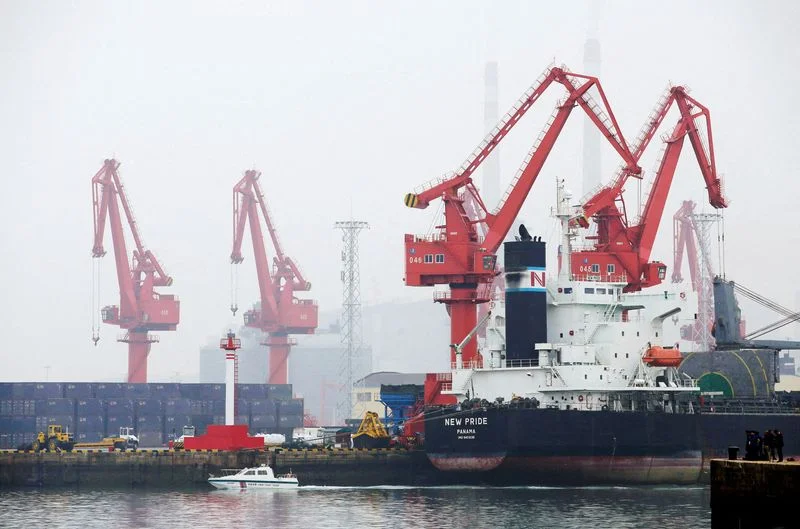
The tightening of sanctions imposed by the United States has caused an unprecedented bottleneck in the maritime transport of Russian oil, generating prolonged delays, route deviations and berthing difficulties. According to data collected by Bloombergthe volume of Russian oil that remains trapped at sea has exceeded 180 million barrelsan increase in 21% in the last three months. The scenario, according to the agency, is a direct result of the impact of US actions on Moscow’s export logistics.
The restrictions began to more clearly affect vessels loaded with oil intended mainly for Asiaespecially to China and India, which have become the main markets for Russian oil since the start of the war in Ukraine.
Longer voyages and idle ships: routes to the Pacific become congested
One of the most critical cases occurs on the oil routes EXPOSUREembarked at the port of Kozminoin the Pacific. The average duration of voyages for ships loaded in November exceeded 12 diaswell above the average slightly above eight days registered in August.
This increase in travel time has led cargo ships to remain at sea for long periods, some waiting weeks to unload at Chinese ports. Bloomberg mentions the case of a ship with ESPO that has remained idle for more than 20 dias.
At least two ships carrying oil Urals chose to bypass the Cape of Good Hopeavoiding the Red Seaa region affected by tensions and risks of attack. Others diverted from ports on India’s west coast, further lengthening the journey and increasing logistical costs.
Shipments rise after six weeks of decline, but prices continue to decline
The increase in cargo at sea coincides with the resumption of Russian maritime flows. In the four weeks ending November 30, Russia embarked 3.46 million barrels per daynearly 210 mil barris more than in the previous period — the first increase in six weeks.
Despite this, international oil prices have been recording none remains consecutivepushing Russian export values to their lowest level since January 2023.
The US sanctions announced in October directly targeted large producers such as Rosneft e I locked itincreasing the logistical obstacles faced by the sector. At the same time, ships linked to Russia suffered attacks in Black Seaattributed to Ukraine, including the one that hit one of the buoys at the Ukraine export terminal CPCnear Novorossiysk. So far, the attacks have not disrupted the region’s flow.
In the week ending November 30, total shipments rose to 3.94 million barrels per daythe highest level in almost three months. The number includes Kazakh oil shipments KEBCOwhich is not subject to Western sanctions.
In the Pacific, Kozmino again accelerated operations. The terminal Sakhalin 1in De Kastri, maintained a reduced pace. The ports of Murmanskdo Baltic and the Black Sea recorded a recovery in volumes.
Despite the increase in flow, prices continue to fall. According to Argus Mediathe setbacks vary between US$ 1,90 e US$ 3,60 per barrel, depending on the region of origin. In India, values fell to US$ 58,66 per barrel — the lowest level since March 2023.
Ships without declared destination break record and exceed volume sent directly to China and India
Another sign of the pressure of sanctions is the significant increase in ships that fail to inform their final destination. In the 28-day period up to November 30, shipments to an undeclared destination reached 1.47 million barrels per daysurpassing, for the first time, the volume explicitly directed to China, India or Türkiye.
Of this total, 1.42 million barrels departed from Russian ports towards Suez Canal or sailed across the Pacific without a registered delivery point — a movement associated with evasion practices and the fear of secondary penalties imposed by the US.
Historically, these cargoes end up disembarking in Indian or Chinese ports, but the advance of sanctions could change this dynamic. According to analysts, the number of oil tankers that turn off tracking systemsuse spoofing or carry out clandestine cargo transfers (ship-to-ship, STS) to hide the origin of the oil.
Türkiye maintains stable flow; Syria remains out of official records
The flows to Türkiye increased slightly, reaching around 170 thousand barrels per day. Shipments to the Syria remained officially zero. According to recent patterns, ships supposedly destined for the Syrian port of Traders They tend to “disappear” from tracking systems south of Crete, only reappearing in the Eastern Mediterranean, which makes accurate accounting of deliveries difficult.
Data excludes KEBCO oil, differentiated after the start of the war
All figures shown exclude loads from Kazakh oil KEBCOrenamed after the start of the war in Ukraine to officially separate barrels coming from Kazakhstan — not covered by sanctions — from Russian exports traditionally subject to restrictions.
Source: https://www.ocafezinho.com/2025/12/04/sancoes-de-trump-travam-navios-russos-e-deixam-mais-de-180-milhoes-de-barris-de-petroleo-parados-no-mar/