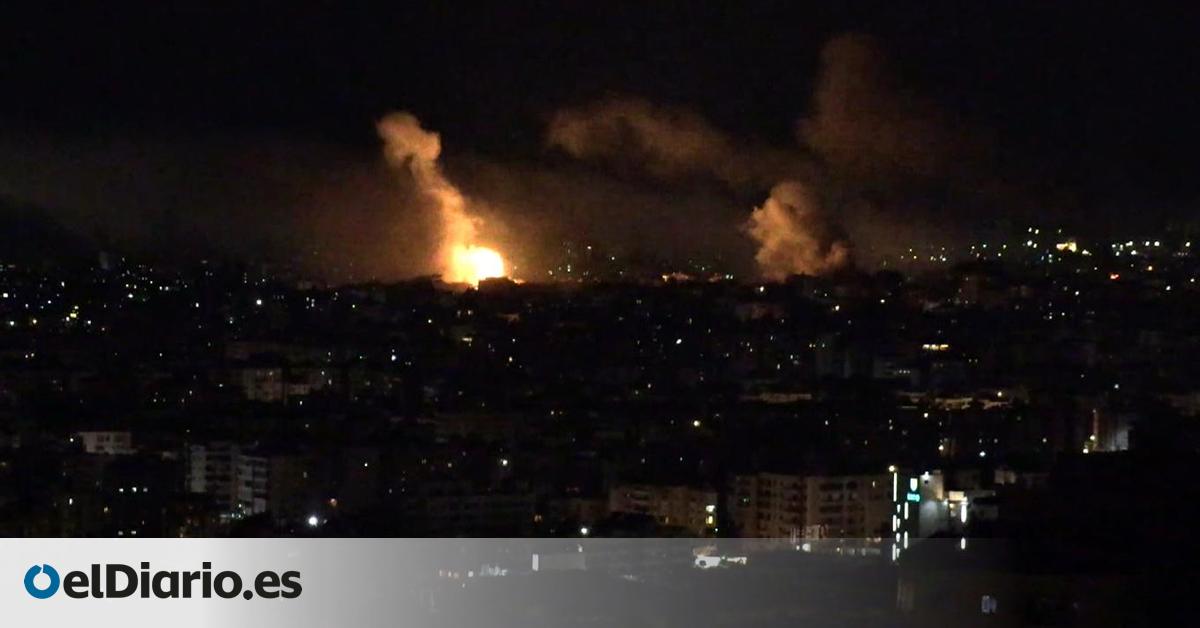
The war in the Middle East spreads and worsens. The US and Israel bombed targets across Iran on Sunday, bombing its ballistic missile facilities and destroying warships as part of the intensifying military campaign following the assassination of Supreme Leader Ayatollah Ali Khamenei. According to Iranian leaders, more than 200 people have been killed since the attacks began, The Associated Press reports. Israel also launched attacks on Beirut, after Hezbollah fired missiles across the Lebanon-Israel border on Monday morning.
As the bombings have continued, the war has spread beyond the United States, Israel and Iran. Iran-backed militant groups in Iraq and Lebanon have claimed responsibility for attacks against Israel. Gulf states warned they could retaliate against Iran following attacks that hit key targets and killed at least five civilians.
After the United Kingdom announced that it would allow the United States to use its bases, Cyprus reported that a drone attack had targeted a British base on the island.
Iran vowed to respond and launched missiles at Israel and Arab states in a counteroffensive that killed three U.S. service members, the first known U.S. casualties of the war.
Israeli rescue services said the strikes hit several locations, including Jerusalem and a synagogue in Beit Shemesh, where nine people were killed and 28 wounded, bringing the total death toll in the country to 11.
The attacks against Iran redoubled: the US and Israel targeted warships and ballistic missile bases.
The three deceased Americans were Army soldiers deployed in Kuwait as part of a supply and logistics unit, AP reports.
Israel announced several waves of fighter jet strikes against Tehran, including on buildings belonging to the Iranian air force and its internal security force.
The US military claimed that B-2 stealth bombers attacked Iran’s ballistic missile facilities with 2,000-pound bombs. At the same time, Trump declared on social media that nine Iranian warships had been sunk and that the Iranian navy headquarters had been “virtually destroyed.”
In a sign that the conflict is spreading to other nations, Britain, France and Germany said Sunday they were willing to work with the United States to help stop Iran’s attacks, and a group of Gulf Arab countries said they reserved the right to respond to Iranian attacks.
Trump, who a day earlier had encouraged Iranians to “take control” of their government, signaled on Sunday that he was open to dialogue with Iran’s new leaders. “They want to talk and I have agreed to talk, so I will talk to them,” he told The Atlantic.
The war spreads
In the Gulf, Iran’s responses have brought the conflict to cities that have long been touted as safe havens in the region: three deaths have been recorded in the United Arab Emirates and one each in Kuwait and Bahrain.
In the United Arab Emirates, authorities claimed that most of the Iranian missiles and drones were intercepted. However, some managed to break through the defense or fell as debris, causing deaths and significant damage. Bahrain and Kuwait claimed that Iranian strikes in both countries hit civilian targets outside U.S. bases, where Iran had vowed to retaliate.
In Lebanon and Iraq, Iranian-backed groups have also entered the conflict.
The Iraqi Shiite militia Saraya Awliya al-Dam has claimed responsibility for a drone attack against US troops at the airport in the Iraqi capital, Baghdad. The group is one of numerous Shiite militias operating in Iraq.
Israel also launched attacks on Beirut, after Hezbollah fired missiles across the Lebanon-Israel border on Monday morning. It was the first attack the Lebanese militant group has targeted Israel in more than a year. The Israeli military said Hezbollah had “joined the campaign” along with Iran. Hezbollah claimed in a statement that its attacks were retaliation for Khamenei’s assassination and “repeated Israeli aggression.”
The Lebanese government had urged Hezbollah not to enter the fray in support of Iran, fearing another war. The country has not recovered from the last war between Israel and Hezbollah, which ended with a supposed ceasefire in November 2024. Since then, Israel has continued to launch almost daily attacks in Lebanon.
Source: www.eldiario.es