The President of the United States, Donald Trumpstated that he expects the US government to maintain direct supervision over Venezuela for an extended period, possibly for years, without setting a deadline for the end of Washington’s political presence in the country. The statements were made in an interview given on Wednesday night (7) to The New York Timesin an almost two-hour conversation that covered foreign policy, security and economics.
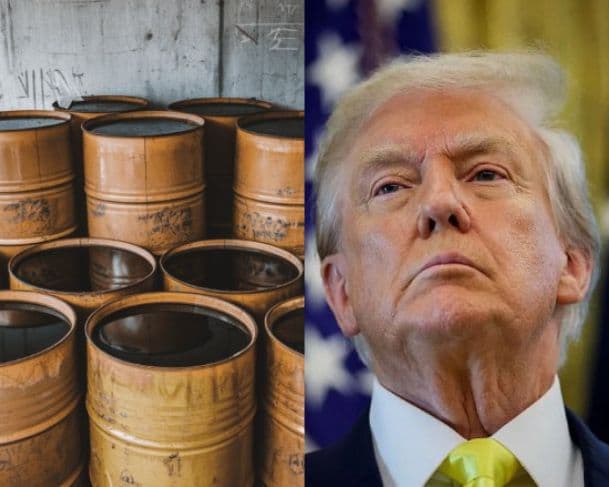
Asked about the duration of the control, Trump said the US administration could last “much longer” than months or a year. According to the president, the strategy involves managing the sale of Venezuelan oil and using the revenues as part of an economic reconstruction plan. “We are going to rebuild it in a very profitable way. We are going to use oil and we are going to extract oil,” he said.
According to Trump, the Venezuelan interim government would be cooperating with American interests. He stated that the country’s current administration “is giving us everything we consider necessary”, without detailing formal commitments or legal instruments that support this cooperation. The president also said that the policy adopted would reduce international oil prices and direct financial resources to Venezuela.
The statements came just hours after members of the US administration reported that the United States plans to take control of the sale of Venezuelan oil for an indefinite period of time. According to authorities interviewed by the newspaper, the initiative is part of a three-phase plan presented by the Secretary of State Marco Rubio to parliamentarians in Congress.
The plan calls for Washington to centralize decisions on oil exports and sales contracts, in coordination with Venezuela’s interim authorities. The proposal received support from Republican lawmakers, while Democrats warned of the risk of a prolonged intervention without a clear legal basis and possible long-term diplomatic and financial impacts.
During the interview, Trump did not indicate when the United States would stop exercising oversight. “Only time will tell,” he said. He also avoided making commitments on holding elections in Venezuela or on the political transition in the country.
The president was asked about recognizing the Venezuelan vice president Delcy Rodriguez as interim leader, instead of supporting opposition names. Trump did not respond directly, but stated that Rubio maintains frequent contact with the leader. “We are in constant communication with her and the administration,” he stated.
The interview took place days after the operation conducted by United States forces that resulted in the capture of the Venezuelan president Nicolas Maduro and his wife, Cilia Flores, taken to New York to face charges announced by the US government. Trump once again celebrated the action and said that the operation was planned in advance, including training in a replica of the complex where Maduro was located.
According to the president, there was concern that the action could result in failure. He compared the risk to the episode of the hostage rescue attempt in Iran in 1980, during the government of Jimmy Carter. Trump also mentioned the withdrawal of US troops from Afghanistan, which took place under the Joe Bidenas an example of an operation that, in his assessment, had negative consequences.
In the same interview, Trump addressed other international policy topics, such as immigration, the war between Russia and Ukraine, NATO and Greenland. At one point, he interrupted the conversation to answer a call from the president of Colombia, Gustavo Petroafter previous statements in which he had threatened action against the country for its role in international drug trafficking.
After the call, which lasted about an hour, Trump dictated a message to his social networks stating that Petro called to discuss the fight against drug trafficking and that he was invited to visit Washington. The contact indicated a temporary reduction in tensions between the two governments.
Trump’s statements to the New York Times increase the international repercussion of the strategy announced for Venezuela and reinforce uncertainty about the duration and scope of the United States’ presence in the South American country, in a scenario marked by legal questions, diplomatic reactions and debates in the North American Congress.
Source: https://www.ocafezinho.com/2026/01/08/trump-admite-que-eua-devem-fincar-o-pe-na-venezuela-e-administrar-venda-de-petroleo/