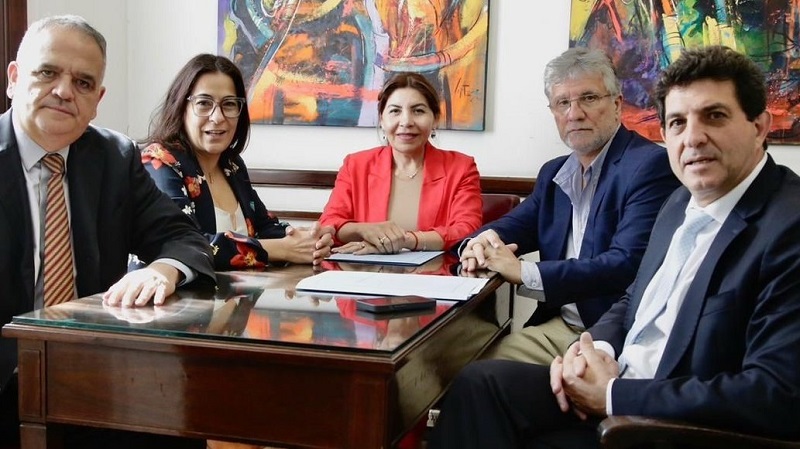
The recurrence of the collaboration of sectors of Peronism with Milei is no longer surprising. However, this Thursday he wrote a new chapter. Senators Carolina Moisés (Jujuy), Guillermo Andrada (Catamarca) and Sandra Mendoza (Tucumán) who until now were part of the Federal Conviction bloc within the Popular interbloc of the PJ, led by José Mayans, decided to break and put together their own bloc. They thus confirm the alignment with the Casa Rosada and that they will continue to collaborate with whatever the ruling party needs, now from a differentiated block.
Peronism was divided in the Senate and Carolina Moisés (Jujuy), Sandra Mendoza (Tucumán) and Guillermo Andrada (Catamarca) withdraw from the Interbloc. The space led by Mayans is reduced to 25 members.
Jaldo and Jalil are the governors closest to Milei pic.twitter.com/tis0x8ixjX— Jesica Calcagno (@Jesi_mc) February 23, 2026
The breakup is an announced end to the policy they have been following, aligned with the interests of three governors who have been openly negotiating with Milei such as Raúl Jalil (Catamarca), Gustavo Sáenz (Salta) and Osvaldo Jaldo (Tucumán). The three maintain a pragmatic relationship with the Casa Rosada and have been, since December 2023, key pieces for Milei to advance with its anti-worker and adjustment agenda.
The three were part of the Peronist unity ballots and that is how they reached the Upper House: Moisés entered for Unión por la Patria in 2023, while Andrada and Mendoza did so for the Frente de Todos in 2021. The three accompanied the campaign for Peronist unity lists in the last elections posing as “opponents”, and then they did not delay in turning around and accompanying the Government with the sanction of the 2026 Budget. Now they directly break the interblock of Peronism in the Senate, to negotiate directly and openly as collaborators of Milei
Move in the Senate
With the departure of these three, the Peronist interbloc in the Senate is reduced to only 25 members, the lowest number since 1983. The three wayward senators had just joined Convicción Federal, along with Fernando Salino (San Luis) and Fernando Rejal (La Rioja), who for now remain within but it is not ruled out that they follow the same path. The rearrangement opens the door to new alliances – it is speculated that Flavia Royón (Salta), Beatriz Ávila (Tucumán) and two missionaries allied with Rovira could also join – and reconfigures the map of parliamentary power.
The rupture and the discourse of having “greater autonomy” as a bloc cannot cover the sun with their hand: the governors and senators today “independent” have already been collaborating with the Milei government from minute one. As has already been highlighted repeatedly in this newspaper, without the help of Jaldo, Jalil and other collaborators, Milei would not have been able to meet or approve many of its laws against workers’ rights.
During the debate on the labor reform in Deputies, the Tucumán seats of Jaldo’s group – Gladys Medina, Elia Fernández de Mansilla and Javier Noguera – were decisive for the quorum. Medina and Fernández voted in favor of the reform, Noguera gave a quorum and then retired. In Catamarca, Fernanda Ávila, Sebastián Nóblega and Fernando Monguillot allowed the session and then voted against, but the damage had already been done: without a quorum, the law did not advance.
But the collaboration comes from before and Jaldo even came out publicly to support the labor reform and the lowering of the age of imputability, with his entire cabinet in line and the verse of the “modernization” of labor laws.
The breakup in the Senate not only exposes the PJ crisis, but also clearly shows how Milei’s governability is supported by the complicity of a sector of Peronism, which paves the way for the extreme right.
Source: www.laizquierdadiario.com