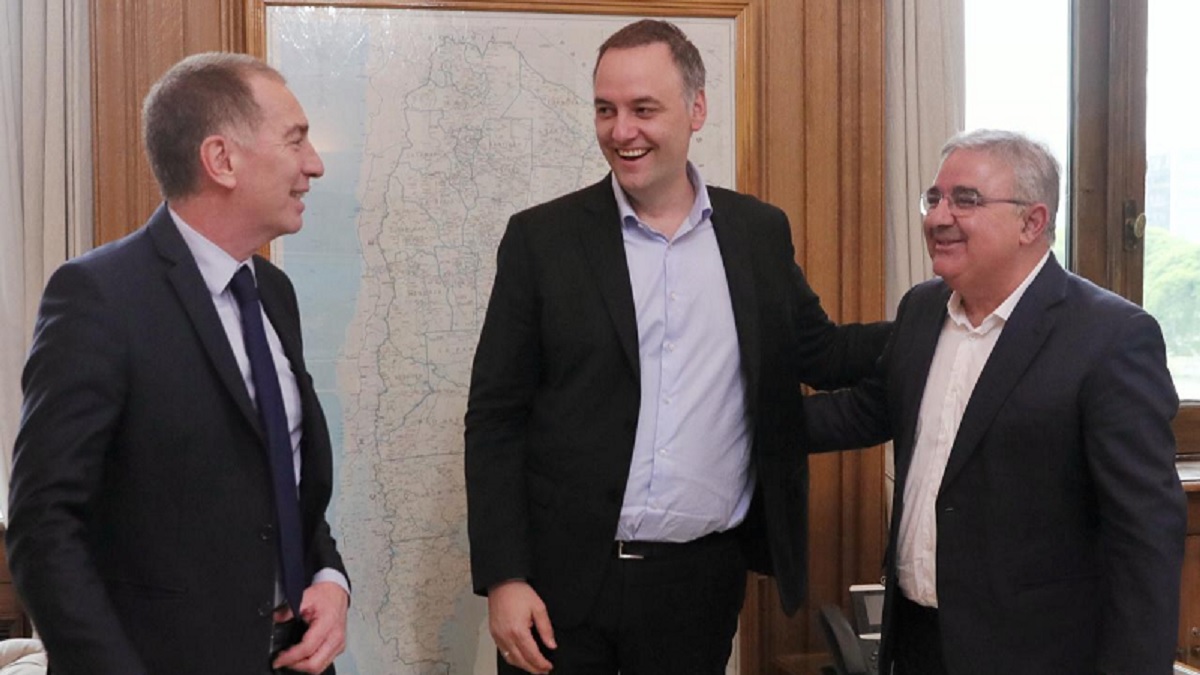
In the last hours, the Chamber of Deputies was the scene of a new scam: three deputies from Catamarca—Fernanda Ávila, Sebastián Nóblega and the elected Fernando Monguillot—left the Unión por la Patria (UP) bloc to form their own bench, “I choose Catamarca“.
Behind this move is the Peronist governor Raúl Jalil, who since the early days of the Milei government has been showing good harmony with the government and paused his collaboration only for the elections. The result is concrete: with this new break The Unión por la Patria bloc falls back to 94 deputies and paves the way for the ruling party, which – with the recent incorporation of Francisco Morchio (Entre Ríos) – manages to retain the first minority. This novelty would allow him to retain control of the most important commissions such as Budget and Constitutional Affairs, and also retain the vice presidency of the chamber.
The decision was formally communicated through a letter to the president of the Chamber, Martín Menem, where it is reported that Nóblega will lead the new bench.
The movement is far from obeying a “localist” motive or a provincial whim. This is a national rearrangement where Governors like Jalil seek to secure their own businesses and shares of power, even if that means betraying the mandate of those who voted for Unión por la Patria thinking of forming a majority opposition to Milei.. An electoral scam that, in any case, is not surprising when you review the history of the Catamarca native: Jalil was one of the first to openly support regressive measures on key issues such as the RIGI or, more recently, the refusal to provide a quorum in the session that was going to modify the DNU law to limit Milei’s power and reject the DNU of the debt that leaves Caputo free for a new cycle of scams for the country.
The scam of Peronism and complicity with the adjustment
The Catamarca rupture is just the tip of the iceberg in a Peronism that has been drifting for some time. Within the bloc, an attempt was made to stop the bleeding by setting up a federal table and ratifying authorities —Germán Martínez will continue as head, with Cecilia Moreau and Paula Penacca at the top—, but the truth is that the fragmentation responds to something much deeper.
Not only has Peronism not been a real opposition during these two years, but it is carrying out a program of adjustment and debt in the provinces where it governs. Just look at the example of the Province of Buenos Aires, where the governor Kicillof approved a Budget that enshrines various cuts in health, education, housing and salaries In addition to getting the votes necessary for a new debt, validating the debt previously taken by María Eugenia Vidal.
All this was forgotten during the electoral campaign, where Peronism limited itself to talking about “stopping Milei” even allying itself with governors like Jaldo and Jalil, despite the fact that they collaborated throughout this time for the government.
The deputies aligned with Jalil had already been collaborating with the Casa Rosada in key votes and now they simply whitewash the pass. In parallel, other governors such as Gustavo Sáenz (Salta), Osvaldo Jaldo (Tucumán) and Hugo Passalacqua (Misiones) analyze similar movements. Once the campaign was over, everything was back to how it was before.
In the Senate, the panorama is similar: Guillermo Andrada, Jalil’s ally, is a member of the “Federal Conviction” bloc, far from Kirchnerism. And in San Luis, Jorge “Gato” Fernández has already warned that he will not join UP because, according to him, the space “has become Kirchnerized.” Peronism, far from standing up to the government, facilitates its governability and negotiates the terms of its subsistence from below.
Thus, what was promised during the campaign disappears as soon as the elections are over. What we see with the Catamarca deputies is a sign that those who filled their mouths talking about defending the interests of the people end up openly negotiating with Milei to secure positions, resources and business. Something that all sectors of Peronism preferred to forget, going so far as to campaign against the left with the excuse of “strengthening the Peronist bench in Congress.” A notable contribution to wash the face and strengthen those who helped the government get here.
Congress, far from being the place of “popular representation”, is transformed into a gondola where the majority blocks are sold to the highest bidder and the opposition exists only in name. Milei thus advances with the adjustment and delivery while preparing the reforms requested by the large employers and the IMF.
A regime in crisis: it is necessary to build another alternative
The anger generated by this type of betrayal is not accidental. More and more people wonder what the point of voting is if the “opponents” later end up turning around and negotiating with the government. A reasoning that was expressed in the strong absenteeism of the last elections (the highest since 83 until today).
The breakup of the Catamarca deputies is just an example of how the politics of those at the top work: promises in the campaign, betrayal and business later. An electoral scam that, far from surprising, is the rule in a Congress that only responds to the interests of the powerful. It is necessary to build a true political alternative for workers, independent of all the parties of the regime, to face the adjustment and counter-reforms that are coming. The seats of the Left Front are at the service of these struggles, but it is necessary to redouble the bet: build, together with the combative sectors and all those who have been part of the struggles against the government, a great party of the new working class, without bureaucrats or bosses, that is up to the task of facing the attacks that are coming.
Source: www.laizquierdadiario.com