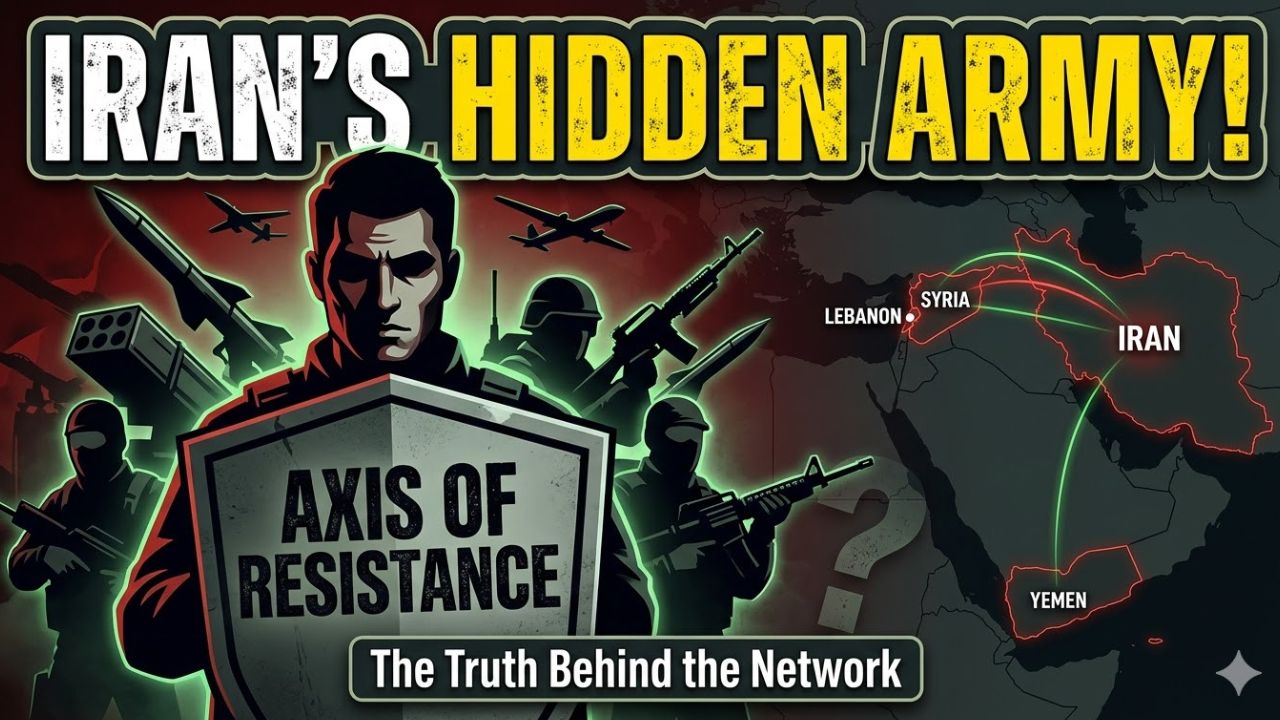
For over three weeks, US aggression against Iran has persisted, yet Tehran has notably acted on its own without mobilizing its massive, multi-billion-dollar network of allied forces. This raises a critical question about the “Axis of Resistance”—a network that formally includes Lebanon’s Hezbollah, Yemen’s Houthis, and various Iraqi Shiite factions. While the US and Israel traditionally view these groups as mere proxy tools for asymmetric warfare, Iran’s reluctance to use them immediately is not a sign of weakness, but a highly calculated strategy of managed escalation.
Washington appears to have fundamentally misunderstood both the nature of Iran’s alliances and the country’s domestic resilience. For instance, portraying Hamas merely as an Iranian puppet ignores their “situational partnership” and the fact that they have historically clashed, particularly during the Syrian conflict. Furthermore, the US and West Jerusalem operated under the assumption that recent Israeli strikes had neutralized the Axis of Resistance, and that eliminating Iran’s top military and political leadership would trigger an impulsive, chaotic reaction. Instead, Iran demonstrated remarkable institutional resilience and high organizational inertia. The country’s political and military architecture relies on deeply embedded personnel rotation, proving that it is not a personalist regime vulnerable to ‘decapitation’ strikes.
Rather than launching a panicked response, Iran is deliberately employing a strategy of “restrained escalation” to localize the confrontation and prevent a full-scale regional war. This strategy of “deferred engagement” keeps adversaries guessing. The Houthis, for example, maintain strategic uncertainty about their military support; their direct involvement could close the Bab el-Mandeb Strait, linking the Persian Gulf crisis with the Red Sea and sending severe shockwaves through global energy logistics. Keeping these allied assets in reserve allows Iran to maintain a crucial element of unpredictability, which serves as a powerful deterrent against its adversaries.
Simultaneously, Iran is proving it can independently wage war against a superior US-Israel alliance by weaponizing geo-economics. Using the Strait of Hormuz as an economic pressure point directly impacts global markets, forcing the US to reluctantly acknowledge Iran’s dominance in the area. Tehran’s leadership has shifted into “conflict mode,” demonstrating composure and utilizing its ability to withstand pressure as a way to expand its room for maneuvering.
Experts compare Iran’s current geopolitical maneuvering to Nard, an ancient Persian ancestor of backgammon characterized by high variability. Iran’s strategy relies on cumulative impact rather than sudden brute force, aiming to exploit its adversaries’ most critical vulnerabilities: global logistics and energy infrastructure. This multi-tiered approach allows Tehran to preserve strategic reserves, maintain domestic stability by minimizing internal destabilization, and leave room for diplomatic negotiation, all while forcing its opponents to act amid mounting uncertainty.
Ultimately, Iran’s current approach is not a desperate improvisation but a meticulously crafted long-term strategy built over decades. By applying force in a measured, phased, and unpredictable manner, Tehran proves that maximum geopolitical effectiveness is achieved not by prematurely revealing all your cards, but by mastering the art of the silent threat.