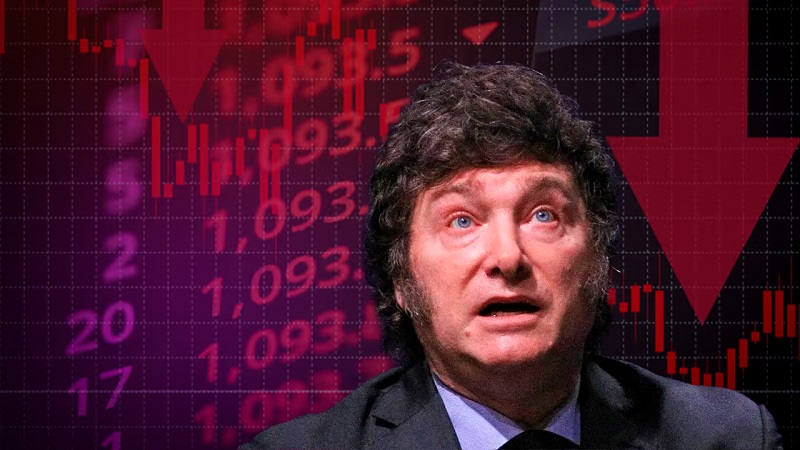
This Tuesday the inflation data for January was known: 2.9%. It is the highest variation in nine months and confirms a trend that has been observed since May 2025 when it was 1.5%: the Consumer Price Index (CPI) has not stopped rising.
The data came wrapped in scandal after the departure of Marco Lavagna from INDEC. The reason? Javier Milei’s decision to stop the methodological update of the CPI, a change that the institute itself, the Central Bank and even the IMF had already announced for this year.
We already return to the implications of the lack of updating. But first it is important to highlight that the January results, even without a methodological update, show a very strong upward dynamic in food and non-alcoholic beverages, which increased 4.7% and in Greater Buenos Aires the growth reached 5.1%.
What happens with food is relevant because it impacts the basic food basket, used to measure poverty. Its cost went from increasing 4.1% in December to growing 5.8% in January. This has a full impact on the most vulnerable households. But it also impacts Milei’s story and his promise to eliminate inflation.
Let’s return to the problem of methodological non-updating. Currently, inflation is measured with a basket of goods and services based on a twenty-year-old survey. The “new” CPI that Milei suspended uses the 2017-2018 Household Expenditure Survey, much closer to reality.
The critical point is the weight of public services. In the current index, the item “housing, water, electricity and gas” represents only 10.5% of a household’s spending in the GBA. However, in more current measurements such as that of CABA, that weight rises to 17.4%.
There are numbers that illustrate the underrepresentation of services very well: with Milei, between December 2023 and December 2025, the general price level rose by 186% while services increased by 393%.
By using an old basket, the impact of the tariffs is “softened.” Consulting firms such as LCG estimate that, with the updated methodology, the accumulated inflation of the Milei era would be 200% instead of the reported 186%.
Excuses and reality. Minister Luis Caputo argued that it is not updated to “maintain comparability” and that it will be done when disinflation is “consolidated.” It’s technical nonsense.
As pointed out by the Internal Board of ATE INDEC, comparability is resolved by splicing statistical series. The real objective is another: to hide the high rates planned for this year.
The victims of the gap. It is not just a debate among economists. This underestimation of inflation has material consequences:
- Retirements and AUH: They are updated by an index that yields less than what the costs of living actually increase.
- Salaries: Joint ventures close on inadequate references, deepening the loss of purchasing power.
- Dollar: The exchange band system is distorted by being based on underestimated inflation.
Given this, it is very important to demand methodological updating. But, also, as the Brown Group of INDEC proposes, a body totally independent of governments is necessary; an INDEC in the hands of the workers and technicians themselves, supported by a body of specialists from universities and other users interested in ensuring that statistics are not behind reality.
While it is true that a distinction can be made between the methods of statistical manipulation with harassment by Guillermo Moreno’s gangs and political interference to prevent the basket from being updated, the ultimate objective of governments is similar: to disguise inflation to liquefy the income of the working class, those who are active and those who are retired.
But there is a stronger truth. The workers’ pockets do not know statistics: they feel the rigor of an adjustment that cannot be hidden.
Source: www.laizquierdadiario.com