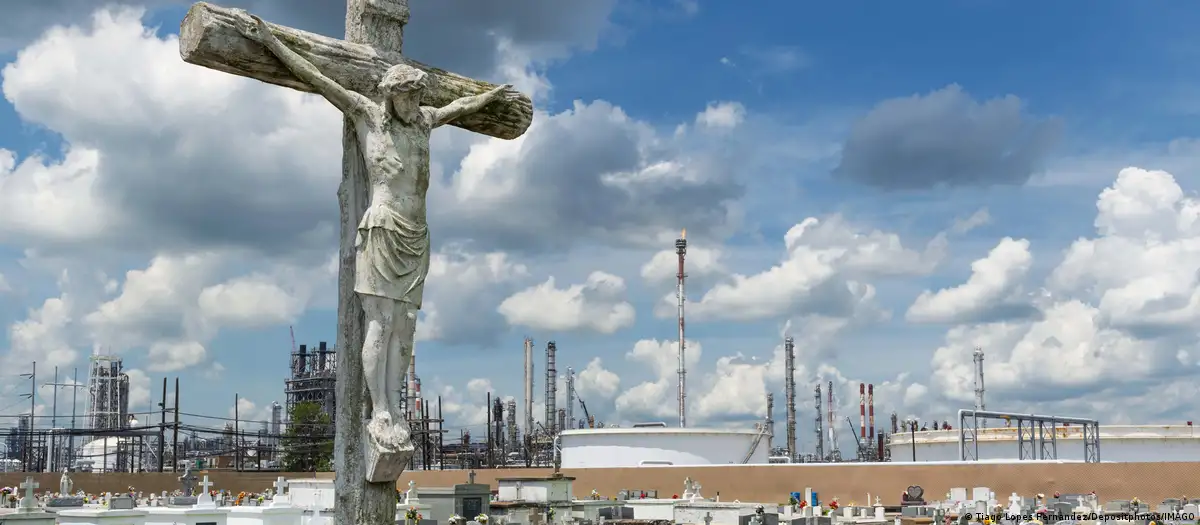
A 140 km strip in the state of Louisiana contains more than 200 petrochemical facilities, which for decades have released toxic pollutants. Residents of the region, who have 50 times more risk of developing cancer, try to resist
One of the first signs is the smell, says Shamell Lavigne, explaining how to recognize that your homeland is immersed in pollution. She grew up in the heart of what became known as the “Cancêr Corridor” (Cancer Alley, in English), a stretch of approximately 140 kilometers between Baton Rouge and New Orleans, in the state of Louisiana, in the United States.
There, some 200 fossil fuel and petrochemical plants cluster along the banks of the mighty Mississippi River. The region accounts for about a quarter of U.S. petrochemical production, which fuels demand for chemicals, fertilizers and plastics. For decades, these facilities have released a variety of toxic pollutants into the surrounding soil, water, and air.
Local communities also feel they are paying a high price for the mountains of plastic the world produces — a volume that is expected to double or even triple over the next 25 years. The US is among several countries, including China, South Africa, Brazil, Iran and Saudi Arabia, expanding their petrochemical capacity.
“I would describe this as a sacrifice zone,” said activist Lavigne, citing the term as referring to geographic areas permanently damaged by heavy environmental changes. “We became the sacrificial lamb so the rest of the world has single-use plastics.”
Risk still underestimated
The Cancer Corridor earned its grim nickname for placing its residents at one of the highest cancer risk rates in the United States. “There are so many houses on every street affected by cancer,” says Lavigne. Sometimes it’s every other house, she explains — or even several houses in a row where at least one or two family members have gotten sick.
The activist and her mother decided to act when a new plastics factory was announced a few kilometers from the family home, with an investment of 9.4 billion dollars (R$50 billion). Through an organization, they have led local resistance against industrial pollution.
In Louisiana’s Cancer Corridor, the petrochemical industry is everywhere and creates multiple health risks | Tiago Lopes Fernandez/Depositphotos/IMAGO
There is increasing evidence that the population is at risk. For decades, the area was among the 5% most likely to develop cancer in the country. Near one of the Cancer Corridor facilities, the risk was estimated to be 50 times higher than the national average by an expert report.
Recent research from Johns Hopkins University further suggests that the risks have been vastly underestimated, and the total threat of cancer may be up to 11 times greater than government estimates.
Respiratory diseases and infertility
There are other health hazards. The US Toxic Release Inventory shows that a variety of harmful pollutants are released into the air, water and soil in the Cancer Corridor. They are associated with respiratory and reproductive problems, birth defects and autoimmune diseases.
In Lavigne’s house, the reality is no different. She herself faced infertility and a miscarriage before having her daughter, who grows up with frequent nose bleeds, allergic reactions and sinus infections that sometimes prevent her from going to school.
Her 10-year-old daughter limits her time outdoors so she doesn’t get sick. “It’s really heartbreaking,” says the mother.
The Louisiana Department of Environmental Quality, however, denies that area residents face disproportionate pollution burdens and health impacts.
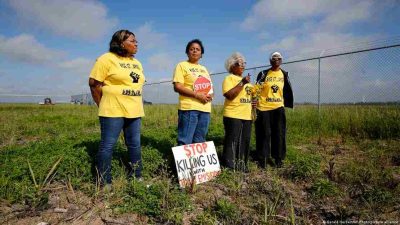 Residents of the Cancer Corridor became activists against petrochemical expansion in the USA | Gerald Herbert/AP Photo/picture alliance
Environmental racism
Despite having grown up in the Cancer Corridor, Joy Banner only understood in adulthood that the problem of pollution “had racism at its center.”
Alongside her twin sister, she created The Descendents Project in 2021 to raise awareness about how the Cancer Corridor is intertwined with the legacy of slavery. “The industrial pollution and proliferation that surrounds us today began hundreds of years ago,” says Banner.
Before petrochemical and fossil fuel companies arrived in the 1960s, slavery fueled the thriving sugar plantations in this part of Louisiana. And to this day, the majority of the area’s inhabitants are black.
The sisters argue that black residents, many descendants of people forced to work on these plantations, are now disproportionately affected by the Cancer Corridor’s petrochemical companies.
The United Nations (UN) has already classified what happens there as a case of environmental racism. Several studies show that black residents face significantly higher levels of exposure to pollution. Where Lavigne grew up, most of the factories built since 1958 are in majority-black neighborhoods.
Weak regulation
Although the US has pollution regulations, Banner believes the Cancer Corridor reached its current point because authorities chose to turn a blind eye.
“When you’re next to the Mississippi River and you have a government that doesn’t look, it’s extremely easy to come here and pollute,” says Banner.
Companies must report emissions to the Environmental Protection Agency, but the requirements do not cover all pollutants. Furthermore, self-reported data often underestimates reality.
Activists criticize that companies that exceed limits typically face little more than fines. Nor are they required to install pollution monitors.
Researchers at John Hopkins University say there are just one or two monitors in a densely industrialized stretch of Cancer Corridor, not enough to reveal what people actually breathe.
Local resistance
The region has become a point of resistance to petrochemical expansion. Despite the unequal chances, communities have achieved some victories.
In recent years, Lavigne’s organization has been active on local councils and in the community, in addition to pressuring banks to withdraw their investments in the new plastics factory and initiating legal proceedings.
“We have been fighting them since 2018. We prevented them from entering our area and we continue to fight to keep them out,” she says. “Not wanting to see my community die prematurely is one of the things that motivates me most.”
Local groups managed to block several important projects. But the Banner sisters insist that more people need to recognize that no one should sacrifice their health for a job while the petrochemical industry no longer generates the wealth it once did.
Some activists fear the toughest battles are yet to come as President Donald Trump’s administration promises to expand fossil fuel production and roll back environmental protections.
Originally published by DW on 12/04/2025
Por Holly Young
Source: https://www.ocafezinho.com/2025/12/07/a-poluida-regiao-dos-eua-apelidada-de-corredor-do-cancer/