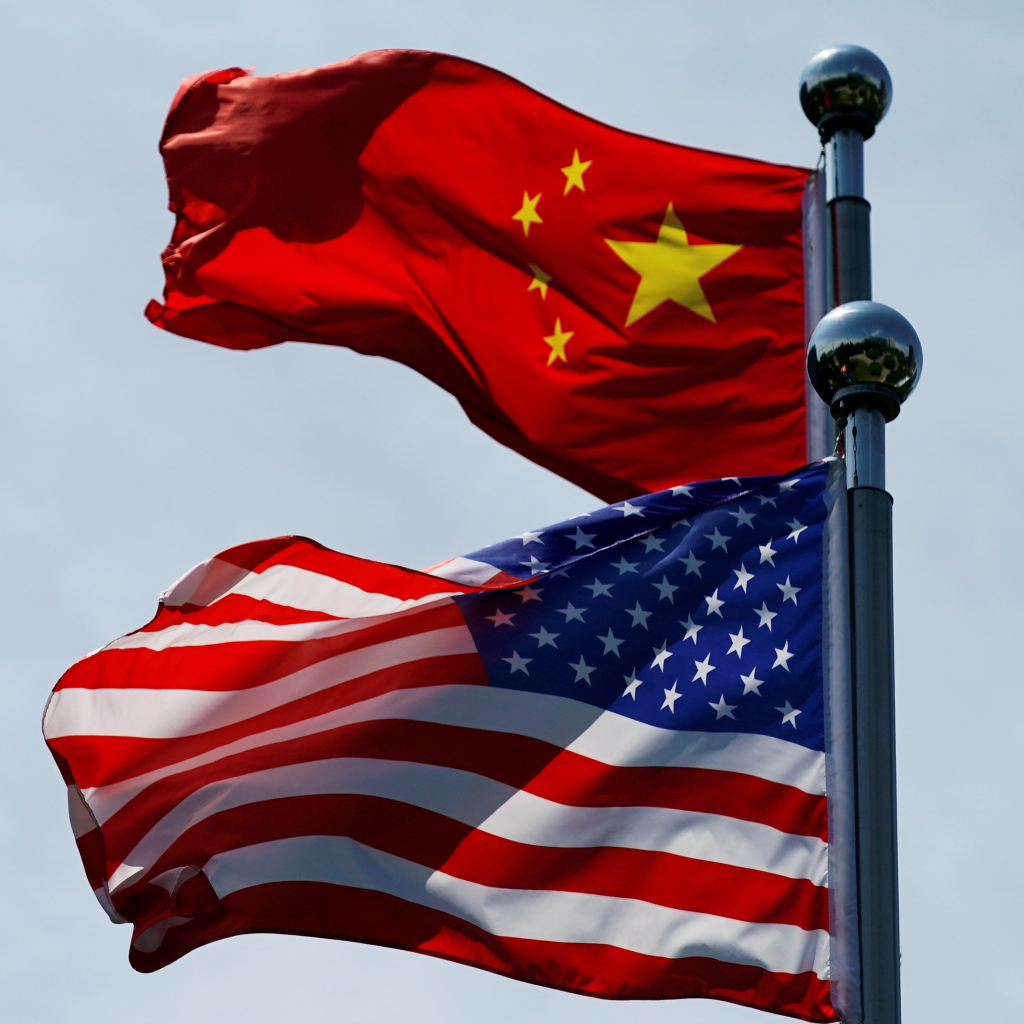
Diplomatic pressure, economic threats and institutional reaction show how the Panama Canal has once again become a key player in the international geopolitical chessboard
In the calm waters that cut the Central American isthmus, giant ships glide in silence, carrying dreams, goods and geopolitical tensions. The Panama Canal, this monumental work that shortened oceans and redesigned global routes, is once again the scene of a silent but intense dispute. As shipping containers painted with the flags of dozens of nations pass through its locks, two superpowers are locked in an invisible battle for influence. This time, the playing field is two strategic port terminals — and the price to be paid could redefine the balance of power on the American continent.
It all started with a seemingly technical court ruling, but one loaded with historic consequences. Panama’s Supreme Court has nullified the license of a subsidiary of Hong Kong-based CK Hutchison to operate two key terminals on the waterway, through which about 40% of all U.S. container traffic transits annually.
The measure, although based on local legal arguments, immediately resonated across borders. Washington celebrated the decision as a major victory, as the White House has made blocking China’s influence over this key global trade route one of its top priorities. However, experts warn: reducing the episode to a simple American victory ignores the complexity of Panamanian sovereignty and the risks of transforming smaller nations into pawns on a geopolitical board.
Faced with the judicial setback, China did not hesitate to raise its tone. In its strongest rebuke to date, Beijing warned on Wednesday that the Central American country “will inevitably pay a heavy price, both politically and economically” unless it changes course. Furthermore, the Hong Kong and Macau Affairs Office of China’s State Council called the court’s ruling “logically flawed” and “completely ridiculous.”
Such statements reveal Beijing’s discomfort at seeing its strategic investments threatened by independent judicial decisions — an uncomfortable reminder that not all countries accept subordinating their autonomy to foreign interests, whether East or West.
However, the Chinese response goes beyond words: according to Bloomberg, Chinese customs authorities also plan to intensify inspections of Panamanian imports, including bananas and coffee, products essential to the local economy.
Faced with external pressure, the president of Panama, José Raúl Mulino, adopted an unexpectedly firm stance. He rejected China’s threats, saying on Wednesday that he “firmly rejects” the statement from the Hong Kong and Macau Affairs Office.
On social media, Mulino highlighted that Panama is a “country of law” that respects the decisions of its superior court, noting that decisions made by the judiciary are independent of the central government.
This position deserves reflection: in a world where powers often impose their will on smaller nations, the defense of Panamanian judicial autonomy represents an act of silent resistance. On the other hand, CK Hutchison did not give up and stated on Wednesday that it took Panama’s case to international arbitration, adding that it “strongly disagrees with the decision [do tribunal]” Thus, a new chapter of transnational legal disputes opens.
The game of chess in Latin America
Analysts predict that the consequences of the court decision will last for a long period. With persistent doubts about the security risks posed by CK’s management of ports and the existence of mitigation measures, everything indicates that this is “a simple dispute for hegemony in Latin America”, said Scott Kennedy, senior consultant at the Center for Strategic and International Studies.
Indeed, China has stepped up investment in strategic infrastructure in the region, including a major deep-water port in Peru. The Port of Chancay, operated and controlled mainly by the state-owned company Cosco, is expected to cut maritime transport times in half. However, this advance worries Washington, which sees Chinese influence as a threat to its traditional sphere of hemispheric influence — a view that often ignores the right of Latin American countries to choose their trading partners freely.
Meanwhile, critical voices warn of the growing concentration of global maritime power. Analysts at the Foundation for Defense of Democracies, a Washington, D.C.-based think tank, said China appears to have “the maritime industry under absolute control.” According to Elaine K. Dezenski and Susan Soh of FDD, Beijing controls more than 100 overseas ports on every continent except Antarctica and manufactures more than 95% of shipping containers and 70% of port cranes.
Furthermore, China dominates the world’s shipbuilding order book, with nearly two-thirds of global orders going to Chinese shipyards by 2025. But it’s crucial to put things into context: about 40% of U.S. container traffic passes through the Panama Canal every year, handling, in total, approximately $270 billion in cargo annually. Therefore, any expansion of Beijing’s maritime dominance could put the US and its allies at risk of the same dependence they face for critical minerals and rare earths.
Faced with this binary and dangerous scenario, the Secretary-General of the United Nations, António Guterres, offered a necessary perspective. He recently criticized the power struggle between the US and China, warning that global problems “will not be solved by a single power making the rules.” At a press conference on January 29, Guterres stated: “We see — and many see in relation to the future — the idea that there are two poles, one centered on the US and the other centered on China.”
He then concluded wisely: “If we want a stable world, if we want a world in which peace can be sustained, in which development can be widespread and in which, in the end, our values prevail, we need to support multipolarity.”
This vision resonates deeply in Latin America, a region historically subjected to external interventions. After all, the people of the Panamanian Isthmus — who fought decades to regain sovereignty over their own canal in 1999 — deserve to decide their fate without being crushed between the American hammer and the Chinese anvil. The waterway that unites oceans can thus become a symbol not of dispute, but of dialogue between different civilizations.
With information from CNBC*
Source: https://www.ocafezinho.com/2026/02/07/o-canal-do-panama-na-sombra-das-superpotencias/