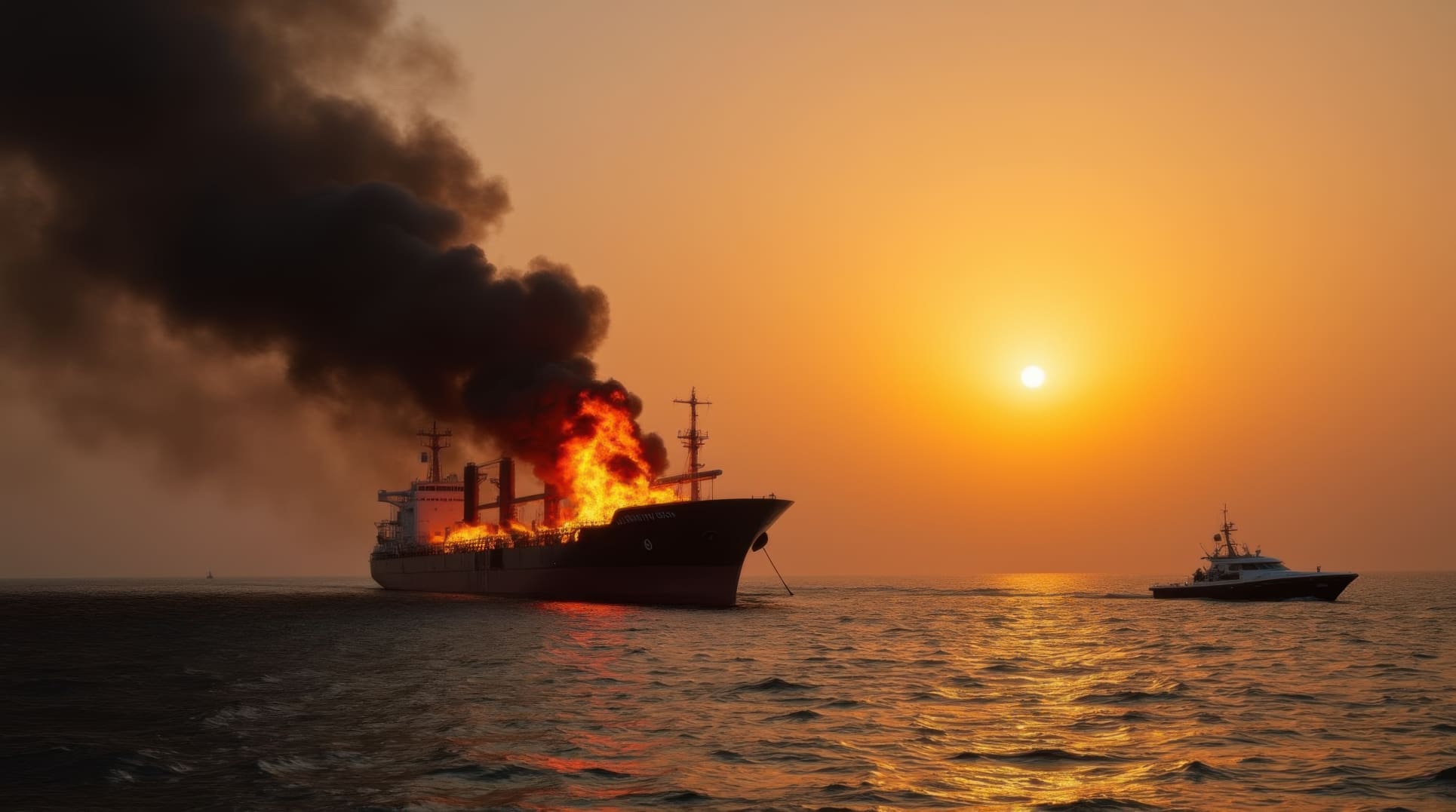
The Netherlands and five other major economies want to stabilize the energy market by guaranteeing safe passage through the Strait of Hormuz. What exactly this assistance entails remains unclear for the time being.
The call comes on a day when oil and gas prices are rising sharply again and financial markets worldwide are bleeding.
Hard words, soft commitments
This is evident from a joint statement by the United Kingdom, France, Germany, Italy, the Netherlands and Japan. The six countries condemn the Iranian actions “in the strongest terms”.
They call on Iran to “immediately cease mine laying, drone and missile attacks and other attempts to block commercial shipping passage.”
The countries call the disruption of international shipping and energy chains “a threat to international peace and security”. They demand a complete moratorium on attacks on civilian infrastructure, including oil and gas installations.
Yet it remains just words. The statement talks about “willingness to contribute to appropriate efforts”, but what that means in concrete terms is unclear. In any case, there is no military mission yet.
Jetten: ‘too unstable for mission’
Prime Minister Rob Jetten said this morning at his first EU summit in Brussels that the Netherlands is not part of the war in Iran. According to him, there is also no concrete proposal for a mission on the table.
“It is currently too unstable to start a mission in the Strait of Hormuz,” Jetten said. “With the current number of attacks taking place there, it will be very difficult to initiate a mission there in the short term.”
Jetten instead calls for de-escalation and more EU sanctions against the Iranian regime. “Hopefully this brutal regime will disappear as soon as possible, but bombing Iran will ultimately not lead to regime change. More is needed for that.”
Energy markets in free fall
The Strait of Hormuz, the narrow passage between Iran and Oman through which a fifth of the world’s oil normally flows, has been virtually at a standstill for weeks. Iran effectively closed the strait in retaliation for the US and Israeli attacks that began on February 28.
Today the conflict escalated further. Iranian missiles hit Qatar’s Ras Laffan gas facilities, which account for roughly a fifth of global liquefied gas (LNG) production. State oil company QatarEnergy reports “extensive damage”. Refineries in Kuwait and a gas facility in the United Arab Emirates were also hit.
The oil price shot up again to $113 per barrel. European gas prices rose by 25 percent and have risen more than 60 percent since the start of the war. The European stock markets plunged up to 2.5 percent into the red.
Expensive energy is eroding corporate profits and fueling fears of stagflation, a toxic mix of high inflation and slowing economic growth.
The six countries welcome the International Energy Agency’s (IEA) decision to release strategic oil reserves and pledge to work with producing countries to increase production.
Trump insists, Europe hesitates
The statement follows days of pressure from Washington. President Donald Trump urged allies earlier this week to help reopen the Strait of Hormuz, warning that NATO faces a “very bad future” if that doesn’t happen.
So far he has received no response. German Chancellor Merz said bluntly: “The US and Israel did not consult us prior to this war.”
British Prime Minister Starmer stated that the UK “will not be drawn into the war”. Today’s joint statement appears to be a cautious approach, without anyone committing to a concrete military contribution.
Meanwhile, Trump himself is considering sending thousands of additional troops to the Middle East, Reuters reports. These could be used to restore shipping through the Strait.
Source: https://newsbit.nl/nederland-en-bondgenoten-bereid-tot-passende-hulp-bij-belangrijkste-olieroute-ter-wereld/