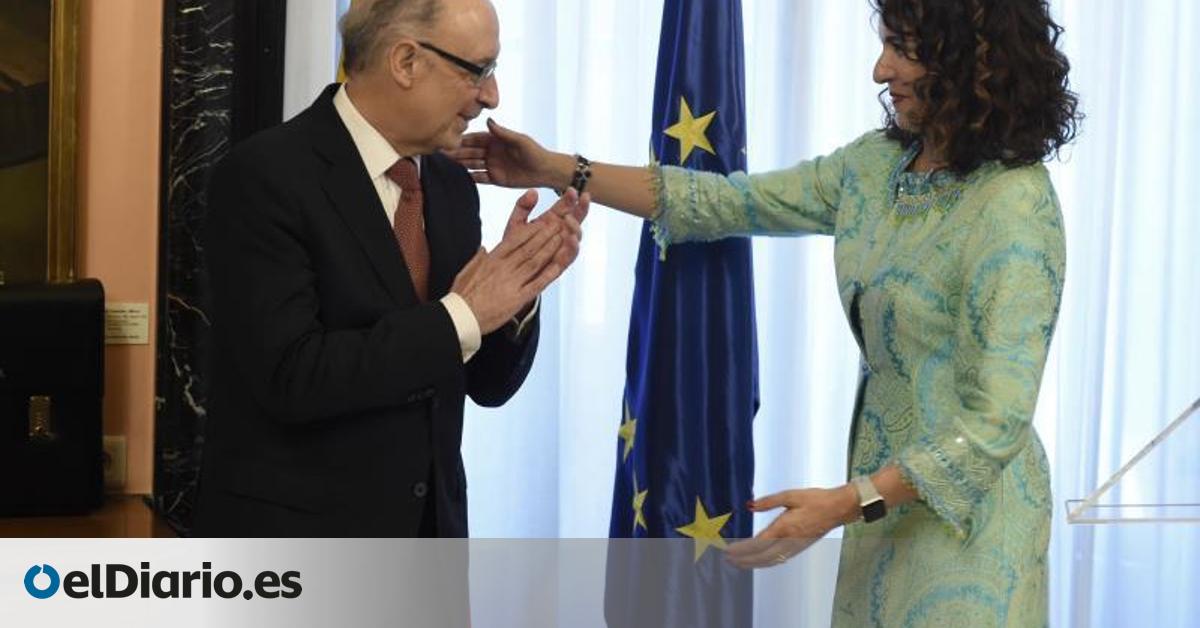
The Government has broken the record of extensions in the public accounts that until now had the last General State Budgets (PGE) signed by Cristóbal Montoro, the once all-powerful Minister of Finance – now fallen from grace – in the Government of Mariano Rajoy, which were in force for 912 days, from July 3, 2018 to December 31, 2020.
The processing of these accounts was already unorthodox: the Government that presented them fell into a motion of censure only a week after approving them in Congress and it had to be the then new head of the branch, María Jesús Montero, who defended them in the Lower House upon her return from the Senate. The law was signed by Pedro Sánchez, who had barely been in La Moncloa for a month, and had to take over the accounts of his predecessor.
Almost eight years after the Fundamental Law of 2018 was approved, the Government of Pedro Sánchez once again faces an unprecedented situation in democracy. With a third extension, regardless of whether the Government approves accounts in the first quarter, Montero’s Budgets already exceed Montoro’s in longevity: 1,097 days, until January 1, 2026. And those that remain, if finally next year there are no general elections and the majority of the investiture, with Podemos and Junts inside, does not become a budget majority.
The Treasury started the procedures for this new extension, which the Government trusts to be ‘technical’, in the last Council of Ministers in 2025. In it, an agreement was approved with the criteria with which this extension of the Accounts will be carried out to the year 2026 and the different portfolios were also ordered to adapt the credits linked to European funds to the last year of the Recovery Plan, before incurring new expenses financed with this ‘European manna’.
The Executive maintains its plans to present the PGE project for 2026 in the first quarter of the year. When she approved the spending ceiling and the deficit path for the draft Budget, Vice President Montero set next February as the date to do so. But the latest public statements by the Executive refer exclusively to the first three months of 2026. This leaves the date open until March. Meanwhile, the Executive awaits a resolution from the Constitutional Court on the amnesty that allows the return of Carles Puigdemont to Spain and Junts to the majority of the investiture.
Neither in 2024 nor in 2025, but yes in 2026
The President of the Government returned from the summer holidays with the renewed conviction of presenting a Budget no matter what, even if they were doomed to failure in Congress. And he advanced that not even the collapse of this project would mean the abrupt end of the legislature and the electoral advancement, as happened in 2019.
In 2024, the elections in Catalonia caused La Moncloa to abort plans to approve public Accounts. He had already presented a deficit path that, although it received the support of Congress, the PP vetoed in the Senate. After reforming the Budget Stability Law to bypass the Upper House, the Government once again saw its stability objectives rejected. This time in Congress, after the rejection of Junts. The Government abstained from presenting a project.
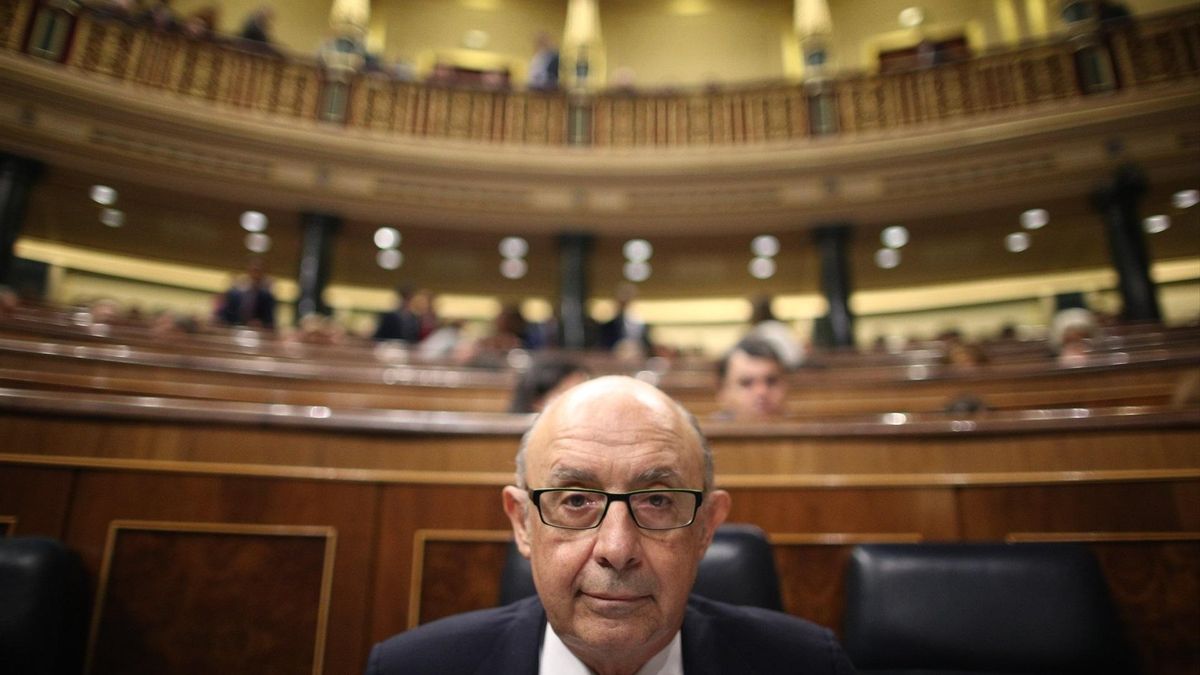
Looking ahead to the new year, the Ministry of Finance has been going through stages in budget processing, testing the waters with investment partners. It approved a record spending ceiling with 212,026 million, 8.5% more than that designed for 2025. And it presented stability objectives for the next three years that gave 5,500 million additional spending margin to the autonomous communities, by allowing them a gap of 0.1% of the gross domestic product (GDP) during its three years of validity.
The Government proposed a reduction in the deficit – the difference between public income and expenditure – to 2.1% in 2026, 1.8% in 2027 and 1.6% in 2028, as agreed with Brussels in the Medium-Term Fiscal and Structural Plan, the key document of the new European fiscal rules. The Executive assumed all the correction of the budget deviation, allowing autonomous communities and local entities greater margin in their public accounts. But this path of stability was also overturned on two occasions by the Congress of Deputies, with the votes against PP, Vox, Junts and the abstention of Podemos and the Compromís deputy in the Mixed Group.
The two rejections give the Government free rein to write the Budgets and Vice President Montero already recognizes the contacts with the parliamentary groups. In fact, he said in an interview on Christmas Day that they were “prepared.” They will be the last accounts with her signature, since she will have to leave the Government to run as a PSOE candidate for the Andalusian Government in elections scheduled for June.
Oxygen to the extensions
The Government has not only been able to survive two years without a Budget in force, but the margin has allowed it to continue incurring important spending measures such as the revaluation of pensions, the increase in salaries of civil servants or the increase in Defense spending up to 2% of GDP.
This is thanks to the record collection (as of November the State has already raised more than 300,000 million euros) and a legal provision included in all Budgets since 2021, which allows the Government to move credits between sections of the PGE through an agreement of the Council of Ministers and without going through Congress.
This mechanism was included to give flexibility to the execution of European funds, but they have given the Government oxygen to be able to adapt the 2023 public accounts for three years. According to the latest budget execution data published last Monday, until November the Government has approved credit modifications worth 75,446 million.
The budget extension that starts this January 1 is not of concern in La Moncloa. “Budgets can be many, but there are budgets that have cuts and there are extended budgets that deepen social cohesion. Not any type of budget is the same. Having such positive extended budgets allows us that social cohesion,” defended the new Government spokesperson, Minister Elma Saiz, in an interview on SER on Monday.
However, relevant voices such as the Independent Authority for Fiscal Responsibility (AIReF), the ‘little cricket’ of public accounts, already warn of the effects of not having updated PGE. “As time goes by, the budget is increasingly less adapted to economic reality. In the first year, 2024, it was possible to make use of the margins offered by items that would have been budgeted with some slack in 2023. In 2025 these slack are disappearing and new needs also arise,” notes the Tax Authority in a report posted on its website. For example, there are fewer and fewer unspent items with which to increase Defense spending, which will grow year by year as the size of the Spanish economy also grows.
Before Congress endorsed the accounts that definitively repealed those of 2018, in December 2020, former Minister Montoro made this reflection in an interview for the laSexta website: “There is nothing eternal. The 18 budgets have had a very long, exceptionally long history, and what that shows is their quality.” María Jesús Montero’s accounts, approved in 2022, have long since surpassed them. The question now is whether the third extension is the charm.
Source: www.eldiario.es