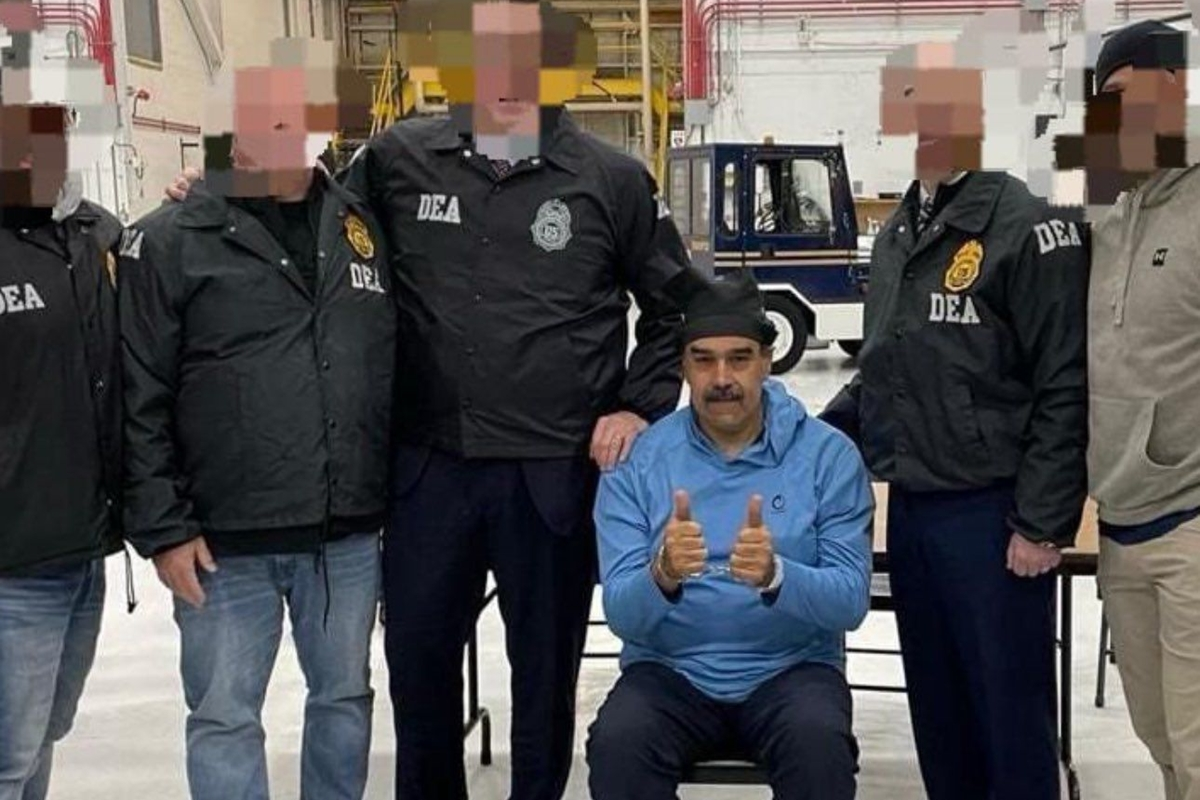
The former leader’s arrival in Brooklyn reignites debates about sovereignty, international justice and the limits of US intervention in Latin America
The political history of Latin America gained a dramatic chapter this weekend. One of those scenes that seem scripted, but aren’t. After being captured and deposed in an operation that continues to divide jurists, governments and analysts around the world, Nicolás Maduro stopped being head of state to become just another number in the United States prison system.
Now, the former president of Venezuela is in custody at the Metropolitan Detention Center (MDC), in Brooklyn. It is a prison known not only for its concrete walls, but also for long-standing allegations of neglect, violence and institutional abandonment. The contrast could not be more symbolic.
Read also: The irony of a cell and the weight of imperial justice
From the Miraflores Palace to a federal cell, Maduro experiences a fall that mixes international justice, geopolitics and an evident taste for historical revenge. Still, nothing about this episode is simple. And nothing is neutral.
A Saturday of celebration, pain and memory
As the sun set on Saturday, the sidewalks near MDC Brooklyn turned into a stage for excitement. Venezuelan immigrants, many of them marked by forced exile, took to the streets. Flags, screams and tears shared space with cell phones pointed at the prison gate.
The arrival of the police convoy became a collective catharsis. For that crowd, the moment symbolized the end of years of political repression, economic collapse and mass migration. It was less about the United States and more about an open wound in Venezuela.
However, the euphoria had a dark side. After all, the place that now houses Maduro and his wife, Cilia Flores, has a reputation that scares even experienced lawyers. Late justice, for many, was accompanied by an inhumane scenario.
The prison overlooking the Statue of Liberty
Few places translate the contradictions of the United States as well as MDC Brooklyn. Located near a shopping mall and overlooking the Statue of Liberty, the prison is often described as a concrete paradox.
Opened in the 1990s, the center houses around 1,300 inmates. There are people accused of international trafficking to entertainment and financial market celebrities. In recent years, names like R. Kelly and Sean “Diddy” Combs have passed through its cells.
Despite the modern facade, the internal reports are alarming. In 2019, a blackout left prisoners without electricity and heating for an entire week, in the middle of winter. The episode generated protests and accusations of human rights violations. Furthermore, in 2024 alone, two inmates were killed inside the unit.
For critics, the MDC is no exception. It represents the structural failure of mass incarceration in the US, a system that punishes harshly but provides little care.
Old allies, new enemies
The irony of history reserved unexpected encounters for Maduro. Within the walls of Brooklyn, he may cross paths with Hugo Carvajal, former head of Venezuelan intelligence. Carvajal broke with Chavismo in 2019 and today works with the American justice system.
This detail carries symbolic weight. It shows how Venezuela’s former circle of power has fragmented. It also shows how political alliances can turn into legal evidence.
Additionally, the MDC houses international organized crime figures such as Ismael “El Mayo” Zambada Garcia, founder of the Sinaloa cartel. In the face of criticism, the Department of Prisons says it has made recent structural improvements.
According to the institution itself, “In short, MDC Brooklyn is safe for the inmates and staff”. The administration also claims that reducing the prison population has reduced internal violence. Still, the complaints continue to echo.
Global justice or imperial selectivity?
The arrest of Nicolás Maduro raises an uncomfortable question: who decides who should pay for international crimes? The United States judicial system returns to the center of debate, especially when foreign leaders come into the crosshairs.
Juan Orlando Hernández, former president of Honduras, spent time in the same prison before being pardoned by Donald Trump. The parallel is uncomfortable. After all, Venezuela has always resisted direct pressure from Washington, which adds political layers to the case.
For progressive sectors, the capture of a left-wing leader exposes the weight of legal imperialism. For victims of rape in Venezuela, Brooklyn represents the only chance for real accountability.
Meanwhile, Maduro occupies cells that once held Ghislaine Maxwell and Sam Bankman-Fried. Its future now depends on the New York courts. And the world is watching, divided, whether this chapter will be remembered as justice or as another act of force disguised as legality.
In the end, the question remains: who really walks away from this story?
Source: https://www.ocafezinho.com/2026/01/09/o-dia-em-que-o-brooklyn-virou-espelho-da-america-latina/