The so-called “super Wednesday” marks, this Wednesday (28), the first monetary policy decisions of 2026 in Brazil and the United States. Throughout the day, the two main central banks of the American continent release their verdicts on interest rates, in an environment in which the majority of the market expects stability of both the Selic and the North American basic interest rates.
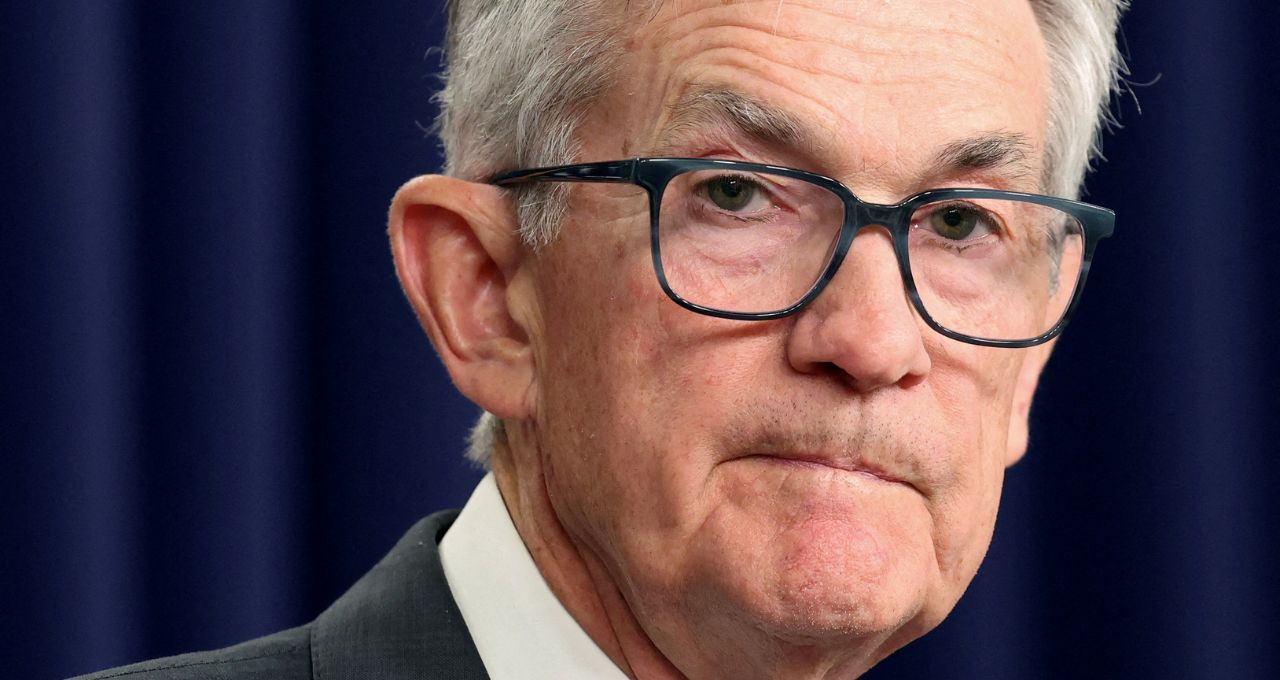
In the United States, the Federal Open Market Committee (Fomc) announces the decision on the basic interest rate at 4 pm (Brasília time). Afterwards, at 4:30 pm, the president of the Federal Reserve, Jerome Powell, holds a press conference to detail the arguments that supported the deliberation. In Brazil, the Central Bank’s Monetary Policy Committee (Copom) is expected to release its decision at around 6:30 pm.
Market analysts project that there will be no changes in rates in both countries. In the Brazilian case, the Selic has been at 15% per year since June 2025, after a sequence of increases that took the rate to its highest level since 2016. In the United States, interest rates remain in the range between 3.5% and 3.75%, after the cut promoted by the Fed in December last year.
Expectations are reflected in market indicators. The Market Expectations System, a weekly survey by the Central Bank of Brazil, shows that the median of projections points to the maintenance of the Selic rate at this meeting. In the United States, the CME FedWatch tool indicates that 96.1% of agents are pricing in interest rate stability, while only 3.9% are still betting on a new cut.
Brazilian scenario indicates Copom’s caution
In Brazil, the predominant reading is that the restrictive monetary policy will continue. The president of the Central Bank, Gabriel Galípolo, has reiterated in public statements that possible changes in the basic rate will depend on the evolution of economic data, especially inflation, activity and the job market.
Recent indicators indicate that the economy continues to operate at a high level of warming. The unemployment rate remains at historically low levels, signaling a resilient job market. At the same time, the Broad Consumer Price Index (IPCA) shows a gradual trajectory of convergence towards the center of the inflation target, although with cores under pressure in some segments.
Another factor considered by analysts is the behavior of the exchange rate. After periods of volatility throughout 2025, the dollar shows signs of accommodation in the domestic market, reducing part of the imported inflationary pressures.
In a report, Santander economists assess that the current situation is similar to that observed in December 2025, when the Copom maintained the Selic at 15% for the fourth consecutive meeting. According to the institution, the combination of mixed signals from the economy reinforces the tendency for the basic rate to be maintained this Super Wednesday, awaiting clearer evidence to justify a change in direction.
Fed decides interest rates amid sensitive political environment
In the United States, the Fed’s decision occurs in a context of greater institutional noise. The process is accompanied by a criminal investigation opened by President Donald Trump’s administration involving central bank president Jerome Powell. In addition, there is speculation about the possible departure of director Lisa Cook and the proximity of the appointment of a successor to Powell, whose term ends in May.
On Tuesday, the first day of the Fomc meetings, Trump once again stated that he intends to soon announce the name he will nominate for the presidency of the Fed. The statements reignited debates about the independence of the North American monetary authority, a topic that has been closely followed by international investors and analysts.
Despite the turbulent political environment, the financial market has not shown clear signs of loss of confidence. Inflation expectations drawn from financial assets remain relatively anchored, and yields on long-term US Treasury bonds do not indicate widespread fear about abrupt changes in the conduct of monetary policy.
For Tim Duy, chief economist for the United States at SGH Macro Advisors, the institutional context is a relevant element in analyzing the Fed’s next steps. “It is not possible to consider the actions of the next Fed president as something separate from the economic environment or the ability to influence other FOMC participants,” he stated.
The market’s gaze remains attentive to future signals
Although the expectation is for rates to be maintained this Super Wednesday, investors are closely following the tone of the announcements and, in the case of the United States, Jerome Powell’s statements. In Brazil, the text of the Copom statement will be analyzed in search of signs about the balance of risks and possible changes in the assessment of the inflationary scenario.
In both countries, monetary policy remains conditioned by the evolution of data throughout 2026. In the short term, Super Wednesday tends to confirm the cautious strategy adopted by central banks, in an environment marked by economic uncertainties, institutional challenges and the need to preserve the credibility of monetary authorities.
Source: https://www.ocafezinho.com/2026/01/28/superquarta-abre-2026-com-decisoes-de-juros-no-brasil-e-nos-eua-sob-expectativa-de-manutencao-das-taxas/