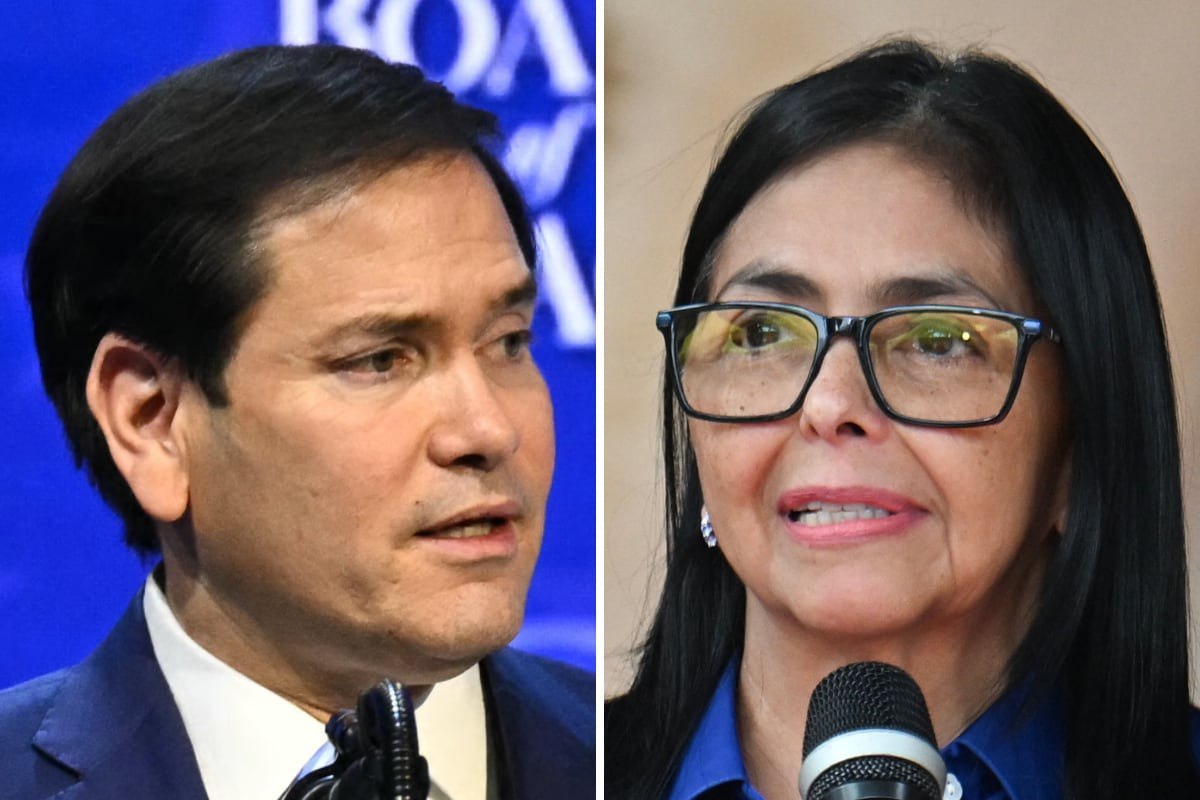
The Secretary of State of the United States, Marco Rubio, appears this Wednesday (28) before a committee of the North American Senate to explain the operation carried out in Caracas that resulted in the kidnapping of Venezuelan President Nicolás Maduro, on January 3, and detail the next steps of President Donald Trump’s government in relation to Venezuela. Excerpts from Rubio’s prepared statement were officially released by the State Department and indicate a tough speech, with explicit threats of the use of force if the new Venezuelan government does not cooperate with Washington.
According to the anticipated text, Rubio intends to make it clear to senators that the Trump administration is willing to adopt more severe measures if it considers that its strategic objectives are not being met. In direct reference to interim president Delcy Rodríguez, who began to lead a gradual process of political changes in the country after Maduro’s fall, the secretary states that she “knows Maduro’s destiny very well” and suggests that her personal interests can align with those of the United States.
“We believe your self-interest aligns with advancing our key objectives. Make no mistake: As the president has stated, we are prepared to use force to ensure maximum cooperation if other methods fail,” Rubio will say, according to the document.
Pressure on Congress and legal challenges
Former Republican senator, Marco Rubio agreed to provide clarifications to former colleagues after weeks of criticism from Democratic parliamentarians. These congressmen accuse the Trump administration of misleading Congress and exceeding its constitutional authority by resorting to the use of military force without explicit legislative authorization.
According to the version presented by the White House, United States Army troops entered Caracas on January 3 and kidnapped Nicolás Maduro and his wife, Cilia Flores. The couple was reportedly taken to New York, where they faced drug trafficking charges brought by US authorities, charges they both deny. According to the US government, the two are currently being held in a maximum security prison.
The legality of the operation remains under intense international debate. While the White House claims that the action respected US law and was based on existing criminal charges, international organizations and sectors of the diplomatic community point to possible violations of international law and Venezuelan sovereignty.
In his defense before the Senate, Rubio intends to maintain that the United States did not arrest a legitimate head of state, but rather “two drug traffickers”. In the prepared statement, he classifies Maduro as an “indicted drug trafficker” and rejects any recognition of his legitimacy as president.
US government denies open war
Despite the tough tone, Rubio will seek to dispel the idea that the United States is at war with Venezuela. “We are not at war against Venezuela,” he will tell the senators. According to him, the operation was conducted “without the loss of a single American life” and did not result in a continued military occupation of Venezuelan territory.
The secretary will also highlight the cost-benefit of the action. “History offers few examples in which so much has been achieved at such a low cost,” he will say, reinforcing the narrative that the Trump administration achieved significant strategic results without major prolonged military involvement.
Venezuelan authorities, however, dispute this version. According to Caracas, more than 100 people died during the operation, including Venezuelans and Cuban citizens who had tried to protect Maduro during the incursion by US forces.
Pressures on Delcy Rodríguez and energy interests
After Maduro’s overthrow, Donald Trump began to pressure Delcy Rodríguez to adopt measures favorable to the interests of the United States, especially in the energy sector. The American president would have demanded direct benefits for US oil companies, in a country that holds one of the largest oil reserves in the world.
Trump has also made it clear that he prefers to negotiate directly with Rodríguez rather than strengthen the traditional political opposition. In this context, the president removed opposition leader María Corina Machado, whom he described as a “very pleasant woman”, but who, according to him, does not inspire enough “respect” to lead the country at the moment.
Despite this, the State Department reported that, after the congressional hearing, Rubio is expected to meet with María Corina Machado, winner of the Nobel Peace Prize. Of Cuban origin, the secretary has always been a scathing critic of left-wing governments in Latin America and, as a senator, publicly defended the Venezuelan opposition led by Machado.
Intelligence reports raise doubts about cooperation
Recent US intelligence reports, cited by Reuters, cast doubt on Delcy Rodríguez’s willingness to fully cooperate with Washington. Assessments indicate uncertainty regarding the interim president’s ability or willingness to formally sever relations with US strategic adversaries, such as Iran, China and Russia.
Among the North American demands would be the expulsion of diplomats and advisors from these countries and the more direct alignment of Venezuelan foreign policy with Washington’s interests. US officials consider this rupture essential to reduce the influence of rivals in the Western Hemisphere and expand the access of North American companies to the Venezuelan energy sector.
A possible refusal by Rodríguez to meet these demands could, according to analysts interviewed by US authorities, increase the risk of deeper US military involvement in Venezuela.
Political alternatives still uncertain
Despite the doubts, reports indicate that the Trump administration does not currently see an immediate alternative to Delcy Rodríguez. It was publicly supported after the fall of Maduro and adopted some measures interpreted as gestures of rapprochement, such as the release of prisoners and the authorization for the sale of large volumes of oil to the United States.
At the same time, Rodríguez maintains a critical speech against North American interference, while channels of dialogue remain open. According to sources, US authorities also maintain parallel contacts with Venezuelan military and security sectors, as part of a cautious strategy.
The same reports point to María Corina Machado as a long-term option for the country’s leadership, due to her popularity, but highlight immediate limitations, such as the lack of solid links with the Armed Forces and the oil sector. For now, her name is only mentioned as a possible collaborator in advisory roles, with no definitive decisions taken.
Source: https://www.ocafezinho.com/2026/01/28/rubio-vai-ao-senado-defender-invasao-dos-eua-a-venezuela-e-faz-ameaca-velada-a-delcy-rodriguez/