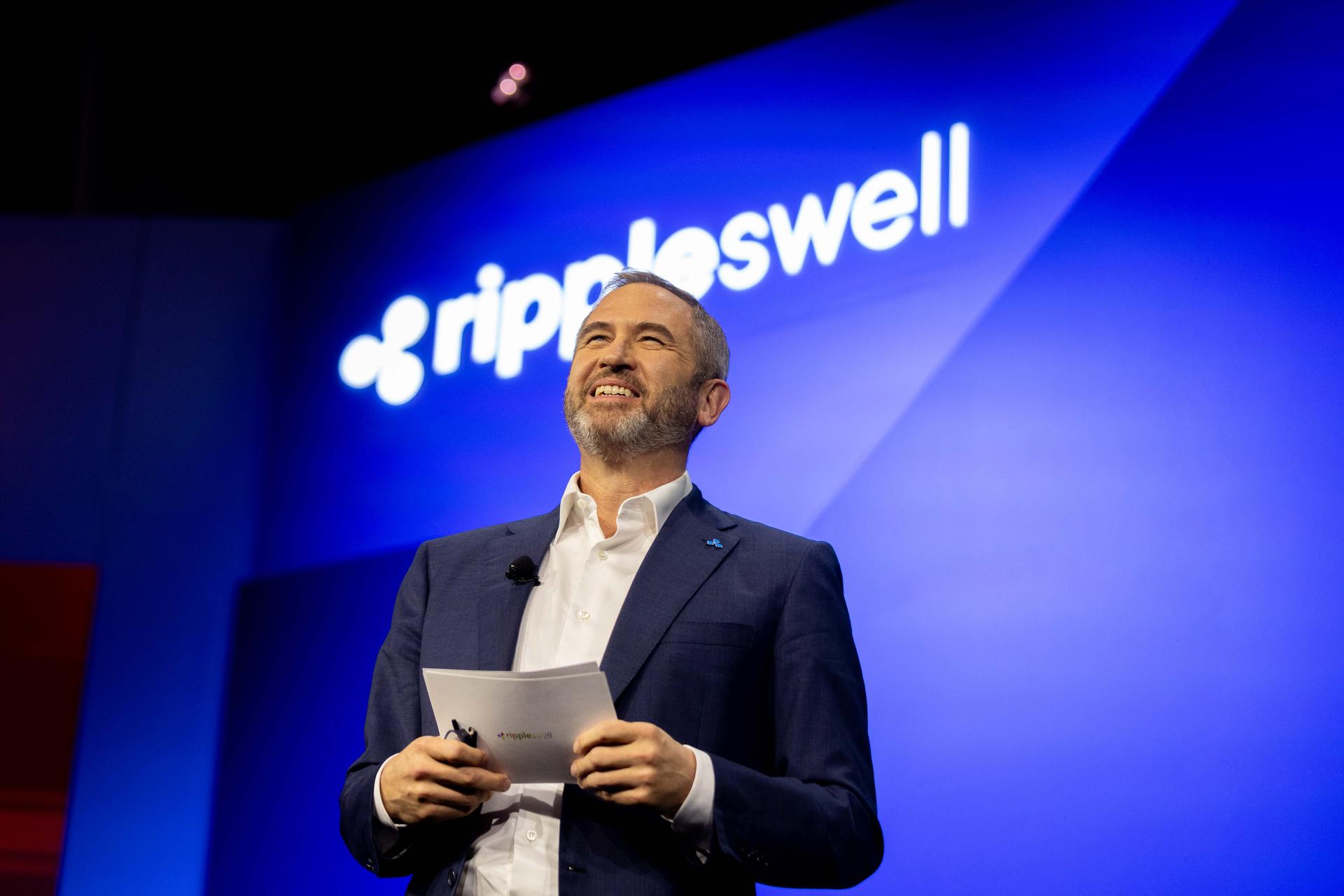
British asset manager Aviva Investors is taking the next step in the digitalization of its offering. The company will collaborate with Ripple, the company behind XRP, to place investment products on the blockchain. How exactly does this work?
Ripple’s first collaboration with European asset manager
Aviva Investors, the asset manager of the British insurer Aviva, announces in a press release that it will tokenize traditional investment funds on the XRP Ledger (XRPL).
It is the first time that Aviva Investors is involved in tokenization of funds, and also for Ripple it is the first collaboration with a European asset manager. The plans should lead to a series of regulated, blockchain-based fund structures from this year onwards, which will be further expanded in 2026.
Tokenization is the process of converting a physical or traditional asset, such as a mutual fund or a house, into a digital token on the blockchain. The big advantage is that transactions are faster and cheaper, because you do not need any intermediaries.
The chosen blockchain is therefore the XRP Ledger. According to Ripple, the network is suitable for financial institutions because of its high speed, low costs and built-in features that comply with regulations and regulations.
Ripple’s Nigel Khakoo sees tokenization evolving “from experiment to large-scale implementation” and calls Aviva’s involvement a signal that institutional asset managers are ready for the next step.
Jill Barber of Aviva Investors added: “We believe tokenized funds can provide significant benefits to our clients.”
The global rise of tokenization
We see that tokenization is receiving increasing attention from the traditional financial sector. For example, Nasdaq and the New York Stock Exchange (NYSE) have already announced that they are working on platforms to also issue shares and investment products as digital tokens.
Governments are also interested in tokenization. According to Binance founder Changpeng Zhao (CZ), twelve governments are now talking to him about digitizing state assets, such as real estate and infrastructure.
Securities and Exchange Commission (SEC) Commissioner Mark Uyeda recently emphasized that tokenization is a logical next step in the modernization of financial markets, and that existing legislation provides sufficient tools to protect investors.
According to him, innovation should not be slowed down by unnecessary regulations: it is the market that should determine whether tokenization will make a breakthrough, not the regulatory burden.
Source: https://newsbit.nl/ripple-werkt-samen-met-europese-vermogensbeheerder-fondsen-naar-xrp-netwerk/