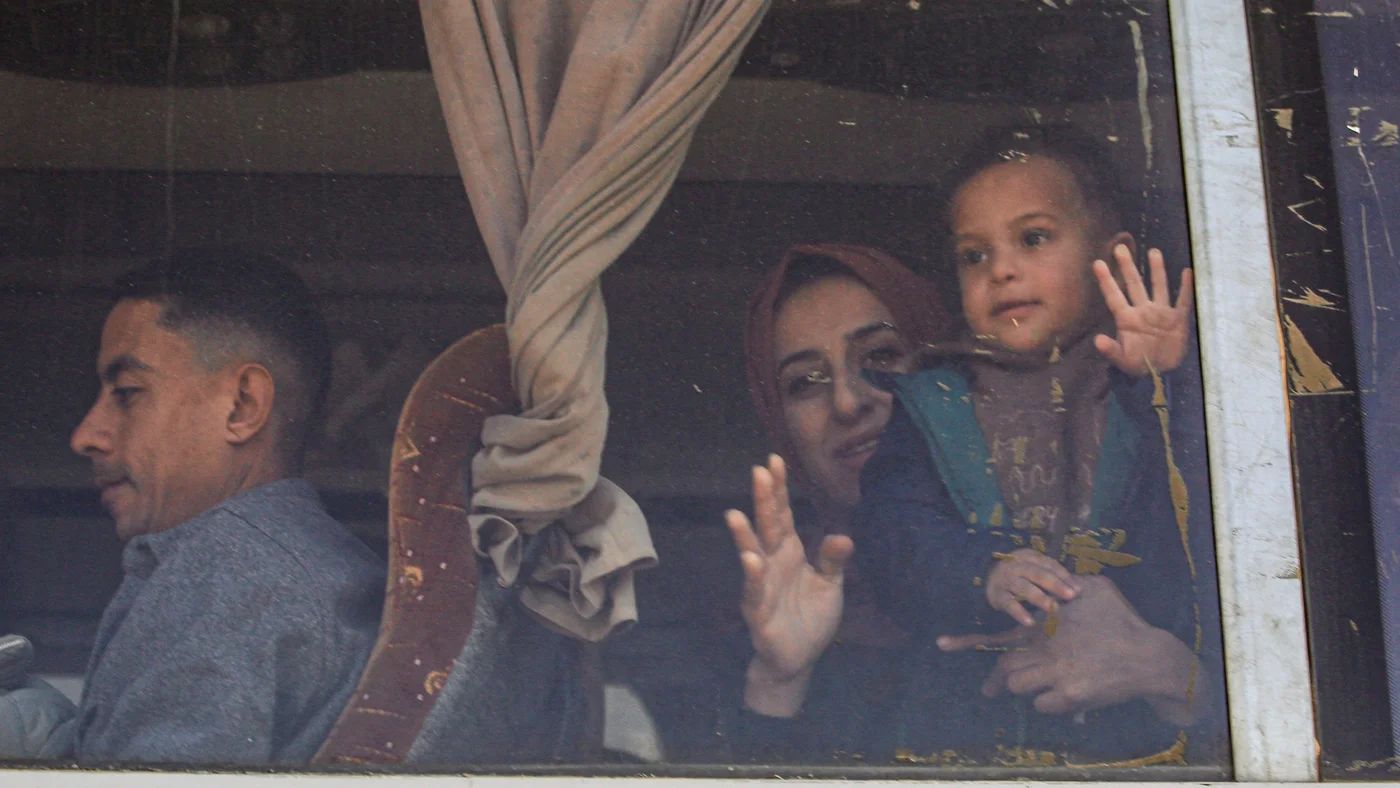
The new agreement allows 50 Palestinians to enter Gaza and 150 to leave per day
The Rafah border crossing, between the Gaza Strip and Egypt, was reopened this Monday for both sides for the first time in almost two years.
The crossing point had been damaged and kept closed by Israeli forces since May 2024, when they took control of it.
According to the new agreement, the conditions for reopening the Rafah crossing impose a series of restrictions:
- 50 Palestinians will be able to enter Gaza from Egypt daily;
- Approximately 150 Palestinians will be able to leave the enclave daily;
- All travelers will have their names subjected to security checks;
- Prior approval from both Egypt and Israel is required.
Israel completed the installation of a checkpoint inside the border crossing on Monday morning, after announcing a partial reopening on Sunday.
Control mechanisms
Israeli forces, stationed in Rafah and along the border, will have no physical presence inside the crossing itself. Administration will be carried out by a team from the European Union under the EU Border Assistance Mission.
However, Israel will carry out physical searches of anyone returning to the Gaza Strip and may monitor those who leave using facial recognition technology, according to Israeli media.
Strategic importance
The Rafah crossing is a crucial route for both civilians and humanitarian aid, being the only crossing for pedestrians and goods that does not cross Israel. Its reopening was included in the ceasefire agreement brokered by the US on October 10 and was a long-standing demand of the United Nations and humanitarian organizations.
Currently, Israeli forces continue to occupy Rafah, including the area where the crossing is located.
Hamas welcomed the reopening, but warned that the conditions imposed by Israel make circulation difficult. Ghazi Hamad, a senior member of the group, accused Israel of imposing restrictions to make travel difficult.
The movement also claimed to have completed procedures to transfer government authority to the newly created National Committee for the Administration of Gaza (CNAG). This 15-member technocratic body will oversee the day-to-day governance of the territory under the supervision of the “Peace Council”, chaired by US President Donald Trump.
During the conflict, Israeli authorities denied entry to health delegations, medical treatments and essential supplies. An estimated 22,000 injured people and patients remain on waiting lists for urgent evacuation, with many depending on crossing Rafah to seek treatment abroad. With current quotas, long waits are expected for most.
With information from Middle East Eye on 02/02/2026
Source: https://www.ocafezinho.com/2026/02/02/passagem-de-rafah-reabre-com-fortes-restricoes-apos-quase-dois-anos/