Right-wing extremist is favorite in voting this Sunday against moderate communist candidate, in the second round of the election that decides Gabriel Boric’s succession.
Chileans vote this Sunday (14/12) in a country polarized between the most right-wing candidate since the end of Augusto Pinochet’s dictatorship, 35 years ago, and a moderate communist representing the left.
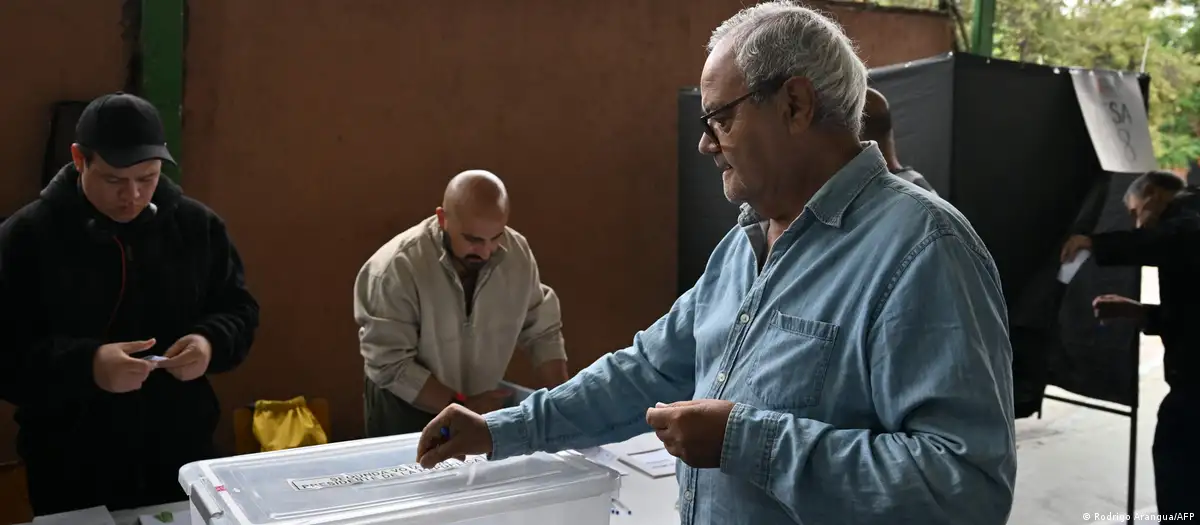
A total of 3,379 polling stations with 40,473 voting tables opened for the start of the second round of presidential elections in Chile, in which the successor to the progressive Gabriel Boric will be chosen.
More than 15.6 million people are eligible to vote – voting is mandatory – to choose between the moderate communist and only candidate from a broad progressive alliance, Jeannette Jara, 51 years old, and the far-right candidate and founder of the Republican Party (PR), José Antonio Kast, 59 years old.
According to analysts and polls published before the electoral restriction period, the Republican candidate enters the second round as the clear favorite, raising more doubts about the margin of victory than about the final result.
After coming second in the first round with 23.9% of the vote, Kast received the support of far-right libertarian Johannes Kaiser and former mayor Evelyn Matthei, a representative of the traditional right, bringing his total to more than 50% of the vote.
Jara, in turn, won the November elections with 26.9% of the vote, but has little room to expand her electoral base, despite being the only candidate in a broad and unprecedented progressive coalition, which ranges from the Communist Party to Christian Democracy.
Ultraconservative supporter of Pinochet
An ultra-conservative Catholic and father of nine children, Kast would be the first president to come to power having campaigned in favor of the continuity of the regime of General Augusto Pinochet (1973-1990) in the 1988 plebiscite.
Throughout his campaign, he based his speech and positioning exclusively on security and immigration issues, the main concerns of Chileans, according to polls, and avoided publicizing his ultraconservative views on individual freedoms and his defense of the regime – his brother was an important minister during the Pinochet government.
He promises to deport almost 340,000 illegal immigrants, most of them Venezuelans, and fight crime tough. In his public appearances, behind bulletproof glass in one of the safest countries in the region, this former congressman presented Chile almost as a failed state dominated by drug trafficking, distancing itself from the “economic miracle” that made it one of the most successful nations in Latin America.
Among other points, he avoided clarifying how he intends to cut 6 billion dollars from public spending in the first 18 months of his possible government and whether he would release former military officers who committed crimes against humanity during the dictatorship.
Distancing from the Boric government
Jara, in turn, tried to distance himself from the unpopularity of Boric’s government and fought against deep-rooted and widespread anti-communism in Chile. She also warned of the risks posed by the far right and defended her leadership in the approval of historic laws, such as the increase in the minimum wage, pension reform and the reduction of working hours to 40 hours a week.
The president elected on March 11 will have to deal with a divided Parliament, where the right-wing and extreme-right bloc is just two seats away from a majority in Congress, and where the votes of the populist-oriented Popular Party (PDG) will be crucial.
Since 2006, power has alternated between left and right, and no president has passed on the presidential sash to a successor of the same political orientation.
The polls are open until 6pm local time (6pm Brasília), and the results are expected a few hours later.
Originally published by DW on 12/14/2025
Source: https://www.ocafezinho.com/2025/12/14/corrida-presidencial-no-chile-tem-ultraconservador-a-frente/