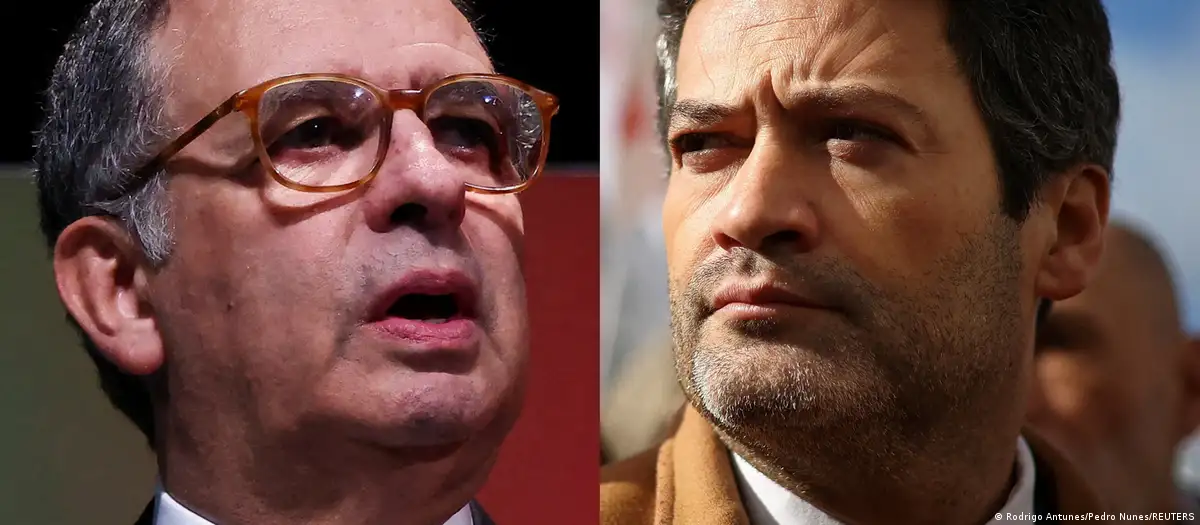
Polls indicate António José Seguro’s victory in this Sunday’s vote over ultra-right leader André Ventura, who promises the “biggest change in the Portuguese political system” since the Carnation Revolution.
The Portuguese vote this Sunday (08/02) in the second round of the presidential elections, in a dispute that represents a referendum on the country’s own democratic architecture.
On the one hand, the candidate António José Seguro, former socialist minister who embodies the continuity of the post-Carnation Revolution democratic regime. On the other, André Ventura, leader of the ultra-right Chega party, who promises a radical break with the system.
Research points to a significant advantage for Seguro, projected for a comfortable victory. A survey by Cesop/Universidade Católica, released on Tuesday, indicates that, disregarding undecided voters and invalid votes, Seguro would have 67% of the votes, against 33% for Ventura.
The campaign crystallized the choice between two antagonistic projects.
Seguro positions himself as a “supra-partisan” candidate who seeks to improve many things” that do not work, but who in no way intends to change the regime. He defends the traditional role of the president as arbiter and monitor.
Ventura promises “the biggest change in the Portuguese political system since April 25, 1974”, the date of the revolution, attacking traditional parties and hinting at a profound restructuring of power.
Campaign amid floods
The final stretch of the campaign was drastically reshaped by the severe storms and floods that have ravaged the country over the past two weeks, causing at least five deaths and widespread damage.
Floods caused widespread damage and led to changes in election campaigns | Patricia De Melo Moreira/AFP
Both candidates redirected their agendas to the most affected areas, adapting speeches and actions.
Seguro focused on dialogue with those affected, stating that “the president’s job is to listen to citizens”.
Ventura dedicated himself to distributing supplies and visiting affected locations, using the crisis to criticize the response of Prime Minister Luís Montenegro’s center-right government.
Voting was postponed for a week in some municipalities due to the damage. A request by Ventura to postpone the election nationwide was rejected, based on electoral law that only allows localized postponements.
Path to the second round
Seguro won the first round on January 18 with 31.11% of the votes, against 23.52% for Ventura. Cesop research suggests that the former minister is the main beneficiary of the transfer of votes from the defeated candidates, receiving broad support from center-right voters who opted for João Cotrim de Figueiredo, Henrique Gouveia e Melo or Luís Marques Mendes in the first round.
Support
Seguro’s candidacy received public endorsement from the other presidential candidates and former presidents of the Republic, such as Aníbal Cavaco Silva and António Ramalho Eanes. Ventura interprets this broad convergence around the opponent not as support for Seguro, but as a rejection of his “anti-system” figure.
In a debate marked by mutual accusations, Seguro accused Ventura of aspiring to be prime minister with executive powers, mischaracterizing the presidency. Ventura retorted, characterizing his opponent’s project as inert, aspiring to a decorative figure similar to the “Queen of England”.
This Sunday’s election will define not only President Marcelo Rebelo de Sousa’s successor at the Belém Palace, but the tone and limits of Portuguese political debate for the next five years, in a test of the resilience of democracy established half a century ago.
With information from DW on 02/07/2026
Source: https://www.ocafezinho.com/2026/02/07/portugal-escolhe-novo-presidente-e-socialista-e-favorito/