Iran is abuzz. On December 28, merchants in Tehran’s Grand Bazaar refused to open their businesses in protest against high inflation, a sharply falling currency value, and the bleak economic situation. The bazaar was historically one of Iran’s most important centers of power, and when its merchants go on strike, it is a sign of both economic desperation and political discontent.
Protests quickly broke out in all provinces, from remote cities plagued by unemployment and abandonment to [la capital] Tehran and other major cities. Iranian authorities blocked Internet access, detained thousands of people, and killed hundreds of protesters. The president [de EE. UU.] Donald Trump is weighing military strikes against Iran as protests continue.
The economic catastrophe in Iran is the result of eight years of US policies that combine comprehensive sanctions with covert operations, cyberattacks and military strikes. While these measures were aimed at weakening the Iranian government, they devastated the economic security of ordinary Iranians. And the Iranian elite with connections to the state, particularly those linked to the Islamic Revolutionary Guard Corpsbenefited from the evasion of sanctions.
The precipitous decline of the Iranian rial, which has lost roughly 90% of its value against the dollar over the past year, accelerated dramatically after military strikes by the United States and Israel this summer. [boreal] past. Fear of the resumption of hostilities undermined hopes of recovery. Inflation made basic goods unaffordable for millions of people. Iran’s oil revenues, a crucial source of income for the state, were severely limited by the reimposition of sanctions, and the government failed to offer viable economic policies to address the crisis, while grossly mismanaging the economy. The result was the perfect storm: skyrocketing prices, currency flight, and widespread economic anxiety.
Tale of two Irans
An analysis of social media posts and comments in newspapers, magazines and television networks conveys the sense that the Islamic Republic is on the verge of collapse, beset by a serious economic crisis, facing a massive revolt that does not stop in the face of repression and confronted with an unorthodox American president who seems increasingly open to military attacks. However, the most important question remains: Are Iran’s current structural conditions comparable to those that precipitated the fall of the Shah and the triumph of the 1979 revolution?
The 1979 revolution did not succeed because Iranians were angry. They had been angry for years.
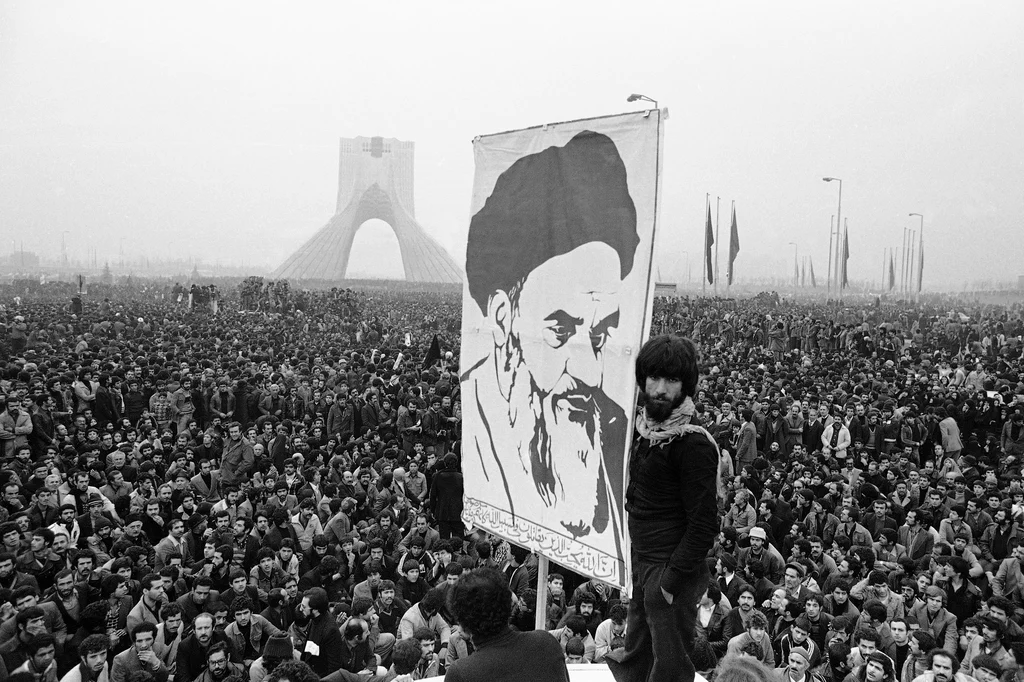
The revolution triumphed because three fundamental centers of power aligned: the people, the clergy, and the bazaar merchants united against the monarchy. This coalition was built over years of organizing, through mosque networks, unions, and the economic influence of the bazaar. When those institutions came together, the monarchy fell.
The contemporary political landscape in Iran is fundamentally different. Through years of research inside Iran’s power structures, I observed how its main institutions of power—the monarchy, clergy, army, bazaar, and civil society—are configured in ways that make the chances of a 1979-style revolution much more complicated.
The monarchy, although attempting a comeback through exiled crown prince Reza Pahlavi, has minimal support within Iran. Pahlavi’s prospects and illusion of popular support for restoring the monarchy were fabricated by Israeli-led online disinformation campaigns, reports [el diario israelí] Haaretz. Despite these efforts, President Trump refused to meet with Pahlavi, a telling sign of how seriously even potential allies take the monarchist option.
Of course, the Iranian government engages in its own disinformation, dismissing all dissent as orchestrated from abroad and using that narrative to justify intensified repression. But misinformation obscures what matters most: understanding the real balance of power within Iran and what it would take for meaningful change.
Consider the bazaar, whose strikes are generating optimism that 2026 could be an echo of 1979. The bazaar was once Iran’s autonomous economic engine, a network of merchants whose financial independence gave them leverage against state power. But 47 years of Islamic Republic rule, and particularly the last two decades of US sanctions, fundamentally altered this institution. Sanctions by the United States and its allies weakened Iran, but also created unprecedented opportunities for the Revolutionary Guard and state-linked elites to accumulate wealth through operations that circumvented sanctions. The companies linked to it became the Iranian apparatus to evade sanctions, controlling imports, managing currency exchanges and monopolizing access to restricted products.
As the military and security elites seized the main levers of the Iranian economy, wealthy, traditional bazaar families and businessmen lost their economic autonomy and were increasingly forced to associate with or submit to networks linked to the Revolutionary Guard to maintain their businesses. The current bazaar strikes are important, but they do not represent the same independent institutional power that helped overthrow the monarchy in 1979. The bazaar became partially integrated into the power structure it was supposed to oppose, or at least became dependent on it.
The bazaar is made up of businessmen who want stable conditions to continue making money. I recently spoke with Ali, who runs one of the largest families in the textile business in Tehran’s Grand Bazaar. He asked me not to reveal his last name for security reasons. “We closed our stores and demanded changes from the government. Many of our factories can no longer function,” Ali told me. “The government has to make fundamental changes in the management of sanctions and the economy.” As protests intensified, repression intensified, and the United States threatened military strikes, Ali became concerned. “This is getting out of hand,” he said.
The Iranian clergy is far from monolithic. The clerical structure of Shia Islam is historically decentralized, with different ayatollahs, seminaries and religious networks operating with considerable autonomy. Individual clergy have very different levels of power, influence, and financial resources. Some control huge charitable foundations worth billions of dollars thanks to donations from their supporters and state budgets, while others run modest local mosques with minimal resources.
Rival factions of the Iranian clergy harbor fundamentally different visions for the country’s future. Some clerics support political reform and greater social freedom, others demand harsher repression of dissent, and many focus primarily on preserving their own institutions and financial interests. This internal fragmentation is important because it means that there is no single “Islamic Republic” to overthrow. There are rival power centers that could fragment under pressure, but they could also reconsolidate in unexpected ways. Unlike 1979, when much of the clergy united behind Ayatollah Ruhollah Khomeini against the Shah, the current clerical hierarchy does not have comparable unanimity.
Most importantly, we have no evidence that the Iranian military is defecting. This is usually decisive. Revolutions succeed when security forces refuse to shoot protesters or when important military units switch sides. In 1979, critical military defections accelerated the fall of the monarchy. Today, Iran’s security apparatus remains intact, and the Revolutionary Guard represents not only a military force, but also the economic and political power deeply interested in the survival of the Islamic Republic. The scant reports from Iran — since Internet access was blocked on January 8 — clearly suggest that security forces are responding with significant repressive force.
The fight inside Iran
Inside Iran, many civil society activists and political prisoners understand these power dynamics. They understand that war would trigger intensified repression and set them back years or decades. They realize that pursuing a violent revolution would prove catastrophically destructive. They focused on building a sustained movement and everyday resistance.
The “Women, Life, Freedom” uprising of 2022 is a case in point: after years of outreach, patient organizing, and persistent civil disobedience, it achieved what many consider the Islamic Republic’s biggest concession since 1979: the de facto abandonment of mandatory veiling in much of the country. “Woman, Life, Freedom” is one of the most significant sociocultural revolutions in contemporary Iran and its success was due to the fact that, through collective action, certain forms of control were made unsustainable.
Revolution requires the alignment of institutions capable of challenging the authority of the State, and at this moment that alignment does not exist. Both the Islamic Republic and its foreign adversaries—the United States and Israel—have spent decades preventing organized resistance from coalescing through infiltration, arbitrary detentions, and deliberate discord. External disinformation campaigns exacerbate the problem. When Western voices promote monarchical restoration (which most Iranians reject), they discredit genuine opposition and validate Tehran’s “foreign interference” narrative. When American officials and Israeli intelligence agents publicly support protests in Iran, they endanger dissidents.
The Iranians deserve better than to see their grievances weaponized for geopolitical advantage. Meaningful solidarity requires several commitments: distinguishing hope from analysis; remain vigilant against misinformation; accept that the transformation will be slower and more complicated than desired. History suggests that without strong organization, cycles of protest repeat themselves without results, or worse, create opportunities for intervention or authoritarian alternatives.
Iranians have already endured a revolution whose promises withered. They deserve clear support to build genuine transformation, not illusions that serve everyone’s interests but their own. Real solidarity means supporting unglamorous organizing work, resisting simplistic narratives, and exercising patience. Revolution is not a moment, but a process, requiring honesty about power and skepticism toward external manipulation.
The world is watching Iran. The question is whether you see it clearly.
Source: www.laizquierdadiario.com