The escalation of tension between the United States and Venezuela gained a new chapter this Monday (22), with Russia declaring explicit support for the government of Nicolás Maduro in the face of the blockade imposed by Washington on oil tanker traffic entering and leaving the country. The demonstration occurred one day after the interception of a third vessel near the Venezuelan coast, expanding the reach of the American offensive in the Caribbean.
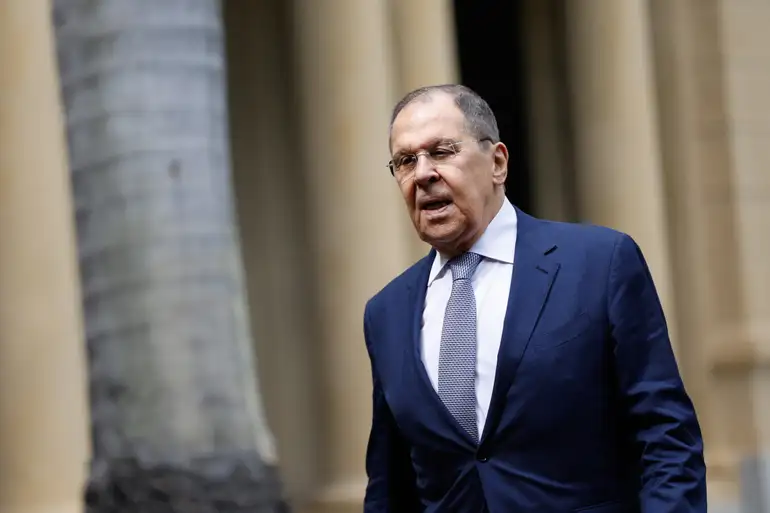
Russian support was confirmed by Venezuela’s Foreign Minister, Yvan Gil, after a telephone conversation with Russian Foreign Minister Sergey Lavrov. According to Gil, the Russian diplomat “expressed Russia’s firm solidarity with the people of Venezuela and with President Nicolás Maduro Moros, and reaffirmed its full support in the face of hostilities against our country.” Still according to the Venezuelan minister, Lavrov stated that Moscow will offer “full support” to Venezuela’s initiatives in the United Nations Security Council.
With this, Russia joined China, which also declared support for the Maduro government this Monday. Beijing and Moscow are among Venezuela’s main international allies and have publicly criticized the actions taken by the White House. Although Russian authorities have already promised to help Caracas in the face of increased tensions with the United States, they have not detailed how this assistance could materialize. Last week, the Russian Foreign Ministry stated that the deterioration of the confrontation between Washington and Caracas could generate “unforeseeable consequences” for the West. In response, the White House declared that Russia would not be able to offer more than rhetorical support to Venezuela, due to its military involvement in the war in Ukraine.
The same official said the ship intercepted on Sunday was subject to economic sanctions imposed by the United States, in line with the “total blockade” announced by Trump last week against sanctioned oil tankers operating in Venezuela. Also according to Reuters, the oil tanker seized on Saturday was not on the official sanctions list.
Shortly after the new interception was released, President Nicolás Maduro stated that his country was facing “a campaign of aggression from psychological terrorism and privateers who robbed oil tankers.” It was unclear whether the statement directly referred to the US action revealed on Sunday. In a post on social media, Maduro stated: “Venezuela has been denouncing, confronting and defeating for 25 weeks a campaign of aggression that ranges from psychological terrorism to privateers who robbed oil tankers. We are prepared to accelerate the march of the profound Revolution.”
In addition to the ship intercepted on Sunday, the United States seized on Saturday (20) the oil tanker Centuries and, on the 10th, the Skipper. A few days earlier, Trump had publicly announced the blockade of all sanctioned vessels entering or leaving Venezuelan ports, a move interpreted by analysts as an intensification of American pressure.
The interceptions are part of a broader pressure campaign against the Maduro government, which includes military mobilization in the Caribbean Sea, overflights in Venezuelan airspace and attacks on vessels. The central objective of the strategy is to restrict Venezuela’s main source of revenue: oil.
The country holds the largest proven oil reserves in the world, with around 303 billion barrels, equivalent to approximately 17% of the known global volume, according to the United States Energy Information Agency (EIA). Most of this oil, however, is extra-heavy, which requires advanced technology and high investments for its exploration. International sanctions and precarious infrastructure limit Venezuelan production and export capacity.
There is also strategic interest for the United States in this scenario. According to the EIA, Venezuela’s heavy crude “is well suited to North American refineries, especially those located along the Gulf Coast.” Thus, by putting pressure on Caracas, the Trump administration is simultaneously acting to favor domestic economic interests and financially weaken the Maduro regime.
The effects of the measures are already beginning to appear. A Bloomberg News report indicated that Venezuela is facing difficulties in storing oil, due to restrictions imposed by Washington on the movement of ships. Since 2019, when the United States increased sanctions on the Venezuelan energy sector, buyers began to resort to a so-called “ghost fleet”, made up of tankers that hide their location or have already been sanctioned for transporting oil from Iran or Russia.
China remains the largest buyer of Venezuelan oil, responsible for around 4% of its imports. In December, shipments should reach an average of more than 600,000 barrels per day, according to analysts interviewed by Reuters. Despite this, the international market remains well supplied in the short term, with millions of barrels stored in tankers close to the Chinese coast.
Analysts estimate that, if the blockage persists, the withdrawal of almost a million barrels per day from global supply could put upward pressure on oil prices. The actions against oil tankers occur in the same context in which Trump ordered the Department of Defense to launch a series of attacks against vessels in the Caribbean and the Pacific Ocean, which the American government accuses of smuggling fentanyl and other illegal drugs. Since September, at least 104 people have died in 28 known attacks.
In an interview with Vanity Fair magazine published this week, White House chief of staff Susie Wiles stated that Trump “wants to keep blowing up boats until Maduro shouts ‘uncle’”.
Source: https://www.ocafezinho.com/2025/12/22/interceptacoes-de-petroleiros-levam-russia-a-declarar-total-apoio-a-venezuela/