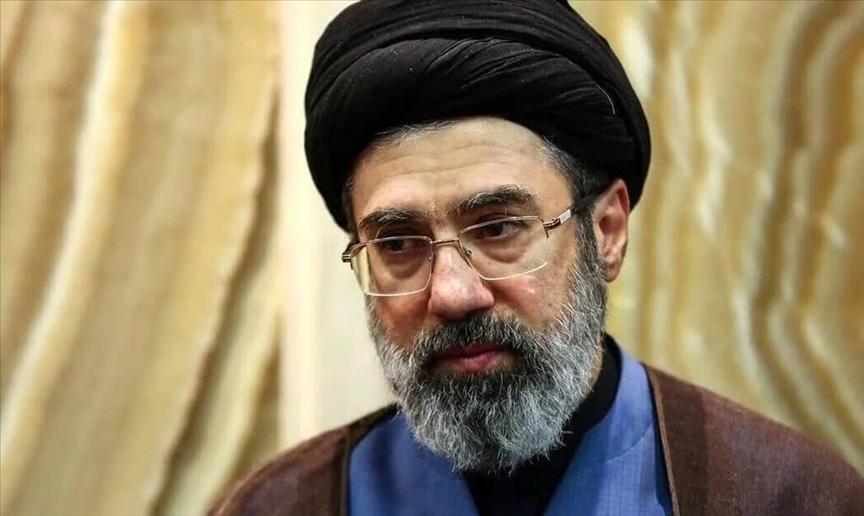
The military escalation in the Middle East gained a new chapter in the early hours of Monday (9), when Iran launched its first offensive after the appointment of the new supreme leader, Mojtaba Khamenei. According to Iranian state broadcaster Irib, the attacks marked the beginning of military operations under the command of Ayatollah Ali Khamenei’s son, killed in an Israeli airstrike at the end of February.
“Iran fired the first wave of missiles under the command of Mojtaba Khamenei towards the occupied territories,” the state broadcaster said in a message published on its Telegram channel. Iranian television also showed an image of a projectile with the phrase “At your command, sayyid Mojtaba”, using an honorific title that can be translated as leader or master.
The offensive took place hours after Mojtaba Khamenei, 56, was announced as the new supreme leader of Iran, the highest position in the Islamic Republic. His father, Ayatollah Ali Khamenei, had been killed on Saturday (28) in an Israeli airstrike against his official residence. The death of the Iranian leader deepened the regional crisis that had already been intensifying since the end of February, when the United States and Israel carried out a surprise operation against the Iranian political and military leadership.
Shortly after the missile launch, Israel responded with a new series of attacks. The Israel Defense Forces said it had struck military infrastructure in central Iran as well as a Hezbollah target in Beirut. The Israeli response comes as the conflict spreads across different parts of the Middle East.
Meanwhile, the effects of the Iranian offensive were reported in several countries in the region. In Qatar, journalists from the AFP agency said they heard several explosions in the capital, Doha. The country’s Ministry of Defense stated that the armed forces managed to intercept the launched projectiles.
Attacks also hit Bahrain. The country’s Ministry of Health reported that an Iranian drone strike on the island of Sitra left 32 civilians injured. “All those injured are Bahraini citizens,” the ministry said in a statement, adding that four people were in serious condition, including children.
Shortly afterwards, another attack hit the Al Ma’ameer oil installation, also in Bahrain. The bombing caused a fire and caused material damage to the refinery, according to local authorities.
In Kuwait, the government said air defense forces intercepted a new Iranian attack. “The country’s defense intercepted a new attack with seven missiles and five drones,” said the Kuwaiti Ministry of Defense.
The Iranian actions are part of a broader offensive that includes attacks against Israel and United States military bases in the region. American targets in countries including Qatar, Kuwait, Bahrain, Saudi Arabia and the United Arab Emirates were mentioned by officials as part of Iranian retaliation following bombings carried out by Washington and Tel Aviv in late February.
Faced with the intensification of hostilities, the American government adopted additional security measures. The United States ordered the withdrawal of part of its embassy staff in Saudi Arabia. The recommendation was aimed at employees who do not perform emergency functions and family members of government employees.
The succession in Iranian command also provoked political reactions in the United States. Asked about Mojtaba Khamenei, Donald Trump expressed dissatisfaction with the choice. “I’m not happy with him,” said the American president during an interview this Monday at a golf club near Miami.
In previous statements, Trump had suggested that Washington should have influence in choosing the new Iranian leader. “If it doesn’t have our approval, it won’t last long,” he said on Sunday (8), in an interview with ABC News.
The Republican also commented on the conduct of the war and stated that decisions on the conflict are discussed directly with Israeli Prime Minister Binyamin Netanyahu. “I think it’s mutual, a little bit. We’ve been talking. I’ll make a decision at the right time, but everything will be taken into consideration,” Trump told The Times of Israel.
Still, the president avoided commenting directly on Mojtaba Khamenei’s appointment after the new leader was officially confirmed. “We’ll see what happens,” he said.
The crisis also provoked reactions from other countries in the region. Saudi Arabia condemned Iranian attacks against Gulf countries and stated that the actions “cannot be accepted or justified under any circumstances”, according to a statement published on the social network X.
Turkey also announced preventive military measures. The Turkish Defense Ministry reported that six F-16 fighter jets were deployed to Northern Cyprus, a territory recognized only by Ankara. The decision was taken a week after the island was the target of a drone attack.
At the same time, the conflict continues to expand on other fronts. In Lebanon, Hezbollah said it had intensified its military operations. In a statement released on Sunday (8), the group said it had carried out 18 actions on the same day.
According to Hezbollah, 13 of these operations targeted Israel, while five took place within Lebanese territory, hitting Israeli forces present in the country. The Israeli offensive in Lebanon has already left almost 400 people dead, according to information cited by The New York Times.
Source: https://www.ocafezinho.com/2026/03/09/ira-lanca-misseis-contra-israel-e-paises-do-golfo-apos-posse-de-mojtaba-khamenei/