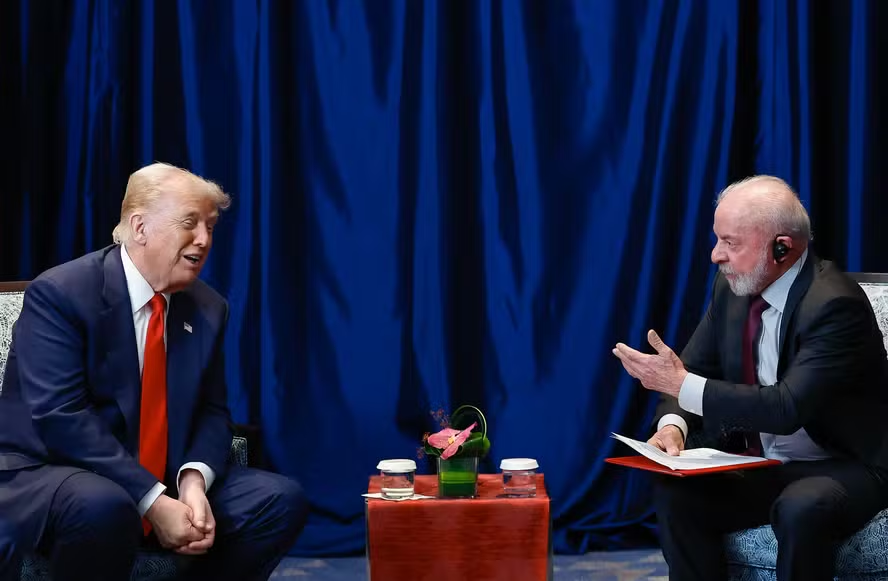
In an article in the New York Times, Lula condemns US bombings in Venezuela and warns of the weakening of international law and the post-war order
President Luiz Inácio Lula da Silva published a scathing article in the New York Times. In it, he condemns the US bombings on Venezuelan territory and the capture of President Nicolás Maduro on January 3. Lula argues that these actions violate international law and weaken the global order established after World War II.
Furthermore, the text highlights how world powers increasingly ignore the authority of the United Nations and the Security Council. Lula warns that the frequent use of force as a solution to disputes threatens peace and stability across the planet. He emphasizes that selective rules lead to anarchy, harming not only individual countries but the entire international system.
However, the article gains strength by focusing on Latin America and the Caribbean. Lula points out that interventions like this bring violence to a region that seeks peace through sovereign equality and self-determination. He recalls that, in more than 200 years of independence, South America faces for the first time a direct military attack from the USA, although previous interventions have already marked history.
Lula argues that Latin America is home to more than 660 million people with their own interests. Therefore, no one should question foreign relations based on universality. Thus, the region rejects hegemonic efforts and prioritizes a doctrine of prosperity, peace and pluralism.
Furthermore, he calls on countries in the area to overcome ideological differences. They need to attract investment in infrastructure, create quality jobs and expand trade. Cooperation appears essential to combat hunger, poverty, drug trafficking and climate change.
Meanwhile, Lula criticizes the use of force as something obsolete. Divisions into zones of influence and neocolonial incursions only harm everyone. Leaders of great powers must understand that permanent hostility does not sustain the world.
The Brazilian president insists that the destiny of Venezuela belongs to Venezuelans. Only an inclusive political process, led by them, guarantees sustainable democracy. This approach allows millions of refugees, many in Brazil, to return safely.
Here is Lula’s opinion piece in full, published in the New York Times:
Lula: This hemisphere belongs to all of us
The US bombings of Venezuelan territory and the capture of its president on January 3 represent yet another regrettable chapter in the ongoing erosion of international law and the multilateral order established after World War II. Year after year, the great powers intensify their attacks on the authority of the United Nations and its Security Council.
When the use of force to resolve disputes ceases to be the exception and becomes the rule, global peace, security and stability are threatened. If norms are followed only selectively, anomie sets in, which weakens not only individual states, but also the international system as a whole.
Without collectively agreed rules, it is impossible to build free, inclusive and democratic societies. Heads of state or government — from any country — can be held responsible for actions that undermine democracy and fundamental rights. No leader has a monopoly on the suffering of his people.
But it is not legitimate for another State to claim the right to do justice. Unilateral actions threaten global stability, disrupt trade and investment, increase the flow of refugees, and further weaken the ability of states to confront organized crime and other transnational challenges.
It is particularly worrying that such practices are being applied in Latin America and the Caribbean. They bring violence and instability to a part of the world that fights for peace through the sovereign equality of nations, the rejection of the use of force and the defense of the self-determination of peoples.
In more than 200 years of independent history, this is the first time that South America has suffered a direct military attack from the United States, although American forces have intervened in the region previously. Latin America and the Caribbean are home to more than 660 million people. We have our own interests and dreams to defend. In a multipolar world, no country should have its foreign relations questioned for seeking universality. We will not submit to hegemonic efforts.
Building a prosperous, peaceful and pluralistic region is the only doctrine that suits us. Our countries must strive for a positive regional agenda, capable of overcoming ideological differences in favor of pragmatic results.
We want to attract investments in physical and digital infrastructure, promote quality jobs, generate income and expand trade within the region and with nations outside it. Cooperation is essential to mobilize the resources we so desperately need to combat hunger, poverty, drug trafficking and climate change.
History demonstrates that the use of force will never bring us closer to these goals. The division of the world into zones of influence and neocolonial incursions in search of strategic resources are outdated and harmful. It is crucial that great power leaders understand that a world of permanent hostility is not viable. No matter how strong these powers are, they cannot simply depend on fear and coercion.
The future of Venezuela, and any other country, must remain in the hands of its people. Only an inclusive political process, led by Venezuelans, will lead to a democratic and sustainable future.
This is an essential condition for the millions of Venezuelan citizens, many of whom are temporarily sheltered in Brazil, to return home safely.
Brazil will continue to work with the Venezuelan government and people to protect the more than 2,100 kilometers of border we share and to deepen our cooperation.
It is in this spirit that my government has engaged in constructive dialogue with the United States. We are the two most populous democracies on the American continent. We, in Brazil, are convinced that uniting our efforts around concrete plans for investment, trade and combating organized crime is the way forward. Only together can we overcome the challenges that plague a hemisphere that belongs to all of us.
Source: https://www.ocafezinho.com/2026/01/18/em-jornal-dos-eua-lula-condena-invasao-a-venezuela/