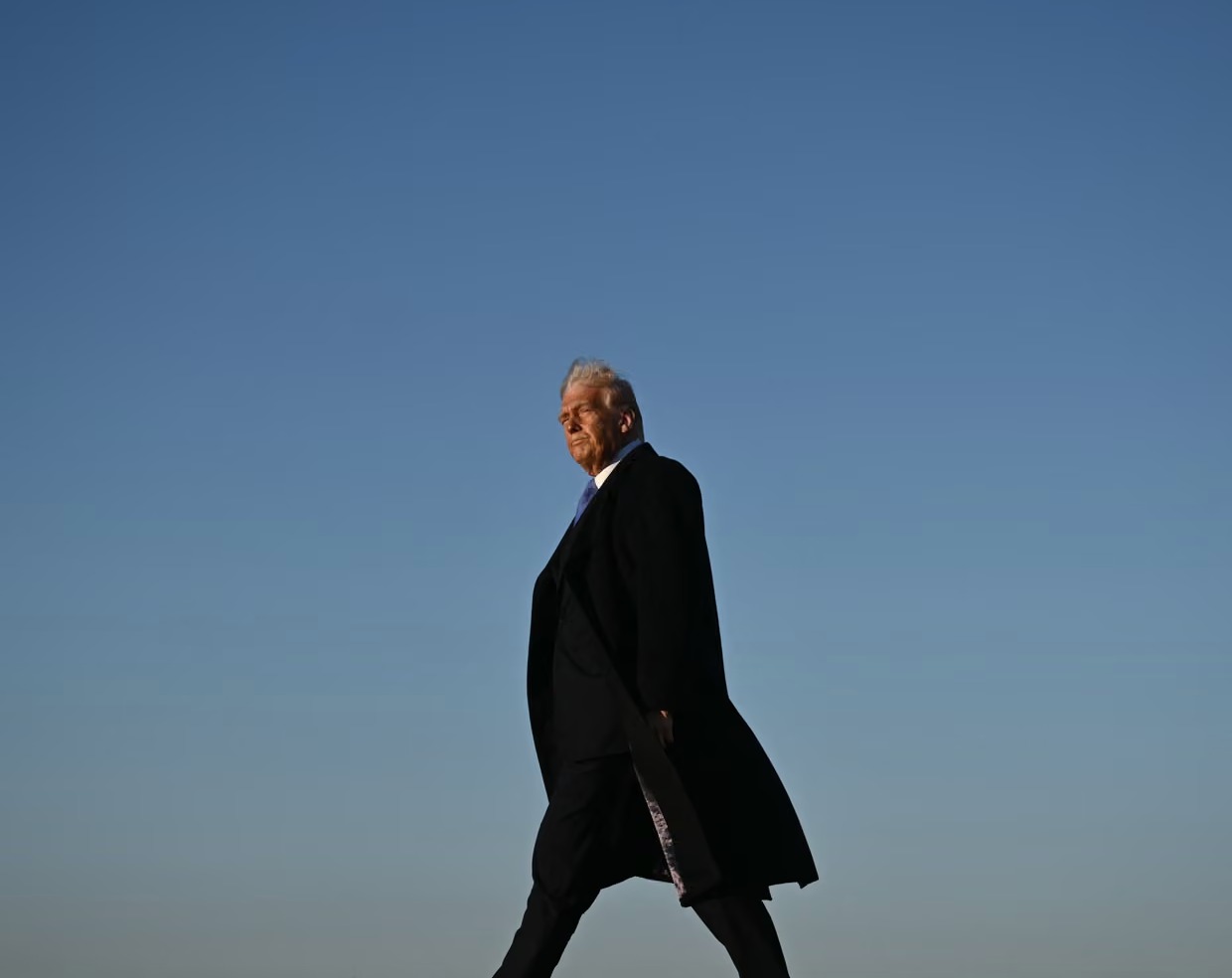
The world will be anxious, and rightly so. For a man so intent on winning a peace prize, Trump appears to revel in conflict. Donald Trump talks about peace, but he is a man of war.
The deposition and alleged capture of Nicolás Maduro, the hardline socialist president of Venezuela, by invading US forces will send shivers of fear and consternation across the world. The coup is illegal, unprovoked and destabilizing at regional and global levels. It subverts international norms, ignores sovereign territorial rights and could create a situation of anarchy within Venezuela itself.
It’s chaos transformed into politics. But this is the world we live in now – the world according to Donald Trump.
The direct attack on Venezuela represents an extraordinary and dangerous assertion of unfettered US power and comes in the same week that Trump threatened another unpopular and anti-Western regime with military strikes: Iran. It follows months of increasing US military, economic and political pressure on Maduro, including lethal maritime attacks on vessels belonging to suspected drug traffickers.
Trump claims to be acting to prevent illegal narcotics from entering the US through Venezuela and to stop an alleged flow of “criminal” migrants. In a throwback to the 2003 U.S. invasion of Iraq, he is also accused of coveting Venezuela’s vast oil and gas resources – suspicions reinforced by the U.S.’s repeated illegal seizures of Venezuelan oil tankers.
But Trump’s main motives appear to be personal animosity directed at Maduro and a desire to revive the 19th century Monroe Doctrine by creating a US sphere of influence and dominance throughout the West.
Regional leaders, including Colombia’s President Gustavo Petro, who has clashed with Trump in recent months, greeted the coup with outrage and alarm; perhaps, above all, because they also fear becoming victims of Washington’s new and aggressive hegemony. Cuba’s left-wing government has particular reasons for concern. It relies heavily on the Venezuelan regime for cheap energy and political and economic support.
Marco Rubio, the American Secretary of State, has made no secret of his desire to see regime change in Havana. In Panama, too, anxiety levels are high. Trump has already threatened military action against the country over control of the Panama Canal. In fact, Maduro’s alleged capture recalls the American invasion of Panama in 1989 and the subsequent fall and imprisonment of the then dictator, Manuel Noriega.
Authoritarian and undemocratic regimes around the world will closely watch Trump’s next moves, as will Washington’s democratic allies. Iran condemned the coup. You have good reason to fear. But Vladimir Putin, president of Russia, may not be entirely unhappy with the ouster of his Venezuelan ally.
Trump’s resort to unprovoked violence is not so different from Putin’s actions in invading Ukraine. Both illegally attacked a neighboring country and sought to depose its leadership. For Xi Jinping of China, whose forces were last week taking military action against Taiwanese “separatists,” Trump has just set a precedent that he might willingly follow one day.
Trump’s coup is of great concern to Britain, the EU and Western democracies. They must, and must, condemn him unequivocally. It directly challenges the rules and principles of the international order that they hold dear. The US has once again ignored the UN and traditional methods of resolving interstate conflicts. And they are acting with apparent disregard or little respect for the consequences that will occur in Venezuela.
The Caracas government has been decapitated, but other key members of the regime appear to remain in power. They are inciting resistance and, potentially, reprisals against the US. There are unconfirmed reports of civilian casualties. If a power vacuum sets in, public order could collapse, triggering a civil war or a possible military coup. And it is unclear whether the latest US military action has ended or whether it could intensify further.
The idea that exiled opposition leaders like 2025 Nobel Peace Prize winner María Corina Machado will quickly return and that full democracy will be restored is naive. The next few days will be critical. And it all depends on Trump.
Trump’s reckless action should finally put an end to his always misleading characterization of himself as a “global peacemaker.” It is time Keir Starmer and other European leaders publicly recognized him for what he is: a global warmonger, a universal threat.
Every time he loudly meddles in conflict zones such as Russia-Ukraine or Israel-Palestine, setting deadlines, issuing ultimatums, playing favorites and monetizing misery, the quest for a just and lasting peace suffers a setback.
No wonder peace is so difficult to achieve. And, interestingly, even though he presents himself as a disinterested and non-interventionist peacemaker, Trump is simultaneously waging war against the world. The US carried out a record number of airstrikes in the Middle East and Africa last year, according to research.
Since returning to office a year ago, pacifist Trump has bombed Yemen, indiscriminately killing countless civilians after relaxing the rules of engagement; bombed Nigeria, with counterproductive effect; bombed Somalia, Iraq and Syria; and bombed Iran, where he falsely exaggerated the success of American attacks on nuclear facilities. He even refuses to rule out the bombing of Greenland, a sovereign territory of NATO member Denmark.
What’s going on in Trump’s head? A more benign interpretation is that, in matters of war and peace, he has no idea what he is doing – no strategy, no clue – and invents policies as the situation arises, depending on how he feels.
The sinister interpretation says that he knows exactly what he is doing, that worse things are yet to come. Like other presidents in their second term who ran out of options at the national level, Trump realizes that the international scene offers greater possibilities for the exercise of power and ambition. He is building a legacy with blood.
Trump’s irresponsible and dangerously erratic behavior is getting considerably worse. His “success” in Venezuela may encourage him to attempt even greater and uncontrolled atrocities. Like Mark Antony without his toga and his brain, he struts and preens, calls for destruction and unleashes the dogs of war.
Originally published by The Guardian on 03/01/2026
By Simon Tisdall
Simon Tisdall is an international affairs commentator for The Guardian newspaper.
Source: https://www.ocafezinho.com/2026/01/03/golpe-ilegal-na-venezuela-qual-sera-o-proximo-passo/