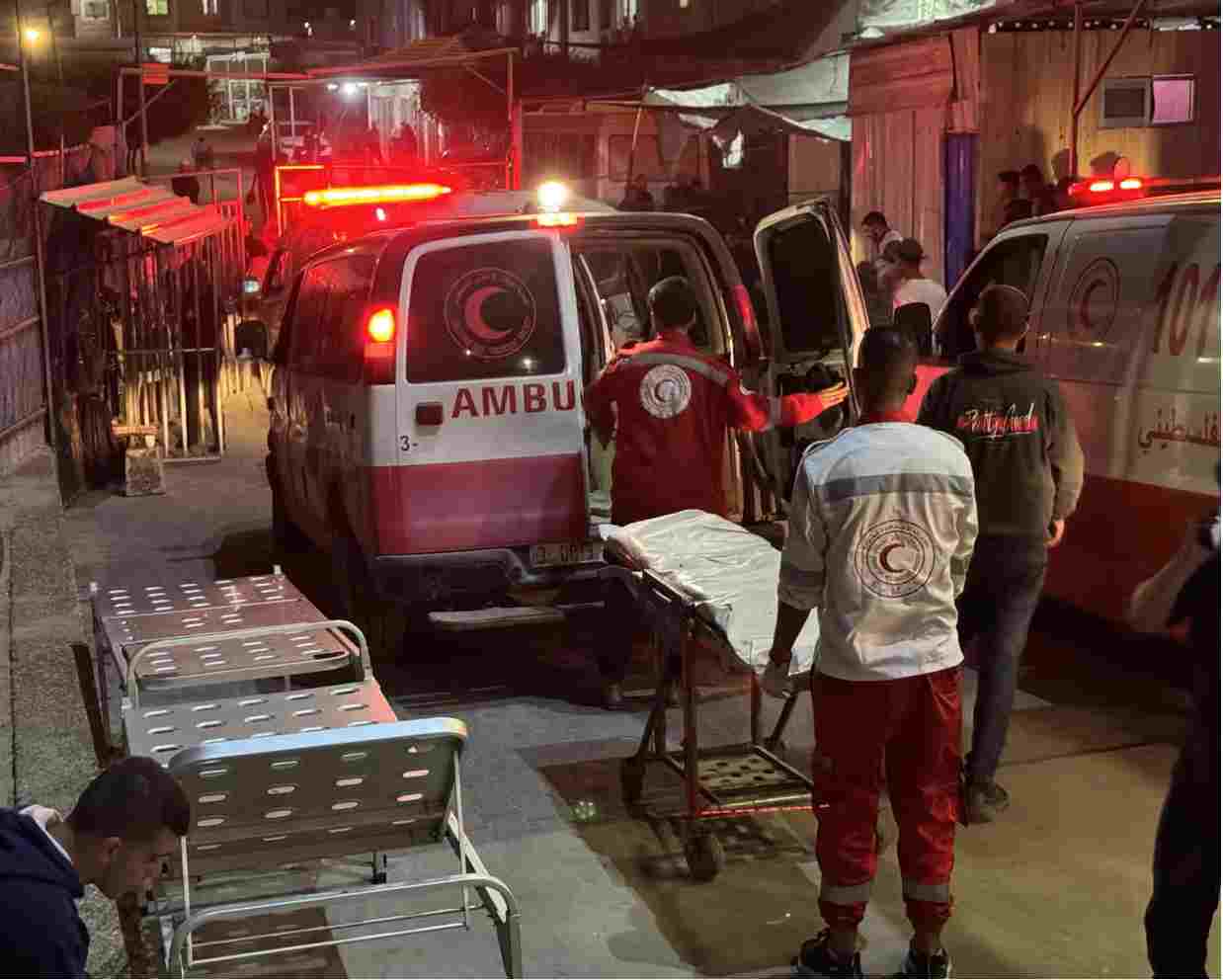
‘Severe shortage’ in territory where Israeli attacks killed more than 50 people and injured more than 100 in recent days.
Hospitals in Gaza are running out of essential supplies, with new waves of Israeli airstrikes killing more than 50 people and wounding more than 100 in recent days, health and aid workers in the devastated Palestinian territory said.
Doctors said on Sunday that supplies of gauze, antiseptics, thermometers and antibiotics were running low.
Mohammed Saqr, director of nursing at Nasser hospital in Khan Younis, said: “We still suffer from severe shortages of most of our supplies and medicines. We face daily crises, with the same shortages and deficiency of supplies, and we remain exhausted as we still receive many patients.”
“There is not much difference compared to the period before the ceasefire. Unfortunately, the bombings are still continuing… We don’t feel there is a big change.”
Humanitarian organizations have sent hundreds of tons of supplies to Gaza since the U.S.-backed ceasefire took effect last month, but stocks of medicine and supplies remain insufficient.
Joe Belliveau, executive director of MedGlobal, a US-based NGO, speaking from al-Mawasi in southern Gaza, said: “There is a shortage of staff, there are not enough ambulances… The entire healthcare system is still on the brink of collapse, with critical shortages across all sectors.”
The Gaza Health Ministry has reported more than 300 deaths from Israeli attacks since the ceasefire, and doctors say large numbers of people are suffering the consequences of malnutrition, adverse weather conditions, lack of shelter and new outbreaks of disease.
The first phase of the ceasefire agreement, which led to Israel’s partial withdrawal from about half of Gaza and the release of all living hostages held by Hamas, is now close to completion.
The next step, which received a boost when the UN Security Council endorsed Donald Trump’s 20-point plan for Gaza on Monday, calls for the creation of a committee of Palestinian technocrats to administer the territory under the ultimate authority of the US president, and the deployment of an international stabilization force.
Continued violence in Gaza has strained the ceasefire, although both sides say they are committed to the agreement.
The office of Benjamin Netanyahu, Israel’s prime minister, said five senior Hamas members were killed in Israeli strikes on Saturday, while health officials in Gaza reported at least 24 dead and another 54 injured, including children.
“We continue to fight terrorism on several fronts,” Netanyahu said on Sunday.
Analysts said Israel appeared to be using any alleged ceasefire violations to continue its efforts to weaken Hamas’ military capabilities by assassinating its leaders.
One of the Israeli strikes in Gaza on Saturday targeted a vehicle, killing 11 people and wounding more than 20 in Gaza City’s Rimal neighborhood, said Rami Mhanna, director general of al-Shifa hospital, where the victims were taken.
An airstrike on a house near al-Awda hospital in central Gaza killed at least three people and injured 11, while another attack on a house in Deir al-Balah, also in central Gaza, killed three people, including a woman, according to medical officials.
“Suddenly, I heard a loud explosion. I looked outside and saw smoke covering the entire area. I couldn’t see anything. I covered my ears and started shouting at the others in the tent to run,” Khalil Abu Hatab in Deir al-Balah told the Associated Press.
“When I looked again, I realized that the top floor of my neighbor’s house was gone,” Abu Hatab said. “It’s a fragile ceasefire. We can’t live like this. There is no safe place.”
Many of the victims were taken to Nasser hospital, the largest of the 13 main health centers still operating in Gaza.
Saqr said: “In the last attack, we had 12 dead; among them, four children and two women. And among the 24 injured, 18 were women and children. We feel that we are still at war and that there has not been much difference. The situation is very difficult.”
International medical NGO Doctors Without Borders said its teams in Gaza City and Khan Younis treated at least six patients, including a 15-year-old and a 71-year-old man, for injuries caused by Israeli airstrikes and bullets.
The Israeli army said it launched strikes following an “extreme violation” of the ceasefire involving an “armed terrorist” who crossed into an Israeli-controlled area and fired at troops in southern Gaza. Soldiers also killed 11 militants who emerged from a tunnel in the Rafah region, a military spokesman said, and two others in northern Gaza who advanced toward soldiers.
More food supplies have been arriving in Gaza since the October ceasefire, but the quantity is still insufficient to meet the enormous humanitarian need.
Belliveau said: “We saw a stabilization in malnutrition, which represented a significant improvement. The World Health Organization had moderate success in sending medicines and medical supplies, but the [MedGlobal] there are two trucks loaded with medicines held since October 10th, awaiting authorization from Israel.”
Israel denies accusations that it is deliberately obstructing humanitarian aid and accuses Hamas of stealing humanitarian assistance.
Cogat, the Israeli Defense Ministry agency responsible for managing access to the Gaza Strip, said last week: “Aid is arriving… Hundreds of trucks arrive daily carrying food, medical equipment and shelter supplies.”
According to reports, a contingent of US military officers is working with Israeli authorities on the entry and eventual distribution of aid in Gaza, although their influence is unclear.
Egypt, Qatar and the United States have acted as mediators between Hamas and Israel, ensuring the ceasefire that came into force last month.
A high-ranking Hamas delegation met with the head of Egyptian intelligence in Cairo on Sunday to discuss the ceasefire agreement and the situation in Gaza, the group said.
The movement also said it had discussed with Egypt ways to urgently resolve the issue of around 100 armed Hamas militants who are still in tunnels under the part of the Gaza Strip controlled by Israel, adding that communication with them has been cut off.
The two-year war in Gaza was triggered when militants led by Hamas killed around 1,200 people, most of them civilians, and kidnapped 251 during a surprise attack in Israel in October 2023. The Islamic organization still holds the remains of three hostages.
More than 69,000 Palestinians, mostly civilians, have been killed in the subsequent Israeli offensive and in attacks since the ceasefire. The bodies of thousands of others remain under the rubble.
Originally published by The Guardian on 11/23/2025
By Jason Burke in Jerusalem
Source: https://www.ocafezinho.com/2025/11/24/hospitais-em-gaza-sem-suprimentos-devido-ataques-aereos-israelenses/