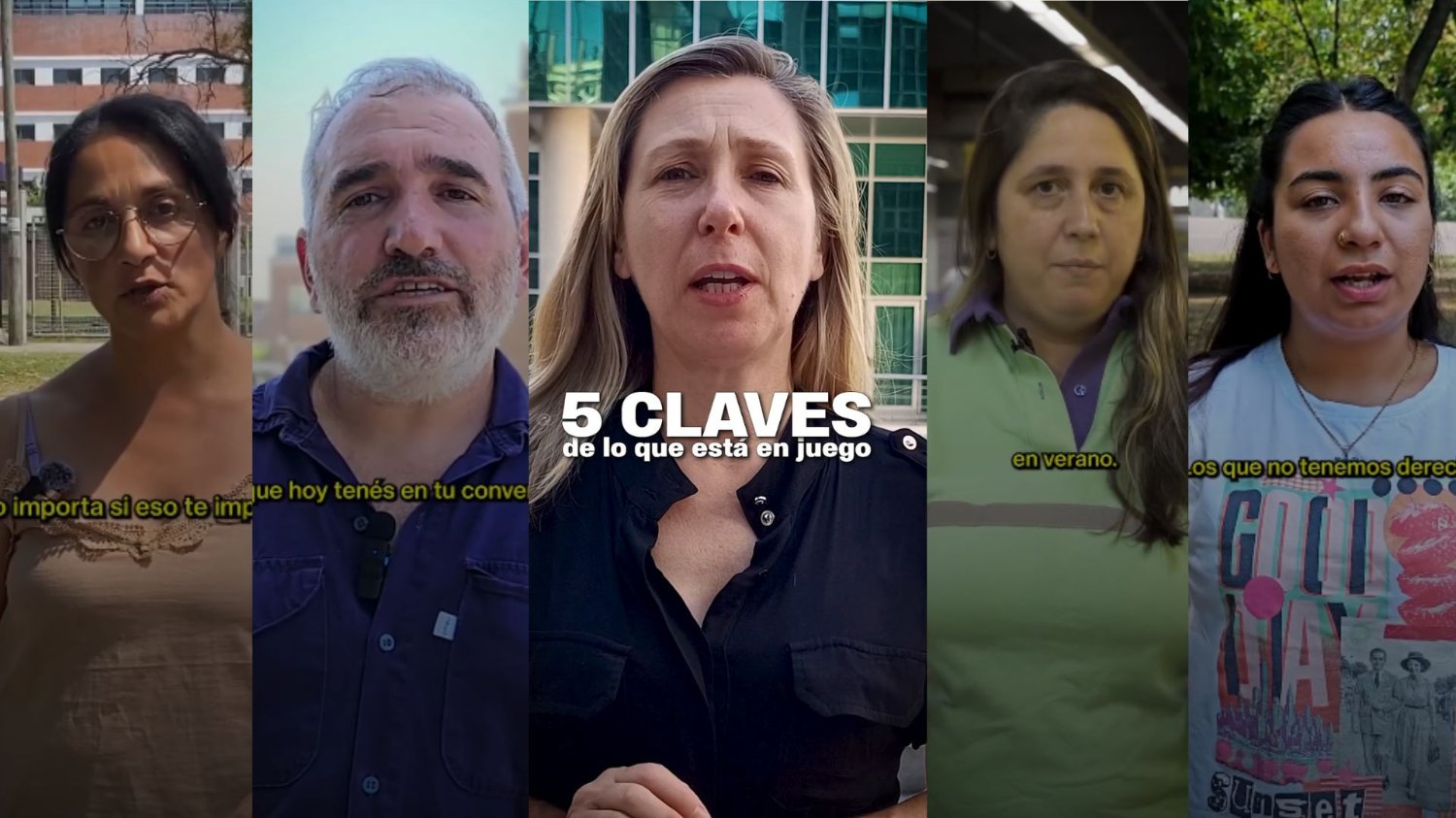
The government of Javier Miley advances with a labor reform that implies a historic setback in the rights of the working class. From different sectors and workplaces, workers warn that what is at stake is not a technical modification, but a change of labor regime that consolidates precariousness, weakens collective organization and strengthens the power of the employers.
The director of PTS-FITU, Myriam Bregmanreported on his social networks that:
“Milei wants to vote for a reform to enslave the working class, no matter what job you have. That is why it is key to understand what is at stake and why we must organize to face it.”.
Based on the testimonies of those who work every day in factories, services, transportation and education, these are some of the keys to the reform promoted by the government.
1. Flexible working hours and end of overtime
One of the central modifications is the so-called “hour bank”which allows companies to arbitrarily allocate working time. Stella Cabrala Kraft-Mondelez worker, explains it clearly:
“The company can force you to work 12 hours one day and 4 the next, and overtime disappears. It doesn’t matter if that prevents you from taking your children to school, the doctor, studying or simply resting.”.
The measure aims to reduce business costs at the cost of completely disorganizing the daily lives of those who work.
2. Attack on collective agreements
The reform also puts at risk the collective labor agreementsone of the main historical achievements of the labor movement. Juan Contrisciania worker at the Río Santiago Shipyard, warns:
“If the company and the union do not agree, the current agreement ceases to apply. And even worse: they can establish agreements per company, without respecting the rights we already have.”.
This opens the door to a total fragmentation of rightswhere each company sets its own downward rules.
3. Vacations at the employer’s discretion and reduction in dismissals and compensation
Another key point is the elimination of the right to vacations. Agustina Chaveza subway line D worker, points out:
“The company will give you vacations however it wants, in installments and whenever it wants. It can be the end of the vacation with your family or friends. They can give them to you in October even if your children have vacations in the summer”.
Far from rest, vacations become a tool for work discipline.
Furthermore, the reform seeks reduce the cost of layoffs and modify the compensation system. According to the workers, it is even proposed that the costs fall on funds linked to retirement, transferring the crisis to those who have already been expelled from the labor market.
4. Criminalization of the claim and attack on the right to organize
One of the most serious aspects is the attempt to limit protest and collective organization. Natalia Hernandezteacher, sums it up like this:
“They want to declare the essentiality of almost all jobs. We won’t even be able to hold assemblies. They want us to bow our heads, without the right to organize”.
The expansion of “essentiality” seeks to prevent strikes, assemblies and forceful measures, emptying the right to complain of its content.
5. Precariousness for life
For those who already work in precarious conditions, the reform does not promise improvements, but rather structural worsening. Lucia Barriosa call center worker and UNLA student, warns:
“Those of us who do not have rights are going to be worse off, because we will never be able to have them. They want us precarious for life, working more and more for less income”.
Organize resistance from below
The closure is once again in the hands of Myriam Bregmanwhich calls for not delegating the defense of rights to negotiations behind the workers’ backs:
“This is not just another law. The present and future of the entire working class is at stake. We cannot trust either the Congress thread or a CGT that has been accompanying Milei. We need to organize from below, with assemblies in workplaces and neighborhoods, coordinate to impose a national strike and a plan of struggle that ends in a general strike”.
And he concludes with a clear political definition:
“The day they want to deal with it, we have to block everything, surround Congress and the governorships to defeat this labor reform”.
Source: www.laizquierdadiario.com