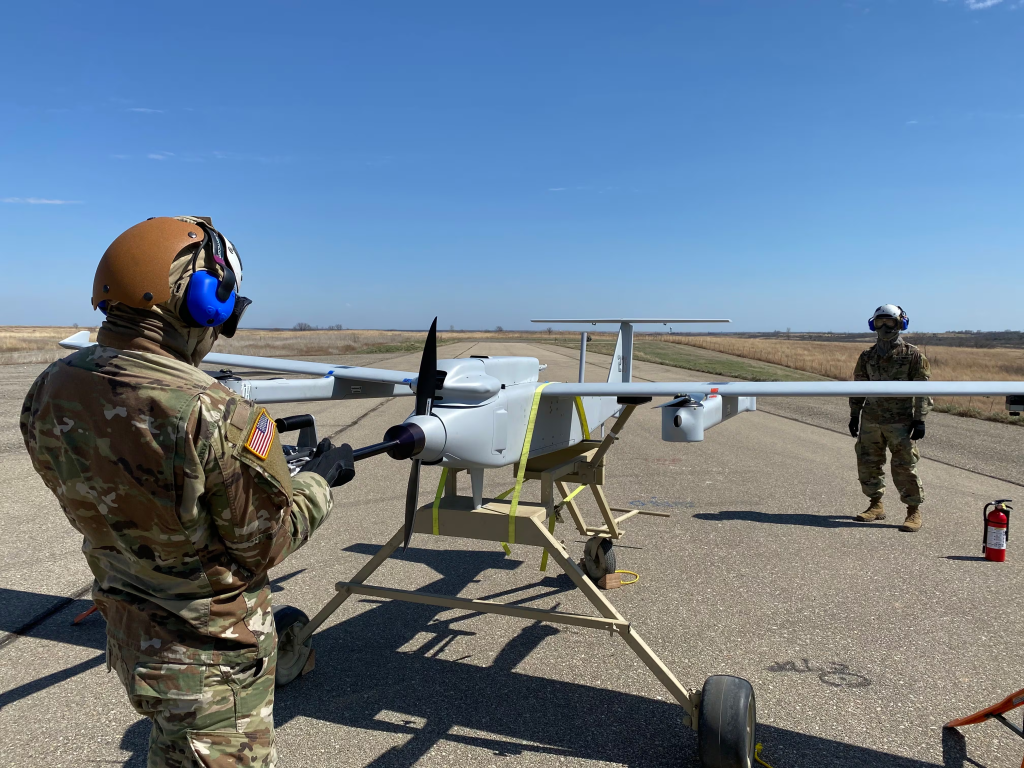
European Commission plan calls for reliable semiconductors in civilian and military drones and directly responds to recent Russian incursions and security breaches
The European Union will present, next week, an unprecedented strategy for drones that puts security at the center of everything. The plan calls for the use of “trusted semiconductors” in all systems, both civilian and military, to protect against tampering and cyberattacks. Sources close to the document, cited by Bloomberg, confirm that the text may still change, but the direction is already defined: producing more drones and, at the same time, making them much safer.
The calendar is no coincidence. Last September, NATO fighter jets shot down 19 Russian drones that invaded Polish airspace. It was the first time since the start of the war in Ukraine that an Alliance country shot down enemy military aircraft on its own territory. The episode made it clear: Europe can no longer treat drones as simple technological toys.
Therefore, the European Commission decided to act urgently. Last year, he proposed the creation of an “anti-drone barrier” and advanced 6 billion euros from a G7 loan to set up an anti-drone alliance with Ukraine. Some member governments reacted with skepticism, but the mood has changed. Now, no one discusses the need for a coordinated response anymore.
The new strategy does not stop at production. It obliges countries to assess the protection of ports, airports, plants and electrical grids against invasions by drones. The objective is simple and straightforward: to make the European Union more resilient, more capable of manufacturing its own equipment and more innovative in defending against threats that come from the sky.
Furthermore, Brussels wants to accelerate the alliance with Ukraine that has already been announced, but has not yet come to fruition. Before the summer, it will convene an industrial forum to boost manufacturing at scale. By the beginning of 2027, it intends to open a research and development center dedicated exclusively to anti-drone technologies.
To turn the plan into practice, the EU will launch drone safety exercises every year. By autumn, each country will have rapid response teams ready to act in emergencies. Member States will also appoint national drone safety coordinators, responsible for monitoring the implementation of all measures.
The plan is open to nearby partners. The United Kingdom and Norway are already invited to participate, signaling that European defense is not limited to the Union’s borders.
Europe understood the message from the Polish skies: cheap, lethal drones changed warfare. Now, the bloc wants to respond with reliable technology, accelerated production and real cooperation. The document that arrives next week is not just another strategy. It is the concrete response of a continent that has decided not to be caught by surprise again.
With information from Bloomberg and Investing*
Source: https://www.ocafezinho.com/2026/02/06/uniao-europeia-quer-controlar-o-risco-dos-drones/