There is some discomfort among the ambassadors of the 27 countries of the European Union regarding the foreign policy assumptions that the president of the European Commission, Ursula Von der Leyen, has taken, which have been expanded with her position in the war in Iran, which was not agreed upon with the member states, or her calls to the Gulf countries, although she has no powers in this regard. A resentment that this Monday will be reflected in the annual summit of the consular bodies with the president of the European institution. Von der Leyen in her speech to the ambassadors not only has not lowered her tone but has advocated for a change in the system in which she even went so far as to point out that “Europe can no longer be the guardian of the old world order, of a world that has gone and will not return. We will always defend and maintain the rules-based system that we helped build together with our allies, but we can no longer rely on it as the only way to defend our interests or assume that its rules will protect us from the complex threats to which “We face each other. Therefore, we need to build our own European path and find new ways to cooperate with our partners.”
“We urgently need to reflect on whether our doctrine, our institutions and our decision-making – all conceived in a post-war world characterized by stability and multilateralism – have managed to keep pace with the changes around us,” commented the President of the Commission. The EU’s foreign policy is a complex system since it needs to bring together 27 countries with different interests and often contradictory positions in the world. There is a trend, promoted by Von der Leyen, to try to accelerate and simplify decision-making, although it is opposed by countries and organizations that doubt its democratic legitimacy.
In fact, the president of the Commission has called the multilateral order into question by pointing out “whether the system we built—with all its well-intentioned attempts at consensus and compromise—is more of a help or an obstacle to our credibility as a geopolitical actor.”
“The point is that, in times of radical change like ours, we can cling to what once made us strong and defend habits and certainties that history has already overcome or we can choose a different destiny for Europe. We can build a foreign policy that makes us stronger at home, more influential globally and a better partner for countries around the world. A foreign policy that is a fundamental pillar of European independence, that protects our interests and promotes our values. Not with nostalgia, nor lamenting the old world, but by giving shape to the new one,” he highlighted.
The shift that Von der Leyen intends regarding the multilateral system and with rules such as international law is of strong significance because it is precisely one of the criticisms that has been made of the actions of leaders such as Russian President Vladimir Putin, with his invasion of Ukraine, or the President of the United States, Donald Trump, with the kidnapping of the Venezuelan President, Nicolás Maduro, or the illegal war against Iran.
“No tears should be shed for the Iranian regime”
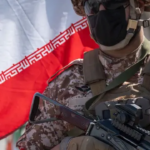
Regarding Iran, Von der Leyen did not want to leave half measures: “I want to be clear: no tears should be shed for the Iranian regime that has inflicted death and imposed repression on its own people, and that has caused devastation and destabilization throughout the region through its allies armed with missiles and drones.” His position is far from that of other European leaders such as Pedro Sánchez or the presidents of France and Italy, who have designated the war in Iran as illegal.
Despite the terrible consequences, both in terms of innocent deaths and the impact on the economy, the president of the European institution has maintained the argument of Iran’s freedom to support the US and Israeli attacks on Iran: “The people of Iran deserve freedom, dignity and the right to decide their own future, even knowing that this will be full of dangers and instability both during and after the war.”
Von der Leyen wants more European initiative, faster and less tied to rules and regulations. “We need to go further. We must be prepared to project our power more decisively. For example, to counter foreign aggression and interference using all our instruments – whether economic, diplomatic, technological or military – or by being much more pragmatic when doing business around the world,” he assured.
Ukraine and EU enlargement
Ukraine has also been a relevant element in Von der Leyen’s speech before the ambassadors. “The war must end in a way that does not sow the seeds of future conflicts. And this is what we continue to work on every day – with Ukraine and with our partners – to ensure real and lasting security for Ukraine, so that we can ensure a complete, just and lasting peace.” The President of the Commission has stressed that the urgent thing is to approve the loan of 90,000 million euros to cover the military and infrastructure needs that Ukraine needs, now held back by Hungary’s veto, although Von der Leyen has assured that “the commitment will be fulfilled, because our credibility – and, more importantly, our security – is at stake.”
Also related to Ukraine and although it is an issue that has raised eyebrows in several capitals, due to the economic consequences it may have, Von der Leyen has insisted on the need for the expansion of the EU to the East. “There has been much debate about how to carry out this merit-based process in a timely manner. But it is of utmost importance that we prepare, bringing the Western Balkans, Moldova and Ukraine closer to our Union now. Enlargement is not about ideology: it is a matter of common interest and European security. And we must be prepared to act when the time comes,” he said.
Source: www.eldiario.es