Will the waltz be different now?
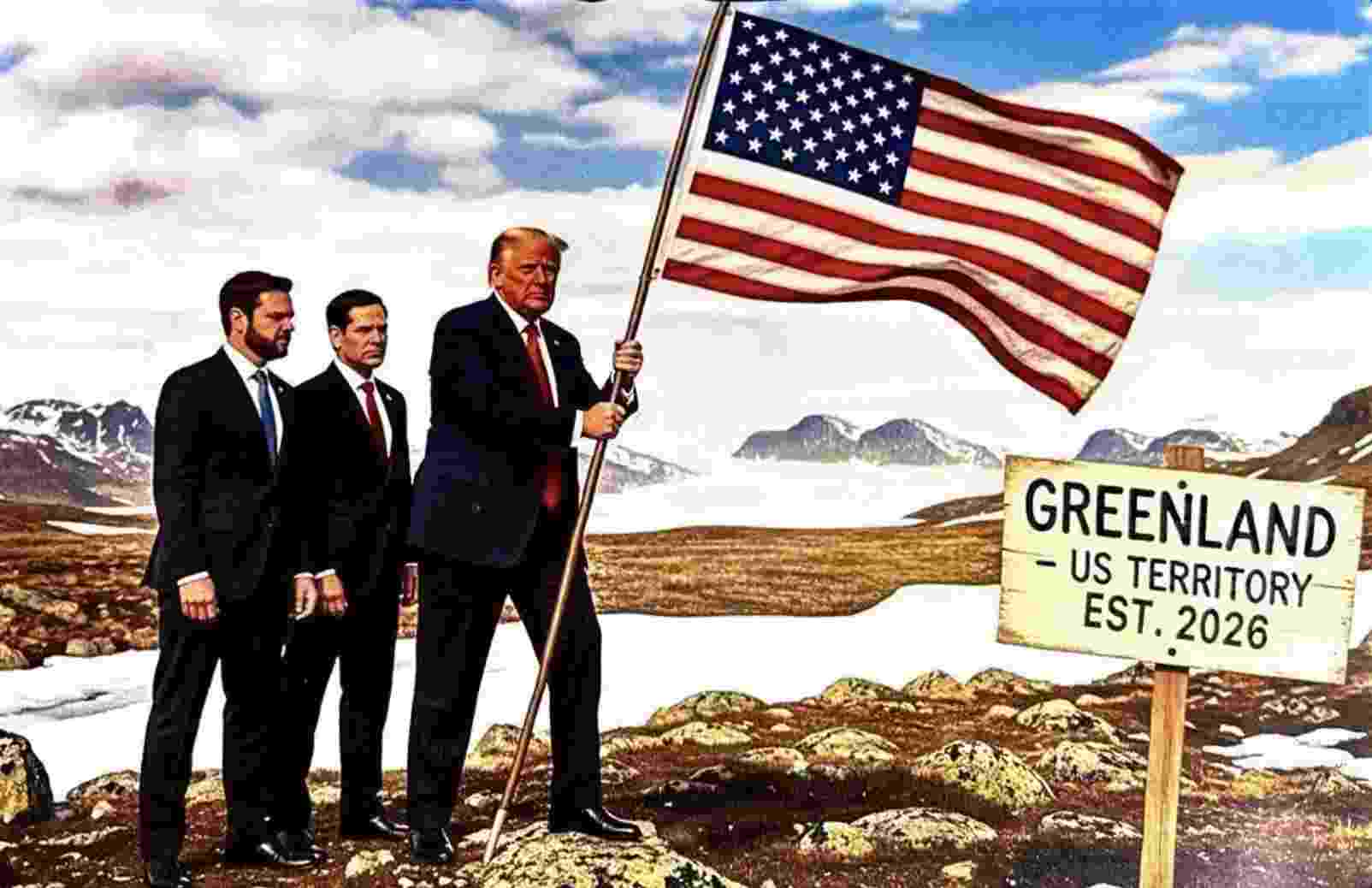
An unprecedented conflict between the United States and Europe broke out, with remote Greenland as its epicenter.
On Sunday, US Treasury Secretary Scott Bessent stated categorically: “I believe the Europeans will understand that the best outcome is for the US to maintain or gain control of Greenland.”
On the same day, ambassadors from the 27 EU countries met in Brussels to discuss retaliatory tariffs worth $108 billion or restricting the entry of American companies into the bloc’s market, as well as possible restrictions on the entry of American companies into the bloc’s market.
The meeting took place after the US announced new 10% tariffs on Denmark and seven other European countries, to take effect from February 1, until “an agreement is reached to purchase Greenland”.
Between rhetoric and action
On the surface, the European response suggests a transition from passive defense to active retaliation. However, the reality is more complex. The retaliatory tariffs have not yet been implemented, and the measures under discussion – including the anti-coercion instrument (ACI) – are being drafted to “give European leaders bargaining power” at the World Economic Forum meetings in Davos.
According to European sources, the bloc will wait until February 1 to see if the US carries out its threats before deciding on countermeasures.
Signs of fragility
A revealing episode occurred shortly after the announcement of the American tariffs: the German reconnaissance team, made up of 15 soldiers, withdrew from Operation Arctic Endurance – a military exercise led by Denmark and scheduled for 2026 in Greenland. Berlin has not offered a public explanation, but analysts attribute the decision to tariff pressure.
Originally, seven European countries (United Kingdom, Germany, Sweden, France, Norway, Netherlands and Finland) had sent 37 military personnel to participate in the exercise.
Dependence and vulnerability
The US turned a proposal once considered absurd – the purchase of Greenland – into concrete pressure, in part because it correctly assessed the fragility of the European response. Years of strategic dependence on the United States, combined with the alienation of other partners such as China and Russia, have made Europe particularly vulnerable to American coercion.
This pattern is repeated in other contexts. During the Russia-Ukraine conflict, Europe imposed radical cuts to Russian gas without fully assessing the economic and social consequences. Similarly, Sino-European relations – once prosperous – deteriorated as Europe adopted American ideological rhetoric at the expense of pragmatism.
The price of appeasement
In relations with Washington, Europe often opts for appeasement. In the previous trade war, Europe’s surrender without a fight may have paved the way for the US to now openly claim European territory.
“Who are our enemies? Who are our friends? This is a question of paramount importance for the revolution” – this teaching, well known in China, seems to be missing in contemporary Europe. In international relations, there are no permanent allies or adversaries, but Europe seems to have difficulty applying this realism to its own situation.
Despite existing US military bases in Greenland and the absence of evidence of a significant Russian or Chinese military presence in the region, the US has now made it clear that it seeks not just cooperation, but sovereignty over the territory. And they calculate, based on precedents, that Europe is unlikely to offer significant resistance.
American actions send an unmistakable message: for Washington, Greenland is indispensable. The real question is whether Europe will be able to demonstrate that it is equally committed to defending the territorial sovereignty of its member states.
With information from Global Times
Source: https://www.ocafezinho.com/2026/01/21/a-europa-e-sua-incapacidade-de-distinguir-aliados-de-adversarios/