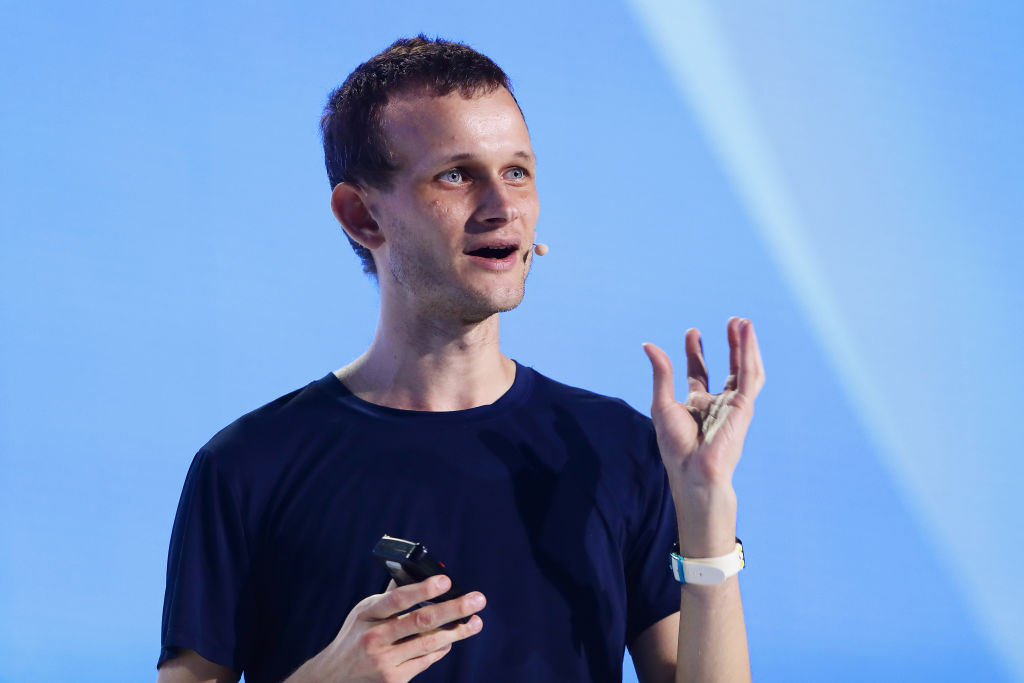
Ethereum founder Vitalik Buterin questions the role of so-called Layer 2 networks. According to him, the old plan to scale up Ethereum (ETH) via these so-called L2s no longer works well. Major players such as Arbitrum, Optimism and Base have divided reactions to this sharp message.
Once the future, now outdated?
For years, the idea was simple: Ethereum is slow and expensive, so we build faster ‘layer 2’ networks on top of it. They carry out transactions and then only report the final position to Ethereum. This way the network remained safe, but much more efficient.
Buterin himself was one of the biggest proponents of that model. But now he says: “That approach no longer works.” He points to two major problems: the Ethereum base layer itself is becoming increasingly powerful, and most L2s are still far from being secure and independent enough. They often still run on a small group of people who can shut down the network, exactly what Ethereum always wanted to avoid.
‘Not every L2 deserves the Ethereum label’
Buterin now advocates a new approach. Instead of every Layer 2 being automatically seen as ‘part of Ethereum’, every network must prove its added value. This could be through better speed, better privacy or unique functions, but in a way that is reliable and safe.
Only networks that at least meet certain standards can really call themselves L2, Buterin believes. The rest? These then function more as independent blockchains with a bridge to Ethereum and not as an extension of it.
Mixed reactions from Arbitrum, Optimism and Base
The response from the L2 world was not long in coming. Arbitrum’s Steven Goldfeder disagrees that Ethereum can survive without L2s. He points out that Arbitrum sometimes processes more than a thousand transactions per second on busy days. “Ethereum simply cannot handle that. If you push away rollups, large companies will soon build their own blockchains, outside of Ethereum.
Karl Floersch of Optimism sees it differently. He acknowledges that L2 networks still have a lot of work to do. For example, there are not yet good bridges between the different L2s, and anyone who wants to withdraw money sometimes has to wait days. He believes in a future where every L2 makes different choices: one focuses on scale, the other on privacy, or on specific apps.
Base, Coinbase’s network, is more on Buterin’s side. They want to distinguish themselves by making it easier for people to use apps, and are working on better privacy and greater ease of use.
Not every Layer 2 is the same
The discussion also shows how broad the group of ‘L2s’ now is. There are roughly two types:
- Optimistic rollupssuch as Arbitrum and Optimism. They assume that transactions are correct, unless someone objects. This system works well, but causes long waiting times and less privacy.
- Zero-knowledge rollupssuch as Starknet and zkSync. They provide direct mathematical evidence for every transaction. That is safer and faster, but technically much more complicated. Some of these networks also consciously choose to be different from Ethereum – something that makes Buterin happy.
Where is it going?
The time when a Layer 2 only had to be ‘Ethereum, but faster and cheaper’ seems to be over. Vitalik Buterin wants every L2 network to reinvent itself. Not just to scale Ethereum, but to offer something unique.
Whether that means more privacy, apps you won’t find anywhere else, or completely new technologies: the bar is being raised. Ethereum itself is becoming more and more powerful. So the question is: which L2s remain relevant?
Source: https://newsbit.nl/vitalik-buterin-l2s-zijn-geen-schaaloplossing-meer/