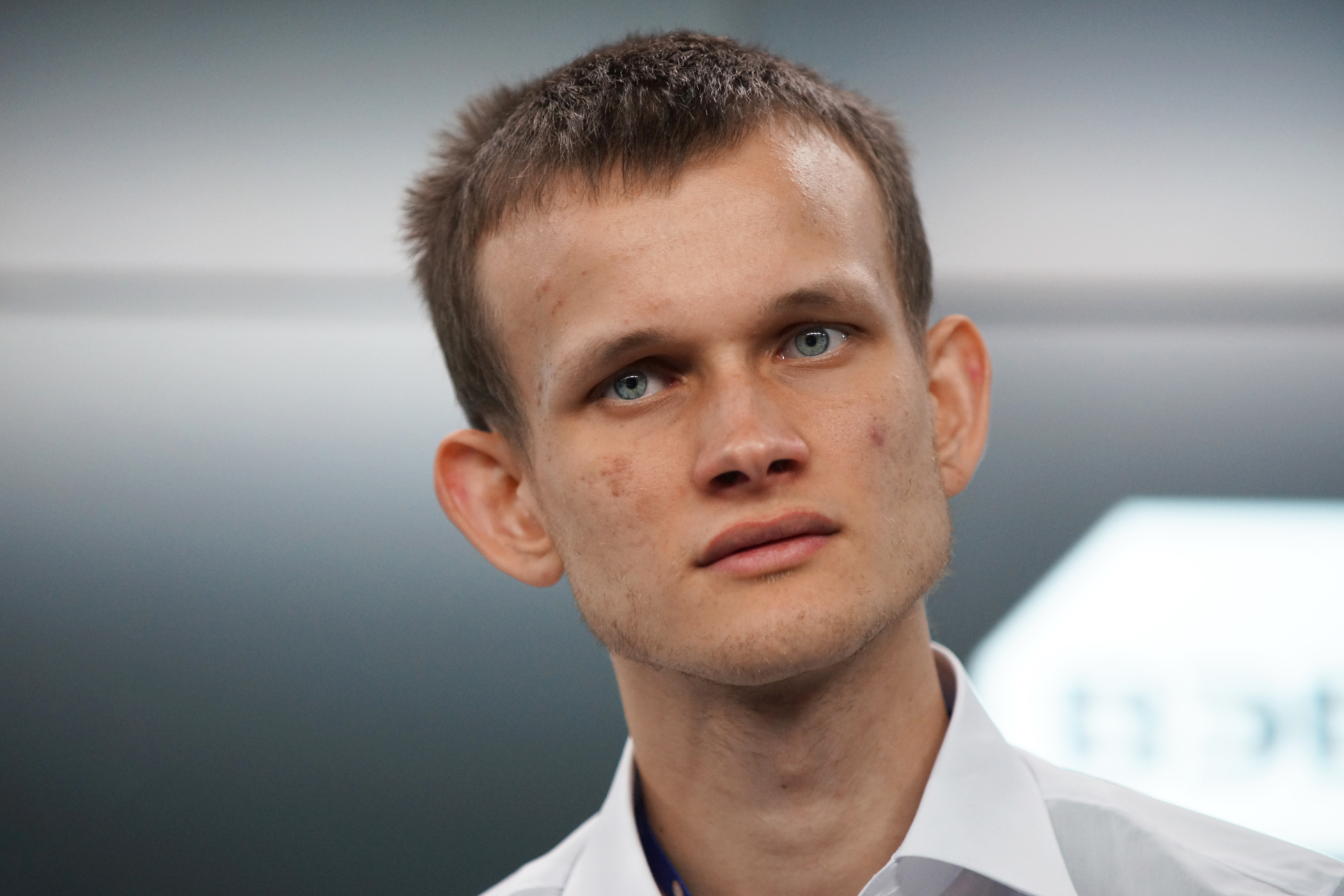
Decentralized autonomous organizations, or DAOs, were once presented as a revolutionary governance model for the Internet. However, there are now also critical voices within the crypto world. Ethereum (ETH) founder Vitalik Buterin argues that it is time for a fundamentally different approach.
DAOs do not work as intended
In a recent post on X, Buterin writes: “We need more DAOs, but different and better.” According to him, the original idea has been simplified along the way, while the potential is much greater.
A DAO is a digital organization on the blockchain, without a boss or central management. Decisions are made by members voting with tokens. This is carried out automatically.
Just as the Bitcoin (BTC) network enables decentralized transactions, DAOs use the blockchain to make decisions collectively, without the intervention of a central party.
DAOs have been around since around 2016. The concept gained widespread attention through The DAO, a project on Ethereum that functioned as a digital investment fund. Members could contribute money and vote together on which projects deserved funding.
Vitalik states that today, DAOs are mainly used as a system where token holders manage a collective treasury through voting rounds. According to him, that model works on paper, but has major shortcomings.
This application is inefficient, prone to concentration of power among large token holders, and does not solve the flaws of human politics. As a result, skepticism about DAOs has grown. Yet Buterin still sees potential in the idea.
What else Vitalik Buterin wants
Buterin believes that DAOs not only need better technology, but also need to be better suited to the type of problem they want to solve. He distinguishes between two types of situations: concave and convex problems.
- Concave problems are complicated or sensitive issues. For this you need a system that processes input from many people and prevents abuse.
- Convex problems require quick, clear choices, such as starting a new project. In such cases, decisive leadership is more effective, according to Buterin.
According to the Ethereum founder, DAOs work best on difficult issues where cooperation is important and you want to prevent one party from gaining too much power.
Two major stumbling blocks for DAOs
He also warns of two major stumbling blocks: lack of privacy and decision fatigue. Without privacy, voting becomes a popularity contest, and if people have to vote too often, they lose motivation.
According to Buterin, the solutions are within reach. Privacy can be ensured with a technology called zero-knowledge proofs (ZK-proofs), which allows users to vote without making their choices public.
Decision fatigue is the phenomenon that people make increasingly poor choices or give up altogether if they have to make decisions too often in succession. In the case of DAOs, this means that if members have to vote constantly, they will eventually become tired, disinterested or drop out.
However, according to Buterin, decision fatigue can be reduced with the help of artificial intelligence (AI), provided that this technology supports and does not replace humans. For example, users can have their own AI assistant that knows their preferences and votes on their behalf, without having to manually track everything every week.
Source: https://newsbit.nl/ethereum-oprichter-vitalik-buterin-kraakt-daos-maar-wat-zijn-dat-eigenlijk/