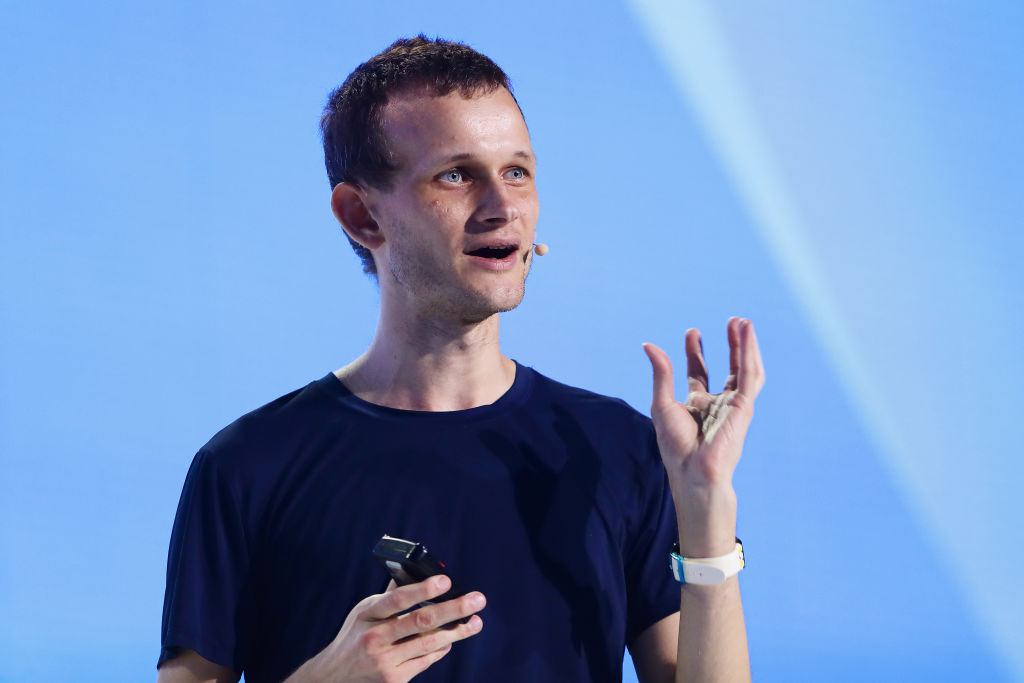
Ethereum co-founder Vitalik Buterin has labeled quantum resilience as an essential part of the network’s long-term strategy. The announcement comes at a time when the risks of breakthroughs in quantum computing are being taken increasingly seriously within the crypto industry.
Increasing urgency around quantum security
Crypto experts are increasingly sounding the alarm when it comes to quantum computing. This new form of computing could potentially crack the complex cryptographic encryptions of crypto networks.
During the Devconnect conference in Buenos Aires, Buterin presented the current roadmap for Ethereum (ETH). He also indicated that the network is preparing for possible threats from quantum computers, which may therefore also pose a threat to the Ethereum network.
The concept of “Lean Ethereum” that was introduced in July forms the basis for this development. It emphasizes simplicity, security and efficiency in Ethereum’s base layer. Within this framework, Buterin mentions “quantum resistance everywhere” as a spearhead.
How much time do we have?
But how real is quantum threat exactly for crypto networks? According to cryptographer Adam Black, this will take some time. Certainly taking into account possible measures, he believes it would take another 20 to 40 years before this quantum threat becomes real.
Although some expect that quantum computers will not pose a threat until well into the future, expectations vary. Some experts even warn of potential risks between 2028 and 2033.
Google recently announced that it had achieved a verifiable quantum advantage with the OTOC algorithm. IBM is also working on a fault-tolerant quantum computer, called IBM Quantum Starling, which is scheduled to be delivered to customers in 2029.
Roadmap Ethereum includes more than just quantum security
Ethereum therefore seems to be anticipating this threat. But quantum resistance is part of a broader set of long-term goals within the Ethereum project. In addition to cryptographic resilience, the team is working on zk-friendly virtual machines, hash functions like Poseidon, formal verification, improved consensus mechanisms, and faster finality.
For the medium term (2025–2026), Ethereum’s emphasis is still on scalability, which has actually been the spearhead in recent years. Scalability should be boosted by, among other things, increasing the gas limit, the introduction of EIP-7732 and the development of parallel processing by nodes.
Source: https://newsbit.nl/ethereum-richt-zich-op-kwantumbestendigheid-in-nieuwe-roadmap/