Kast’s electoral victory was overwhelming, but the organic crisis in Chile is not over. The elected candidate’s program of adjustments, cuts to the State and attacks on workers will require strong offensives to be implemented. This is not synonymous with absolute strength, and Kast knows it, which is why he tried to install a “moderate” discourse after the electoral result, seeking to hide his underlying program, because to carry out his agenda he must confront and defeat key sectors such as the labor movement and the student movement. Faced with this scenario, it becomes necessary to organize resistance in places of study and work to confront his program of attacks, drawing the fundamental lessons of these last four years of Boric, where the passivity that was imposed allowed the advance of the extreme right. The general strikes in Italy and Portugal lead the way.
The results
José Antonio Kast was elected with 7,240,006 votes and 58.17%. Candidate Jeannette Jara obtained 41.83% and 5,205,791 votes.
The business world celebrated. The president of the National Multigremial, Juan Pablo Swett, referred to the availability of working together with the new administration. From the Salmon Council, President Loreto Seguel, gave her support to the future Government and her intention to work collaboratively. “The new Government faces the challenge of leading a State policy for salmon farming, which allows us to grow and develop in a sustainable way,” said Seguel.
Kast’s victory is part of the advance of the extreme right worldwide. The Republican has Giorgia Meloni, from Italy, as a reference, and in Latin America he will align himself with far-right governments such as that of Javier Milei who already greeted him on the social network “X” or Daniel Noboa in Ecuador, all subordinated and followers of the policy of his main international representative Donald Trump at the head of North American imperialism, who has promoted a greater offensive towards Latin America with the attacks on Venezuela and the threats of land invasions with his updating of the old Monroe Doctrine that considers the continent as your backyard.
Kast focused his campaign on authoritarian measures with the excuse of security, attacks on the migrant community and cuts to the public sector. But it is impossible to explain this electoral result without a vision of Gabriel Boric’s mandate, the passivization that he installed in the social movements, of workers and youth, with the complicity of the union leaders and the movements, who preferred to be the social base of the government rather than strengthen the organization from below, in addition to his permanent somersaults and programmatic changes, which demoralized his social base and emboldened the advance of the extreme right.
A government that arrived promising profound social transformations, campaigning against the AFP, against the ISAPRES and saying that they were going to “stop fascism”, but that ended up being a coalition together with the former Concertación, saving the ISAPRES themselves, installing a pension reform that revitalized the AFP, strengthening the repressive framework of the State with historic levels of Mapuche political prisoners, militarizing the Wallmapu, ceding key aspects of economy and security to the agenda of the right that was becoming emboldened.
All of this was deepened by the decisions of Jara’s electoral campaign, which for the second round put historical concertationists such as Carlos Ominami, Francisco Vidal or Paulina Vodanovic at the head of his command, sectors widely repudiated by the vast majority of the population.
Jara’s first statement: Speech marked towards an opposition of an “institutional” nature
Jeanette Jara quickly came out to recognize the result, calling for unity and emphasizing the defense of transversal agreements. Positioning themselves from the “constructive and respectful” opposition. Giving continuity to the policy of agreements with the right that the Boric government had, calling for the construction of a purposeful opposition.
Gabriel Boric’s call to Kast occurred almost an hour after the Servel results were announced, calling for national unity: “And I am very proud of democracy, regardless of those who celebrate, those who are sad about today’s result, Chile is somehow consolidated in a way that makes us all proud,” he noted while making himself available for whatever Kast needed: “Commit all our support as a government to the transfer of command, respecting republican values. My conversation with the president-elect is to be in that line, that is why we will have a meeting tomorrow, Monday, with the elected candidate,” he said.
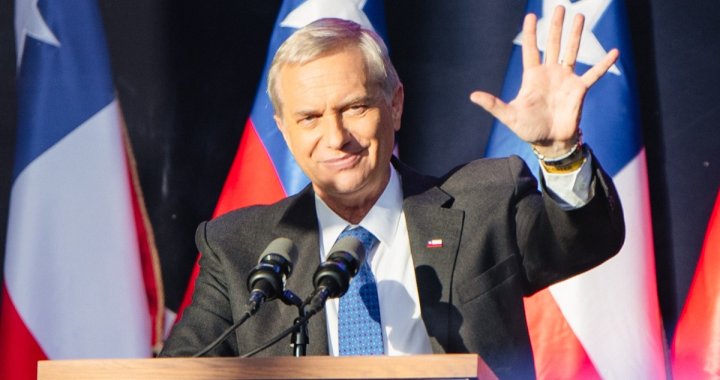
Kast: A first speech appealing to the “center” to hide its underlying program
In his post-electoral victory speech, Kast made permanent gestures to the “political center” with greetings to the former Concertación and former presidents Frei, Lagos and Bachelet, even greeting Jara and focusing his political axis on the “emergency government” to reestablish order and growth but with a speech that sought to be hegemonic by speaking of being the president of “all Chileans” and speaking of a unity government. In any case, he announced that 2026 will be a “hard, very hard year, because the country’s finances are not good,” already setting the stage for the adjustments and attacks they are preparing, because their underlying program will be greater suffering for the working class and oppressed sectors. He showed it in the threats to teachers and with the idea that “ideology is over in universities.”
Against fear and resignation, to strengthen collective organization from below to confront the extreme right
The electoral result will give confidence to Kast and the right to try to advance their anti-popular and anti-majority program. But the truth is that this will be a government crossed by contradictions. It is necessary that the large labor confederations such as the CUT and student organizations such as CONFECH call for confronting each of the attacks and a plan of struggle to defeat them and break their passivity of years.
More generally, the organic and institutional crisis remains open in the country and especially the international situation appears unstable with the crisis of American hegemony, greater clashes between powers, a slowed economy, and aberrant phenomena such as the ongoing genocide in Palestine and the Russian-Ukrainian war.
These phenomena directly affect and put pressure on Chile, an open economy especially subject to the vagaries of the international situation and the Sino-American dispute in the region.
In turn, the congress will be more fragmented and no sector will have an absolute majority.
But if there is a fundamental fact about the international situation, it is the entry on the scene of new phenomena of the class struggle, with the workers’ strikes in Italy in solidarity with Palestine, against the economy of war and adjustments, which have firmly confronted Meloni’s program (Kast’s reference), the strike in Portugal that has put its right-wing government in check, or even the massive mobilizations against Trump in the United States. Given Kast’s advance, it is essential not to fall into the game of the extreme right and overcome resignation and look at these examples that show a way forward.
In Chile there is the social force to confront the advance of the extreme right. In the recent history of the country it has been demonstrated. The student mobilizations of 2011 during the Piñera government established the discussion on free education and left Piñera in check. The massive mobilizations by No + AFP and the women’s movement showed the potential strength of these sectors. The popular revolt also showed the potential power of popular mobilization. It will be essential to draw the lessons from these processes to arrive stronger.
From today, the need to move forward in strengthening the organization from below is established, taking the international examples of strikes in Europe, of struggles in Peru, in Asia, in Ecuador, which have known how to face the attacks of capitalist governments. We must break the passivity that was installed during the government of Gabriel Boric and return to the path of organization, coordinating the struggles of the present and seeking the broader unity of causes such as that of Julia Chuñil, in solidarity with Palestine, raising common coordination and also seeking to strengthen the student, women’s and workers’ movements.
For this, complete political independence from the current Boric government will be essential. Class independence is a key lesson of these four years where Boric ended up being a continuity government of the former Concertación. We cannot trust that with negotiations at the top, with parliamentary disputes behind the people’s backs or with agreements with the right and businessmen, we will stop the Kast government and its attacks.
The path of mobilization, organization and political independence will be the way to begin the resistance against the extreme right. That task is imposed from this precise moment. We put the resources and reach of our environment and our organization at the disposal of this.
Source: www.laizquierdadiario.com