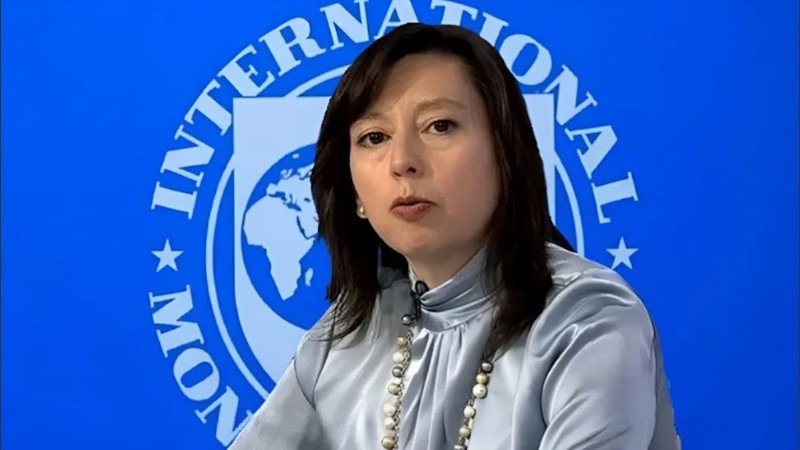
Once again the IMF won the fight against Minister Luis Caputowho spent the last few days explaining in interviews and before businessmen, that this government was the one that “bought the most reserves.” Despite the placement of bonds in dollars last week – which is not a return to the international credit “markets” as explained Pablo Anino here-, reserves remain at negative levels that exceed US$16 billion.
In this way, it will not only fail to meet the goal of accumulation of reserves agreed with the IMF by the end of December, but it still lacks more than US$3.5 billion to meet the debt maturities with private bondholders next January for the sum of US$4.5 billion.
After the IMF’s repeated demands for the government to advance a plan to strengthen reserves, after the change in the exchange front announced this Monday by the organization’s mouthpiece, Julie Kozak He said on social media: “We welcome recent market access and the steps announced to strengthen the monetary and currency framework, rebuild reserve buffers and advance growth-enhancing reforms.” He added “We are working closely with the authorities as they implement these important measures.”
One of the main changes is the way to update the floor and ceiling going from 1% monthly to adjusting for inflation (CPI) of the last two months. This implies that from January 1 the adjustment will be 2.5%. Regarding the reserve accumulation program, the economist and finance specialist, Christian Buteler, pointed out on networks that “Once again the government must give in and accept what the market consensus demanded. Reserves must be purchased. This purchase will depend on the growth of the demand for money and market liquidity changes. And he added: “it is not a specific program, for example they will buy x amount per month.”
As we have been pointing out in this section, the persistent difficulties in accumulating reserves reveal the inconsistencies of Caputo and Milei’s economic plan. A central problem with Milei’s model is that dollars drain away (foreign debt payments, capital flight, tourism, imports) and do not return. This situation feeds back into permanent uncertainty and speculation with a devaluation, which if it happens implies a blow to the purchasing power of salaries. As the economic downturn chokes the industry, it threatens jobs. The electoral victory gave him a boost, but it does not clear up the underlying problems that are still there, the doubts too. Confronting this course of adjustment and attack on labor rights is urgent, to defeat the Milei plan, the IMF and the economic groups.
Source: www.laizquierdadiario.com