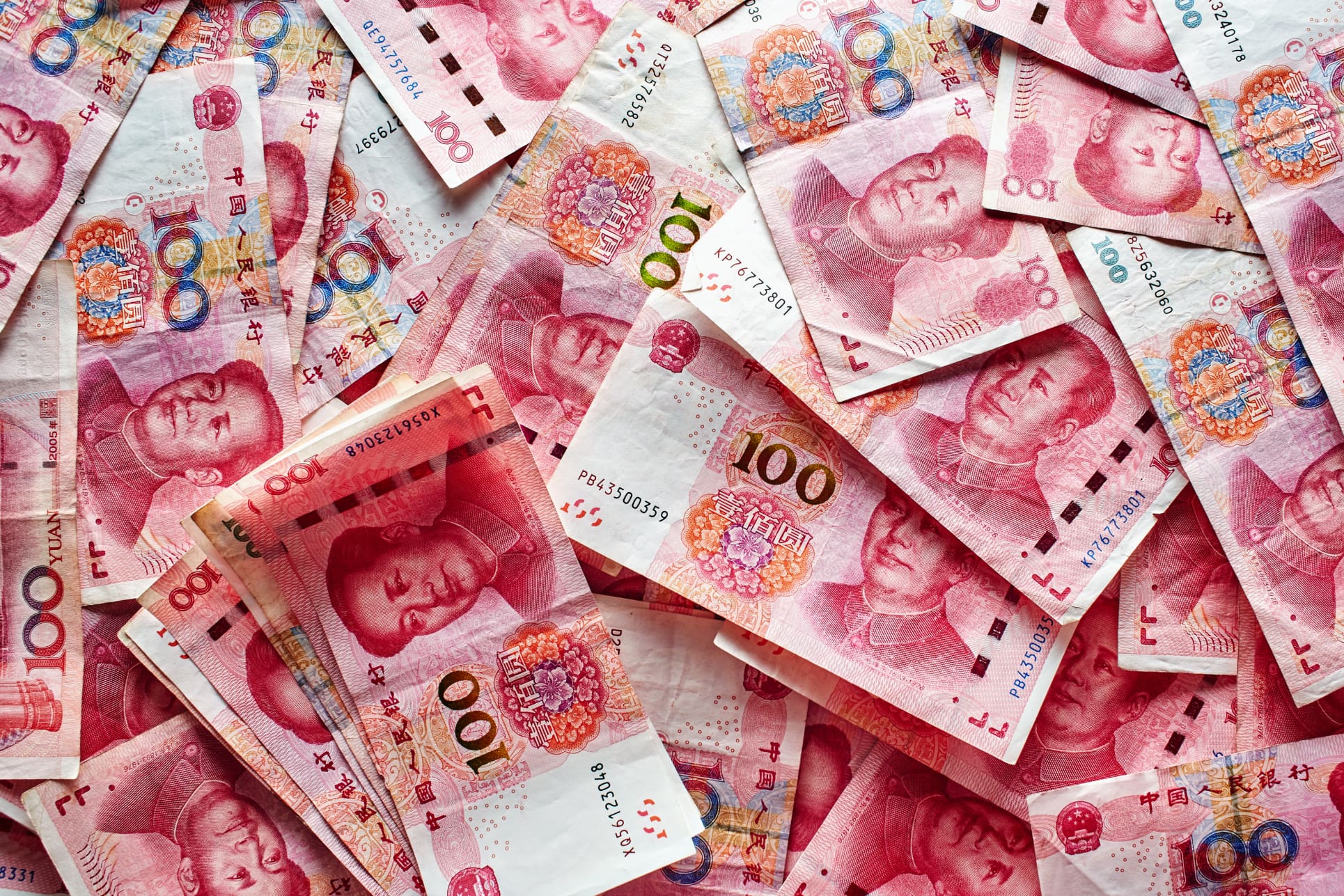
It was already known that the US dollar has been under pressure as a global reserve currency for some time. But China has now announced an ambitious plan to concretely undermine the dominance of the US dollar in the global financial system.
In a period of geopolitical turmoil and declining confidence in US economic policy, Beijing is seizing the opportunity to profile the Chinese yuan (RMB) as a serious alternative on the world stage.
Economic uncertainty increases China’s room for maneuver
Last weekend, the ideological magazine Qiushi, mouthpiece of the Chinese Communist Party (CCP), published statements by President Xi Jinping about the need for a “strong currency that is widely used in international trade and currency markets”.
The timing of this release is no coincidence: the US dollar is trading at its lowest level in four years and investors are turning to alternative safe havens such as gold.
The current international context plays into China’s hands. The re-election of President Donald Trump has led to volatility in the markets, partly due to Trump’s erratic trade policies and his unconventional economic direction.
Trump’s previous decisions to impose tariffs on key trading partners have only further undermined confidence in the stability of the dollar (USD).
On top of that is growing concern about US monetary policy. Trump has repeatedly criticized Jerome Powell, the chairman of the Federal Reserve (the US central bank) who is on his way out. These internal tensions at the central bank reinforce the image of an unpredictable American financial system.
This environment is fueling a broader trend of de-dollarization, with countries and institutions seeking to reduce their dependence on the dollar. The European Central Bank (ECB), led by Christine Lagarde, has long been advocating a greater international role for the euro, and other economic blocs, such as BRICS, are also exploring alternatives.
“To get people to use the Chinese yuan, you actually have to create a niche, and that has been very difficult so far,” says Trivium China’s Dinny McMahon. “Now the party thinks: ‘We are in a unique moment, because people are becoming increasingly disappointed in the dollar.’”
Strategic use of renminbi in global trade
China has been working on the internationalization of the Chinese yuan (RMB) for years, but efforts have recently been stepped up. For example, Beijing has increased foreign access to Chinese financial markets, including by opening the bond and stock markets to international investors. At the same time, cross-border payments are made easier through improved infrastructure.
The global position of the yuan has been partly strengthened by geopolitical shifts. After the Russian invasion of Ukraine and subsequent Western sanctions, China continued to trade with Russia. The yuan was increasingly used as a settlement currency. The result: a record high in the use of the currency in international transactions.
In the summer of 2025, Pan Gongsheng, governor of the Chinese central bank, stated that the yuan is now the largest currency for trade financing and ranks third as a means of payment worldwide. He advocated a “multipolar” currency system, in which multiple currencies coexist, rather than the dominance of a single currency such as the dollar.
International resistance and structural obstacles
Yet the scenario in which the renminbi actually replaces the dollar as the dominant reserve currency is still far from reality. According to the International Monetary Fund (IMF), the US dollar still represented around 57 percent of global currency reserves at the end of 2025. The euro followed with around 20 percent, while the renminbi remained at only 2 percent.
China lacks a credible and transparent legal framework for foreign investors. As long as these institutional conditions do not improve, large-scale adoption of the renminbi as a world reserve currency remains unlikely. According to McMahon, China is also aware of this:
“I can’t imagine a world in which the yuan as a reserve asset comes close to the level of the dollar or the euro, and I don’t think Beijing itself expects that either. But given the shifting relationships in the global financial system and geopolitics, Beijing certainly sees an opportunity here to gain ground.”
Political implications of a multipolar financial system
Control of a world reserve currency provides geopolitical influence. It allows countries to raise cheap money, impose economic sanctions and dictate global financial standards.
It can actually be compared to a poker table where one player holds the majority of the chips. By aiming for a greater role for the Chinese yuan, China wants to acquire not only economic, but also political means of power.
Within the BRICS bloc, the idea has been put forward to create a joint reserve currency, separate from the dollar. Trump has reacted sharply to this proposal in the past and threatened 100 percent import tariffs if it ever becomes reality.
Despite this resistance, China seems determined to overhaul the current monetary system. Not with the illusion of quick replacement, but with the strategic goal of gaining influence in a world where financial power is increasingly less self-evidently vested in the West.
Source: https://newsbit.nl/china-daagt-amerikaanse-dollar-uit-met-nieuw-valuta-offensief/