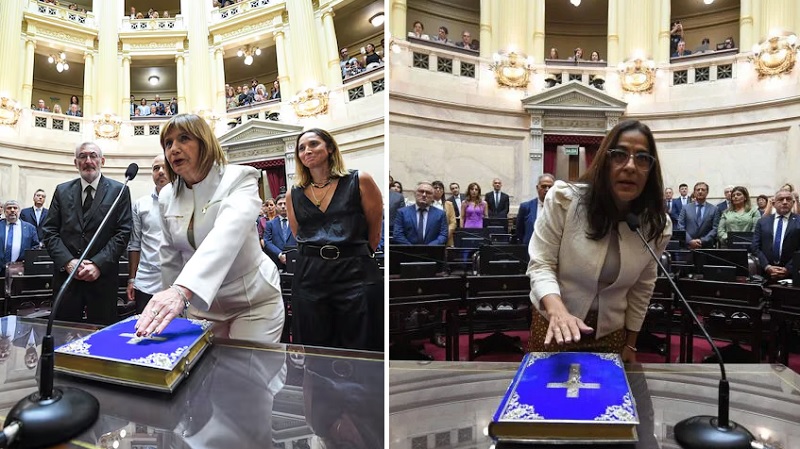
The National Senate started the 2026 legislative year with a political move that perfectly shows how the power alliances that facilitate Milei’s adjustment are built. Within the framework of the preparatory session of the Senate, Carolina Moisés was appointed as the new vice president at the proposal of Patricia Bullrich. Only 24 hours passed since the decision to break the Peronist interblock with Guillermo Andrada and Sandra Mendoza to have “greater parliamentary autonomy” in their own words.
The move, which has the endorsement of governors related to the ruling party such as Jaldo (Tucumán), Jalil (Catamarca) and Sáenz (Salta) left Kirchnerism out of the leadership, despite being the first minority in the Upper House.
But it’s not a surprising move if you watch the entire movie. Moisés, Andrada and Mendoza were already functional to the adjustment and the anti-worker agenda promoted by Javier Milei. Elected by Peronism (Moisés entered for Unión por la Patria in 2023, while Andrada and Mendoza did so for the Frente de Todos in 2021) to occupy a seat in the Senate, they progressively turned around until they ended up sealing this new pact with the ruling party.

The excuse of “greater autonomy” falls to pieces: the break announced this Monday is just the continuity of an open policy of collaboration with the Casa Rosada. It is no coincidence that Bullrich herself admitted that Moisés’ appointment is to reach a majority that is only one vote away from two-thirds, which would allow her to impose the presidential agenda without negotiating with the rest of the interbloc led by Mayans: “We offer the vice presidency to Moisés to strengthen a majority of 47 senators.”
Collaborationist Peronism and adjustment
The PJ’s crisis in the Senate was exposed like never before. The Peronist interbloc, to which all the members of the different tribes of Peronism asked to vote to “stop Milei”, was reduced to 25 members, a historic minimum since 1983. And not only because of the departure of Moisés and company: several senators had already been voting alongside the ruling party and the UCR for regressive reforms such as the “Labor Modernization Law”, a reform tailored to the big employers and against labor rights. Beatriz Ávila, Alejandra Vigo, Carlos Espínola, and now Moisés are just some of the names functional to adjustment and dedication despite having reached their bench talking about the people and the rights of workers.
Milei’s governance is supported by the complicity of many sectors always willing to collaborate. In Jujuy Moisés two years ago ranted against former governor Morales and called him a “dictator” for his constitutional reform in the province. Now he negotiates with Bullrich and Milei the price of their votes, making his contribution to the advance of the extreme right and the bosses.
Source: www.laizquierdadiario.com