US Military Strikes on Suspected Drug Smuggling Vessels Raise Legal Questions
Amid increased naval operations against illicit drug trafficking in the Pacific, the Pentagon's use of force against unflagged drug boats (known as 'narco-submarines') is scrutinised under international maritime law.
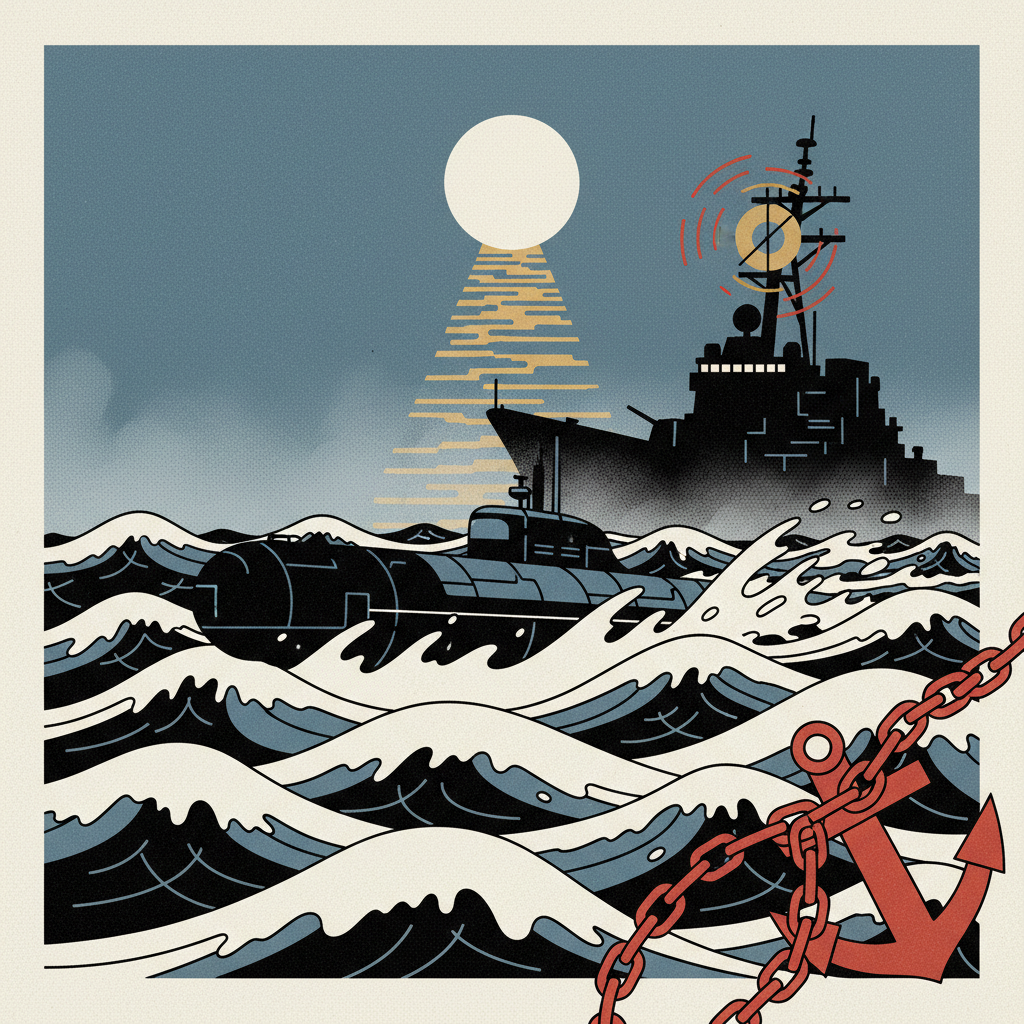
US Military Targets Suspected Drug Boats in Pacific Operations
The United States military has escalated its efforts against international drug trafficking, particularly targeting suspected drug-smuggling vessels in the Pacific Ocean. These operations, often involving armed force against unflagged boats, raise complex questions regarding international maritime law and rules of engagement. The Pentagon's strategy focuses on disrupting the flow of narcotics, primarily cocaine, from South America to global markets, often utilizing advanced detection and interception techniques.
The vessels in question are frequently low-profile, semi-submersible crafts, dubbed 'narco-submarines.' Their design makes them notoriously difficult to detect and intercept, necessitating sophisticated military assets. While the intent is to stop drug flow, the use of military force against what are essentially civilian — albeit illicit — conveyances without clear national allegiance complicates the legal framework under which these interdictions occur.
Under established international law, a warship or military aircraft encountering a vessel on the high seas is generally permitted to stop, board, and search it only if there are reasonable grounds to suspect the vessel is involved in piracy, the slave trade, unauthorized broadcasting, or if it is without nationality. If a vessel is 'without nationality' – meaning it flies no flag or flies the flag of more than one state – it is afforded fewer protections, potentially allowing for more direct intervention.
Critics and legal experts often highlight the fine line between law enforcement and military action in these scenarios. The destruction or disablement of such vessels by military force, even if suspected of illegal activity, must conform to the principle of proportionality and necessity. Any excessive use of force could lead to international condemnation or legal challenges, particularly if there are casualties among the crew. The rules of engagement for US forces typically allow for the use of force in self-defense or to complete a mission, but applying this to a non-military, non-state actor involved in crime creates legal ambiguities.
The US military maintains that its actions are consistent with international law and aim to protect national security interests by stemming the tide of illegal drugs. They argue that these vessels pose a significant threat, not just due to the contraband they carry but also because of potential links to other transnational criminal activities. The operations are often conducted in cooperation with regional partners, adding layers of complexity to jurisdictional responsibilities and legal accountability.
To mitigate legal risks, US forces typically attempt to hail and board suspected vessels. Force is usually considered a last resort, employed when a vessel fails to comply or attempts to evade capture, or when the safety of personnel is threatened. The legal implications extend beyond the immediate kinetic action, influencing how apprehended individuals are processed and where legal proceedings are conducted, often in US or allied courts following successful interdictions.
These military strikes are part of a broader, ongoing effort by the United States and its allies to combat transnational organized crime. The strategy continuously evolves to adapt to the changing tactics of drug cartels, which innovate rapidly in their methods of concealment and transportation. However, the foundational legal principles governing the high seas remain a constant benchmark against which these assertive tactics are measured.
Synthesized from primary source
AP News — https://apnews.com/article/trump-military-boat-strikes-cocaine-pacific-d1f80c8ed5a393461afe6c62eb1d1dfa