US Allies Urge Unity to Counter Global Threats, Division Weakens Deterrence
High-level defense officials from Japan, Australia, and the US emphasized the critical need for allied cohesion at the Shangri-La Dialogue, warning that internal divisions embolden adversaries and undermine collective security.
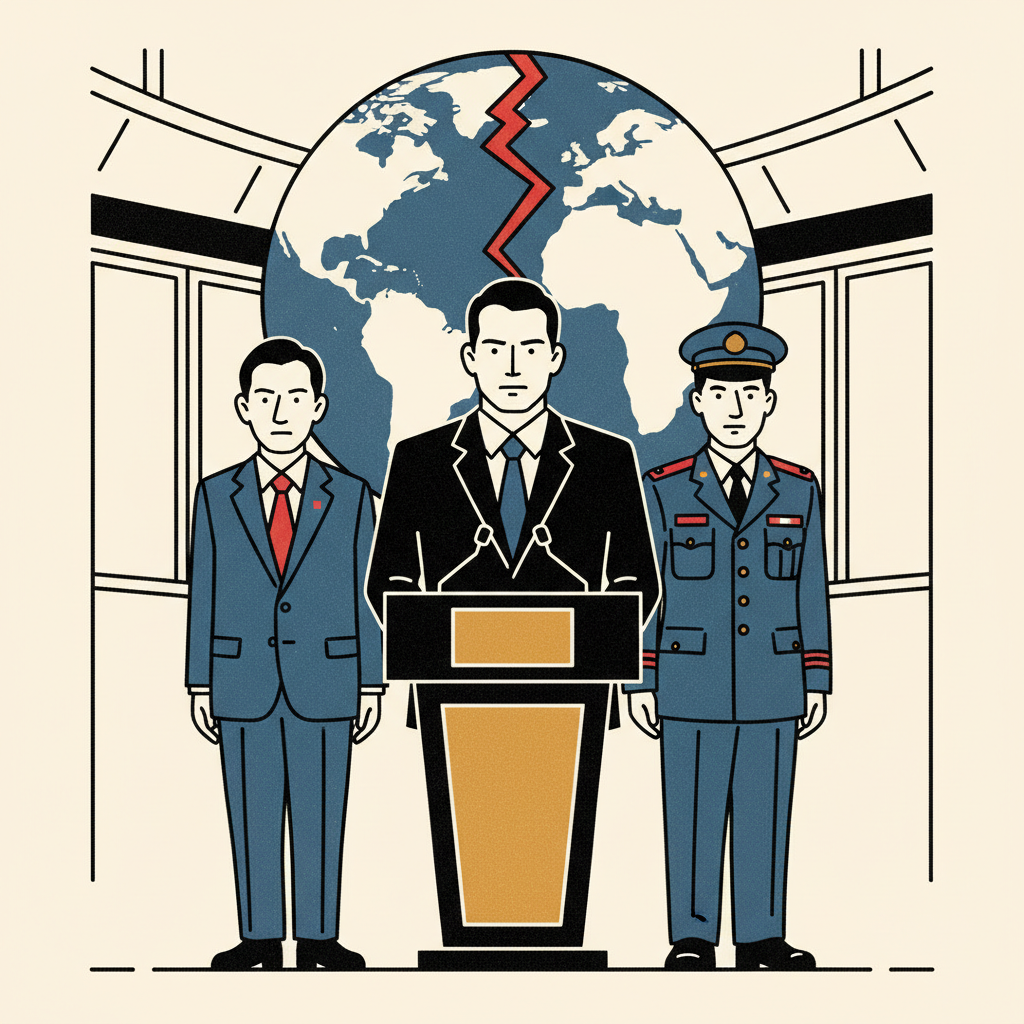
Global Unity and Deterrence: A Call from US Allies
Defense leaders from key US allies have issued a strong call for unity, asserting that fragmentation among democratic nations weakens their collective ability to deter aggression and maintain global stability. Speaking at the Shangri-La Dialogue, Asia's premier defense summit held in Singapore, officials from Japan, Australia, and the United States highlighted the escalating geopolitical challenges and the imperative for a cohesive response.
Japan’s Minister of Defense, Kihara Minoru, underscored the growing significance of alliances in the current international landscape. He observed that while alliances were once primarily understood as bilateral agreements, the contemporary security environment necessitates a more interconnected, multi-layered approach. Minoru’s remarks emphasized that the strength of these partnerships lies not just in their individual resilience but in their interoperability and shared commitment to common values and security objectives.
Similarly, Australia’s Deputy Prime Minister and Minister for Defence, Richard Marles, stressed the direct correlation between allied unity and the credibility of deterrence. Marles warned that any perceived fracture or disunity within the alliance framework would inevitably be exploited by potential adversaries. He articulated a clear message: the absence of a united front serves to embolden those who seek to disrupt the international order, potentially leading to increased instability and conflict.
Adding to these sentiments, a prominent US figure at the conference, retired Brigadier General Blaine Holt, echoed the concerns about internal divisions. Holt pointed out that a significant portion of current US national power is currently diverted towards domestic political conflicts. He emphasized that this internal focus saps resources and attention that could otherwise be directed towards strengthening international alliances and addressing external threats, thereby weakening the overall posture of the United States and its partners on the global stage. This diversion, he contended, sends an adverse signal to both allies and rivals, suggesting a diminished capacity or will for global engagement.
The shared message from these influential figures converges on a critical point: the effectiveness of deterrence in the 21st century depends heavily on the perceived solidarity and operational coherence of leading democratic nations. As the world navigates complex geopolitical shifts, from conflicts in Europe to increasing tensions in the Indo-Pacific, the ability of these alliances to project a united and resolute stance is paramount. Their warnings serve as a salient reminder that internal discord carries external consequences, directly impacting the balance of power and the prospects for peace.
The discussions at the Shangri-La Dialogue consistently reinforced the idea that strong alliances are not merely about military capabilities but also about shared diplomatic resolve and economic cooperation. Leaders reiterated the importance of continuous dialogue, joint exercises, and strategic alignment to ensure that their collective deterrence remains robust and credible against a backdrop of evolving global threats.
Synthesized from primary source
AP News — https://apnews.com/article/koizumi-hegseth-marles-singapore-defense-conference-990438940784f429084996306c0b3960