Ukrainian Drones Ignite Fires at Russian Energy Facilities Amid Intensified Conflict
Multiple Ukrainian drone attacks targeted Russian energy infrastructure, including a prominent oil refinery and storage depots, causing significant fires and prompting emergency responses across several regions.
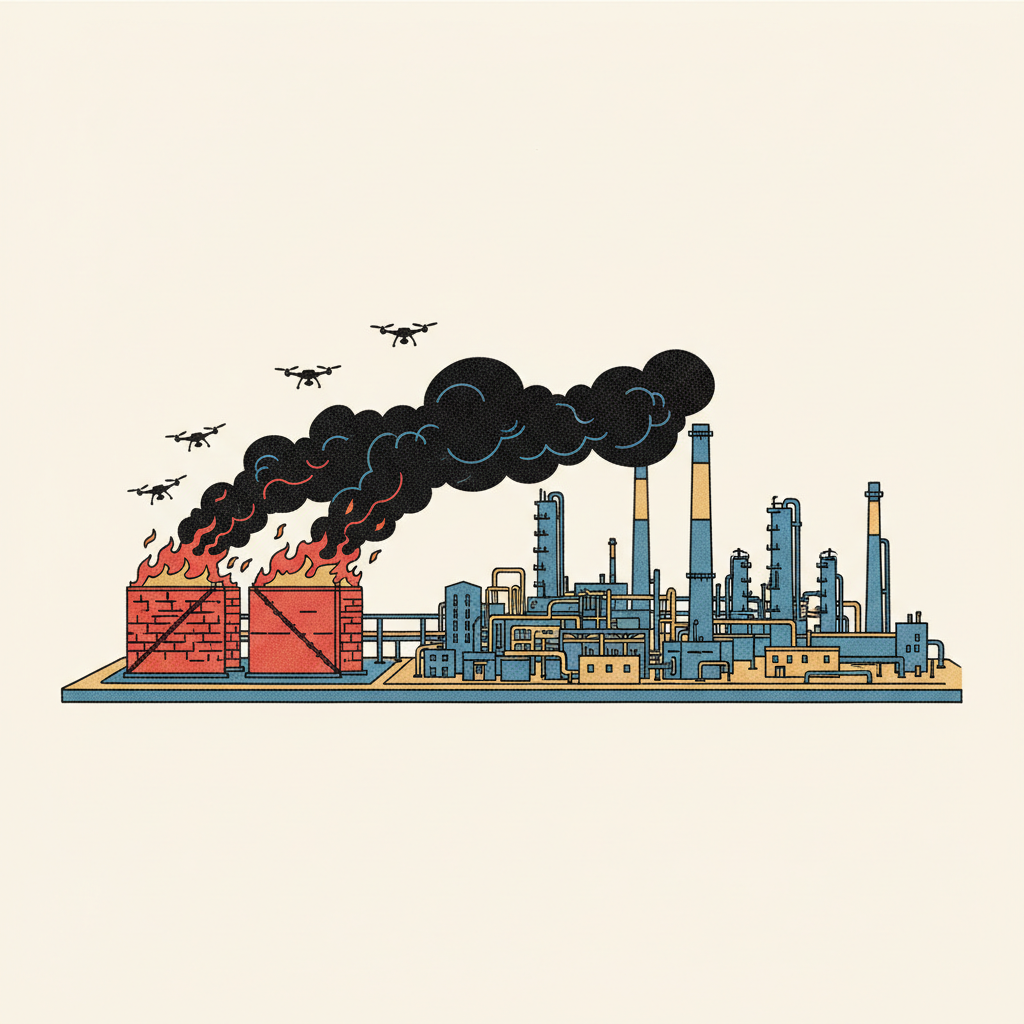
Ukrainian drones launched a coordinated assault against Russian energy sites, resulting in extensive fires and disruptions. The attacks, which occurred throughout the preceding night, struck an oil refinery in Ryazan, situated approximately 130 miles (200 kilometers) southeast of Moscow, and energy storage depots in the Leningrad region, which encompasses St. Petersburg, Russia’s second-largest city.
Authorities reported that the Ryazan oil refinery fire was successfully extinguished within a few hours. However, a separate incident saw a drone fall on the premises of the Kirishi oil refinery, also in the Leningrad region, though officials there claimed it caused no damage and operations continued unimpeded. In another strike, a drone damaged a fuel and lubricants warehouse in the city of Orel, about 100 miles (160 kilometers) from the Ukrainian border, resulting in a fire.
This series of attacks marks an escalation in Ukraine's strategy of targeting Russian energy infrastructure, a move described by Kyiv as a response to Russia's ongoing assaults on Ukrainian cities and energy facilities. Ukrainian President Volodymyr Zelenskyy has previously indicated that such strikes are a justifiable part of Ukraine's defense, aimed at weakening Russia's war machine and retaliating for the extensive damage inflicted upon his country.
The Russian Ministry of Defense confirmed that its air defenses successfully intercepted 58 Ukrainian drones over six different regions, primarily targeting energy facilities. These regions included Belgorod, Bryansk, Kursk, Tula, and Voronezh, in addition to Ryazan and Leningrad.
The repercussions of these drone strikes extend beyond immediate damage. In recent months, similar Ukrainian drone operations have led to significant power outages and fuel supply chain disruptions across Russia. While Russian officials reported no casualties from the latest attacks, the economic and logistical impact continues to mount.
In other developments, Ukraine’s armed forces stated that their air defense systems shot down 20 out of 29 Russian attack drones launched on Wednesday morning, as well as one operational-tactical missile. These interceptions occurred over southern and central regions of Ukraine. Furthermore, Russia launched S-300 anti-aircraft missiles towards the war-ravaged Donetsk region, which borders Russia.
On Tuesday, Russian forces intensified their bombardment of the Sumy region in northeastern Ukraine, near the Russian border, unleashing 1,489 shells and missiles that caused damage to residential buildings, infrastructure, and a local hospital. This unrelenting shelling underscores the ongoing ferocity of the conflict, with both sides employing long-range weaponry to degrade the other's capacity.
The drone attacks on Russian energy infrastructure highlight the evolving nature of the conflict, as Ukraine increasingly employs asymmetric tactics to pressure Moscow and disrupt its military and economic operations. These tactics aim to force Russia to divert resources to defend its vast interior, potentially easing pressure along the front lines.
Synthesized from primary source
AP News — https://apnews.com/article/russia-ukraine-war-drones-nuclear-plant-4168345770d6d3a3808ba9dcb9dc3305